The education sector has transformed dramatically in recent years. Institutions are no longer relying solely on manual administrative tasks, campus-bound communication, or fragmented student data tools. In 2025 and beyond, digital-powered engagement is the expectation — not a luxury.
Cloud-based platforms have emerged as the true backbone of modern education management. They enable flexibility, real-time collaboration, and seamless access to tools that support the student lifecycle — from admissions and enrollment to alumni engagement. As schools and universities seek the best CRM for educational institutions, cloud-based solutions are leading the evolution.
Whether a K–12 school, higher education institution, or training academy, adopting a cloud CRM means future-proofing operations and delivering exceptional learning experiences.
⭐ Key Takeaways
- Cloud CRM platforms offer mobility, efficiency, and advanced automation for student lifecycle management
- They eliminate traditional system limitations like local hosting, IT overhead, and data fragmentation
- The best CRM for educational institutions supports admissions, student engagement, communication, and analytics
- Cloud-based solutions boost collaboration among educators, students, and parents
- Future trends like AI and predictive insights are more accessible with cloud infrastructure
Education’s Digital Shift: Why Legacy Tools Are No Longer Enough
Many institutions still operate through outdated systems and spreadsheets. These approaches lead to:
- Inefficient communication
- Lost leads during admissions
- Data errors and duplication
- Delays in decision-making
- Poor visibility into student progress
As student expectations rise and institutions compete globally, technology gaps become major roadblocks.
Cloud-based CRMs remove these barriers with:
- Centralized student data
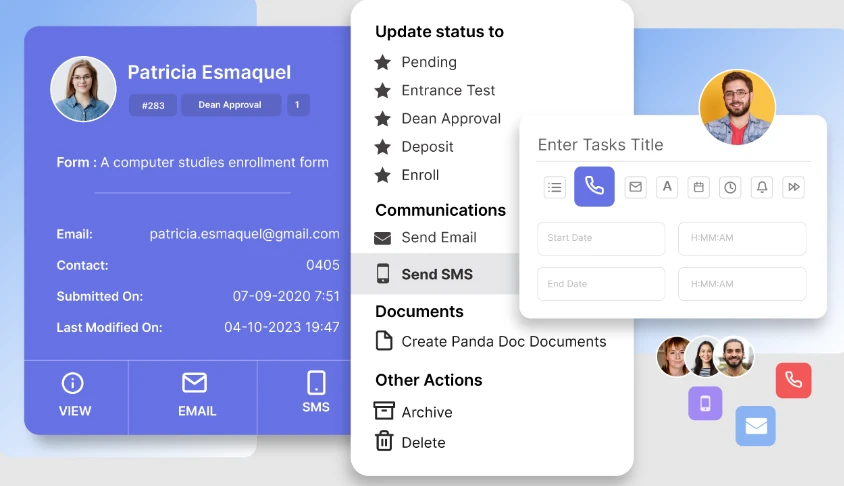
- Multi-channel communication tools
- Automated workflows
- Remote accessibility
- Scalability and integration with learning systems
In short: they align education management with how users — especially digital-native students — actually operate today.
What Makes Cloud-Based Platforms the Best CRM for Educational Institutions?
1️⃣ Cost-Efficient and Easy to Implement
Unlike traditional on-premise software, cloud CRMs:
- Require no hardware investment
- Provide automatic updates
- Reduce IT dependency
- Scale as enrollment grows
This makes them ideal for institutions with tight budgets or distributed campuses.
2️⃣ Secure, Compliant, and Always Available
Modern cloud platforms include:
- Enterprise-grade encryption
- Role-based access control
- Automated backups
- Global compliance (GDPR, FERPA, etc.)
Data remains secure and accessible anywhere — ensuring continuity during disruptions like natural disasters or remote learning situations.
3️⃣ Unified Student Journey Management
The entire lifecycle becomes connected:
StageCRM Support ExampleInquiryLead capture & nurturing campaignsAdmissionOnline forms, automated evaluationEnrollmentIntegrated SIS & fee managementLearningCommunication and academic trackingGraduation & AlumniEngagement and fundraising modules
This single-source visibility is why cloud solutions are recognized as the best CRM for educational institutions worldwide.
4️⃣ Real-Time Communication and Engagement
- Email + SMS + WhatsApp + in-app messaging
- Announcements & alerts for parents and students
- Personalized campaigns based on progression
These tools help institutions build stronger relationships — not just manage records.
5️⃣ Analytics and Predictive Insights for Better Decisions
Dashboards reveal:
- Enrollment trends
- Course and faculty performance
- Student risk indicators
- Fundraising potential
AI-enabled features help educators take proactive action rather than reacting to challenges later.
Challenges Institutions Face — and How Cloud CRM Solves Them
ChallengeCloud CRM SolutionData scattered across departmentsCentralized platformManual processing causing delaysAutomation reduces time & errorsPoor visibility into performanceAnalytics & dashboardsLimited parent engagementMulti-channel communicationLack of remote accessCloud-based mobility
Cloud CRMs provide relief from administrative overload, ensuring staff can focus more on student outcomes.
Best Practices for Selecting and Optimizing a Cloud-Based CRM
Here are actionable tips institutions can follow:
✔ Start with Clear Goals
Examples:
- Improve admissions conversion rate
- Enable parent-student-teacher collaboration
- Increase retention and student success metrics
✔ Ensure Integration with Existing Tech
Check compatibility with:
- SIS (Student Information Systems)
- LMS (Learning Management Systems)
- Online payment portals
- Communication channels
✔ Prioritize Scalability
Choose a platform that grows with new courses, campuses, and digital requirements.
✔ Focus on User Experience
Faculty and staff adoption is key:
- Simple onboarding
- Self-service learning resources
- Intuitive interface
✔ Leverage Automation Features
Set up:
- Lead nurturing campaigns
- Notifications for deadlines
- Attendance & performance alerts
Automation leads to operational agility and student satisfaction.
Frequently Asked Questions (FAQs)
1️⃣ What is a cloud-based CRM for education?
A cloud-based CRM is a student lifecycle management platform hosted online instead of locally. It centralizes admissions, academics, finance, communication, and analytics — accessible from any device.
2️⃣ Why are cloud platforms considered the best CRM for educational institutions?
Because they provide:
- Lower total cost of ownership
- Faster deployment
- Data security and compliance
- Modern engagement tools
- Integration and scalability
These advantages outperform traditional on-premise CRMs.
3️⃣ Can a cloud-based CRM integrate with existing school systems?
Yes. Most leading platforms offer API-based and native integration with SIS, LMS, payment gateways, and communication tools — ensuring seamless data flow.
4️⃣ How does cloud CRM improve data security?
Providers use:
- Encryption
- Multi-factor authentication
- Backup servers
- Strict compliance frameworks
This keeps institutional data safer than locally hosted systems.
5️⃣ Is cloud CRM suitable for small schools and training centers?
Absolutely. Cloud solutions scale to any size and budget — making them accessible whether an institution has 50 students or 50,000.
6️⃣ What features should institutions look for?
- Admissions automation
- Centralized student records
- Communication and engagement tools
- Financial administration
- Timetables and attendance
- Reporting and AI analytics
Ready to Elevate Your Student Lifecycle Management?
Cloud-based platforms are no longer optional — they’re foundational to modern academic success. By choosing the best CRM for educational institutions, administrators can streamline operations, strengthen engagement, and make smarter decisions powered by real-time data.
Solutions like Classe365 are leading this transformation with a unified cloud experience that supports the entire student journey — from inquiry to alumni. If your institution wants agility, efficiency, and future-ready digital infrastructure, now is the perfect moment to move to the cloud.