Businesses today need to communicate products, services, processes, and ideas clearly to different audiences. However, some concepts can be difficult to explain through text, presentations, or static images. Animation provides a visual approach that can make complex information easier to understand and more engaging.
Professional animation video production combines storytelling, visual design, motion, narration, and graphics to communicate information in a structured way. Businesses can use animated videos for marketing, product demonstrations, employee training, technical communication, presentations, and internal education.
Why Businesses Are Using Animation Videos
Modern audiences consume a large amount of digital content every day. Businesses therefore need communication formats that can present important information clearly without making the viewer feel overwhelmed.
Animation can turn complicated information into a sequence of simple visual elements. Instead of explaining a process through several paragraphs, businesses can use animation to show how different components work together.
For example, a technology company can demonstrate how its software operates, while a manufacturing company can visualize a production process. A service-based business can also use animation to explain how its service works from start to finish.
How 2D Animation Simplifies Complex Ideas
2D animation is a flexible format that can be used for a wide range of business communication requirements. It can combine illustrations, icons, typography, characters, diagrams, and motion graphics to explain information visually.
2D vs 3D animation videos are particularly useful for explainer content, educational videos, internal communication, product introductions, and marketing campaigns.
Complex information can be divided into smaller visual sections. Important points can be highlighted through movement, on-screen text, diagrams, and narration.
For example, a business explaining a multi-step service process can use 2D animation to show each stage separately. This allows viewers to follow the information in a logical sequence.
The Growing Role of 3D Animation in Business Communication
3D animation provides businesses with the ability to visualize objects, products, environments, machinery, and technical processes from different perspectives.
3D animation for safety training can show details that may not be visible through conventional photography or live-action filming. Internal components, product mechanisms, movement, and technical processes can be represented through detailed 3D models.
This makes 3D animation useful for industries such as manufacturing, engineering, construction, technology, healthcare, real estate, and product development.
Businesses can use 3D visuals to communicate how something looks, how it works, and how different components interact.
3D Animation for Product Visualization
Product visualization is one of the important applications of 3D animation. Before a physical product is manufactured or launched, businesses may need to present its appearance, features, and functionality to customers, investors, or internal teams.
3D animation can create a digital representation of the product and show it from different angles. The video can highlight individual components, product features, dimensions, movement, and functionality.
For example, an engineering company can use 3D animation to demonstrate a machine, while a property developer can visualize a building or interior environment.
This provides businesses with a flexible way to present products before or during the development process.
Animated Explainer Videos for Better Understanding
Explainer videos are designed to communicate a specific idea, product, service, or process in a simple format. Animation is often used because visual storytelling can break down complicated subjects into manageable sections.
An animated explainer video can combine a short script with illustrations, motion graphics, voice-over, music, and on-screen text.
For example, a software company can explain how users navigate its platform, while a financial organization can use animation to explain a complex service or process.
The visual structure helps viewers follow the information from one point to the next.
Benefits of Professional Animation Video Production
Professional production involves several stages, including concept development, scriptwriting, storyboarding, visual design, animation, voice-over, sound design, and editing.
Each stage contributes to the final communication quality. A well-written script provides the foundation, while storyboarding helps organize the visual sequence.
Professional animation can also be customized according to a company's brand identity. Typography, visual style, graphics, characters, and other design elements can be developed to match existing brand communication.
This allows businesses to maintain consistency across websites, presentations, social media, training platforms, and other digital channels.
Bringing Complex Products and Processes to Life
Some products and processes are difficult to demonstrate through conventional filming. Machinery may have internal components that cannot be seen while operating, while industrial processes may involve environments that are unsuitable for filming.
3D animation can recreate these environments digitally and show processes from different perspectives.
For example, an industrial company can use animation to demonstrate how equipment operates internally. A healthcare organization can visualize a biological process, while an engineering company can show how different components interact.
This makes animation particularly useful for technical and specialized communication.
2D and 3D Animation for Business Storytelling
Both 2D and 3D animation for safety training can support business storytelling, but they are suited to different types of content.
2D animation can work well for simple explanations, educational content, characters, diagrams, and motion graphics. 3D animation can provide detailed visualization of products, machinery, architecture, and technical environments.
Businesses can also combine both formats within one project. For example, a video may use 3D animation to demonstrate a product and 2D graphics to display statistics, labels, or supporting information.
The appropriate format depends on the subject, audience, communication objective, and visual requirements.
Animation for Training and Internal Communication
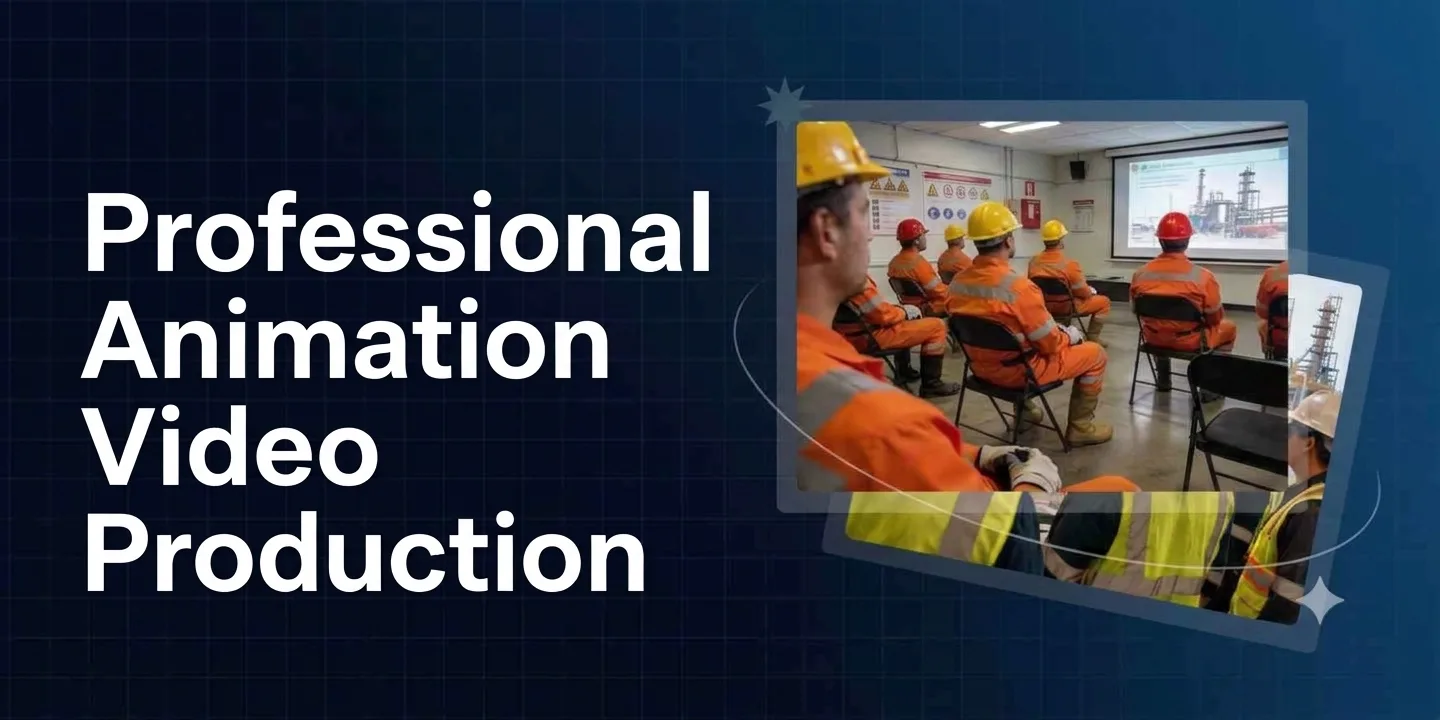
Animation is also useful beyond marketing. Businesses can use animated videos for employee onboarding, training programs, workplace procedures, software training, product education, and internal communication.
Training subjects that involve technical processes can be easier to demonstrate visually. Animation can also recreate situations that may be difficult or expensive to film in a real environment.
For example, an organization can use an animated video to explain a step-by-step procedure, demonstrate how a system works, or introduce employees to a new process.
Combining animation with narration, subtitles, graphics, and real footage can create a comprehensive training resource.
3D Animation for Technical and Industrial Communication
Technical and industrial organizations often need to explain complex equipment, processes, and systems to employees, customers, investors, or business partners.
3D animation can help visualize these subjects through detailed digital models and controlled demonstrations.
A technical animation can show machine components, product assembly, industrial workflows, engineering systems, or operational procedures.
This type of content can also be useful during presentations, sales meetings, product demonstrations, training programs, and digital marketing campaigns.
Choosing the Right Animation Style
Selecting the right animation style depends on what the business needs to communicate.
2D animation can be appropriate for simple concepts, explainer videos, educational content, and visual storytelling. 3D animation can be more suitable for detailed products, machinery, technical processes, and realistic environments.
The complexity of the subject, target audience, budget, communication channel, and desired visual style should all be considered during the planning stage.
Creating Effective Animated Business Content
A successful animation project starts with a clear communication objective. Businesses should identify what the audience needs to understand and what information should be presented first.
The script should be concise and easy to follow. Storyboarding can then be used to plan the scenes, visual elements, narration, and transitions.
Visuals should support the message rather than overwhelm the viewer. Professional voice-over, sound design, graphics, and animation can then be combined to create the final video.
Conclusion
Animation has become a flexible communication tool for businesses across different industries. From 2D explainer videos and employee training to 3D product visualization and technical communication, animated content can simplify information and present complex ideas through engaging visuals.
Professional animation video production allows businesses to combine storytelling, design, technology, and visual communication in a single format. The right animation approach can be adapted to the company's audience, industry, product, and communication objectives. Get in touch with Studio52 to discuss your requirements and create a video that fits your communication needs.