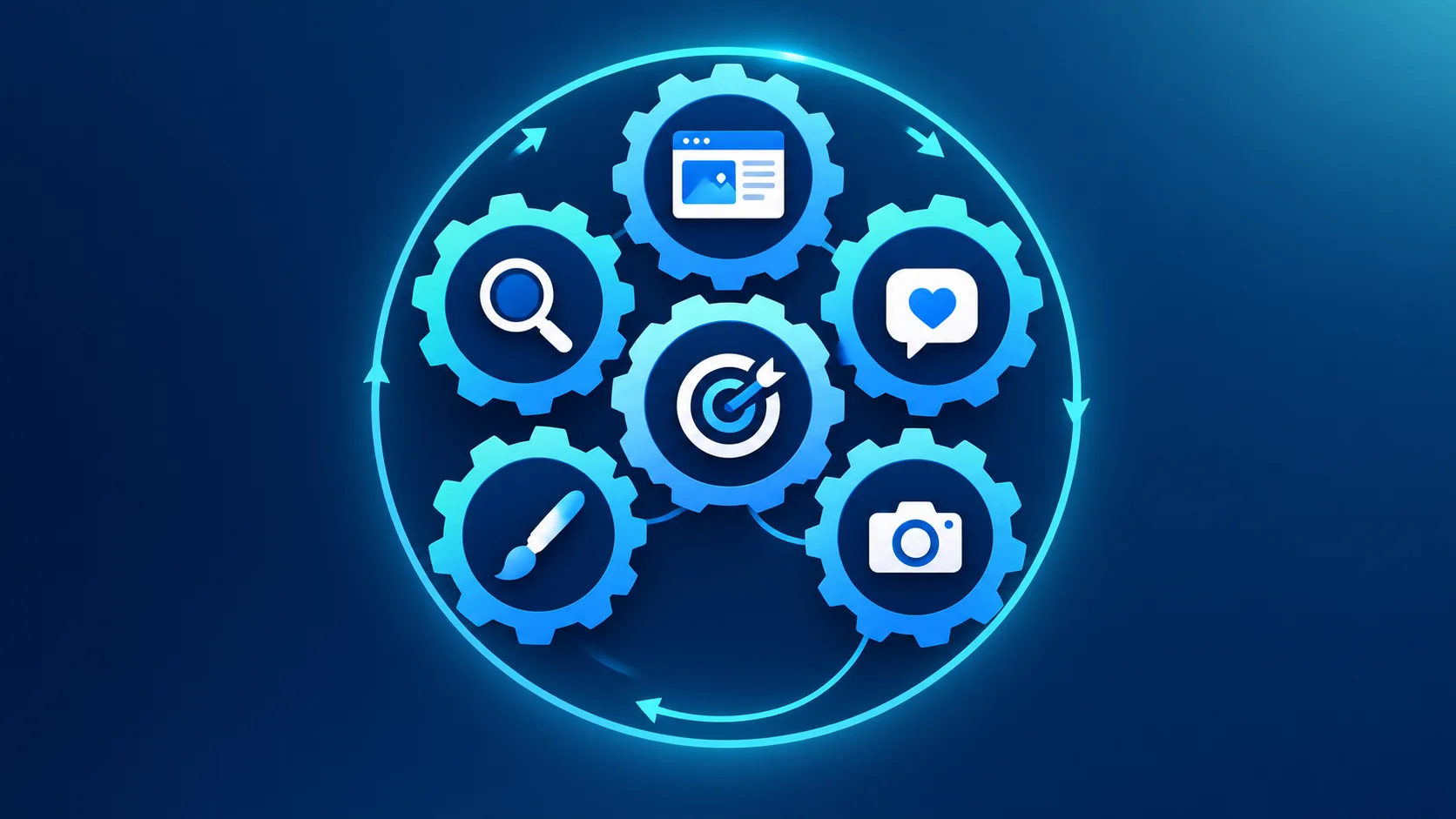

Sustained business expansion rarely happens by chance. As markets become more competitive and customer expectations shift faster than internal processes can adapt, many organizations begin searching for structured guidance rather than ad hoc decision-making. In this context, a business growth strategy agency becomes a practical option for companies that want to move beyond short-term fixes and toward long-term positioning.
At its core, this type of partner helps businesses interpret data, refine direction, and align internal capabilities with external opportunities. Rather than focusing solely on marketing or sales performance, the approach usually spans multiple layers of the organization—from market entry planning to operational efficiency.
For example, firms such as Vaultmark are often referenced in discussions around structured growth planning because they represent a model where analysis and execution frameworks are integrated rather than treated separately.
Understanding the role of a business growth strategy agency
A business growth strategy agency typically operates at the intersection of consulting, analytics, and organizational design. Unlike agencies focused purely on execution (such as advertising or branding firms), its primary function is to identify the structural conditions required for growth.
This includes evaluating whether a company’s current model can support scaling, and if not, what changes are necessary. These changes may involve pricing structures, customer segmentation, product prioritization, or distribution channels.
The key distinction lies in perspective: instead of asking “How do we get more customers?”, the agency often reframes the question to “What system must exist for sustainable customer acquisition and retention?”
Why long-term growth requires structured strategy
Many businesses experience periods of rapid expansion followed by stagnation. This pattern often emerges when growth is driven by opportunity rather than design. Without a coherent long-term framework, scaling efforts can strain operations, dilute brand positioning, or create inconsistent customer experiences.
A business growth strategy agency addresses this gap by introducing structured planning cycles. These cycles typically include market evaluation, internal capability assessment, and scenario modeling.
One of the main advantages of this structured approach is resilience. Companies are better equipped to handle shifts in demand, regulatory changes, or competitive pressure because their growth is not dependent on a single channel or assumption.
In this sense, strategy becomes less about prediction and more about adaptability. Businesses are not trying to forecast the future perfectly; they are building systems that remain functional under multiple possible futures.
Core components of a growth strategy framework
A comprehensive growth strategy usually involves several interconnected components. While each organization has unique needs, certain elements are consistently present.
Market and customer analysis
Understanding the market is the foundation of any growth effort. This includes identifying customer segments, mapping unmet needs, and analyzing competitor positioning. Without this layer, strategic decisions risk being based on internal assumptions rather than external realities.
A business growth strategy agency often uses both qualitative insights (such as interviews and behavioral observations) and quantitative data (such as conversion rates and cohort analysis) to form a more complete picture.
Value proposition refinement
Even strong products can underperform if their value is not clearly articulated or aligned with customer expectations. Agencies working in this space often examine whether a company’s messaging, pricing, and product structure reflect what the market actually values.
This step is not limited to branding; it extends to product design and service delivery as well.
Operational alignment
Growth is not sustainable if internal operations cannot support increased demand. Bottlenecks in supply chains, customer support, or onboarding processes can quickly erode gains from successful acquisition campaigns.
A structured review of operational capacity helps ensure that growth does not outpace execution.
Data and decision systems
Modern growth strategies rely heavily on data systems that support continuous learning. This includes dashboards, KPI frameworks, and feedback loops that allow leadership teams to make informed decisions quickly.
Without these systems, organizations often rely on intuition, which can be inconsistent at scale.
When businesses typically engage a business growth strategy agency
Organizations usually seek external strategic support during specific phases of development.
One common trigger is stagnation after a period of rapid growth. In such cases, internal teams may struggle to identify why performance has plateaued. Another scenario involves expansion into new markets, where unfamiliar conditions require more structured analysis.
Mergers, restructuring, or product diversification are also moments when external strategic input becomes valuable. During these transitions, internal alignment is often fragmented, and an external perspective helps clarify priorities.
Interestingly, some companies engage a business growth strategy agency not because of failure, but because they want to reduce dependency on reactive decision-making. The goal is to institutionalize strategy rather than treat it as an occasional exercise.
Benefits and limitations of engaging strategic partners
Working with a growth-focused agency can introduce several advantages, but it is not without constraints.
Benefits
One of the primary benefits is clarity. External teams can identify patterns that are less visible internally due to proximity bias. They also bring comparative insights from other industries, which can broaden strategic thinking.
Another advantage is structure. Many organizations operate without a unified framework for decision-making, leading to fragmented initiatives. A structured approach helps align teams around shared objectives.
Finally, there is the benefit of speed in diagnosis. External perspectives often accelerate the identification of core issues, reducing the time spent on trial-and-error approaches.
Limitations
However, external strategy work also has limitations. Implementation still depends heavily on internal teams. Without commitment from leadership and operational alignment, even strong strategies may not produce results.
There is also the risk of over-standardization. While frameworks are useful, they must be adapted to the specific context of each business. A business growth strategy agency must balance structure with flexibility to remain effective.
The evolving nature of growth strategy
Growth strategy has evolved significantly over the past decade. Previously, it was often associated with static planning documents and annual forecasts. Today, it is increasingly treated as an iterative process.
This shift reflects changes in market dynamics. Digital channels, global competition, and rapidly changing consumer behavior require organizations to update assumptions more frequently.
As a result, modern strategy work emphasizes continuous learning loops rather than fixed plans. In this model, experimentation plays a central role, and insights are regularly fed back into decision-making systems.
Conclusion
Long-term business growth is rarely the result of isolated initiatives. It is typically the outcome of interconnected systems that align market understanding, operational capacity, and decision-making processes. A business growth strategy agency contributes to this alignment by introducing structured thinking and external perspective.
While no framework guarantees success, organizations that invest in strategic clarity tend to navigate uncertainty more effectively. In competitive environments where adaptability matters as much as scale, this kind of structured support often becomes a practical consideration rather than a luxury.
FAQs
What does a business growth strategy agency actually do?
It evaluates a company’s market position, internal structure, and growth potential, then develops frameworks that align operations with long-term objectives.
How is it different from a marketing agency?
A marketing agency focuses primarily on customer acquisition and brand visibility, while a business growth strategy agency looks at the entire system supporting growth, including operations and product alignment.
When should a company consider working with one?
Typically during periods of stagnation, expansion into new markets, or when internal decision-making lacks structure and consistency.
Is it only useful for large companies?
No. Smaller businesses often benefit as well, especially when they are preparing to scale and need clearer operational and strategic direction.
Can it guarantee business success?
No external partner can guarantee outcomes. However, structured strategy work improves clarity, reduces inefficiencies, and strengthens decision-making processes.