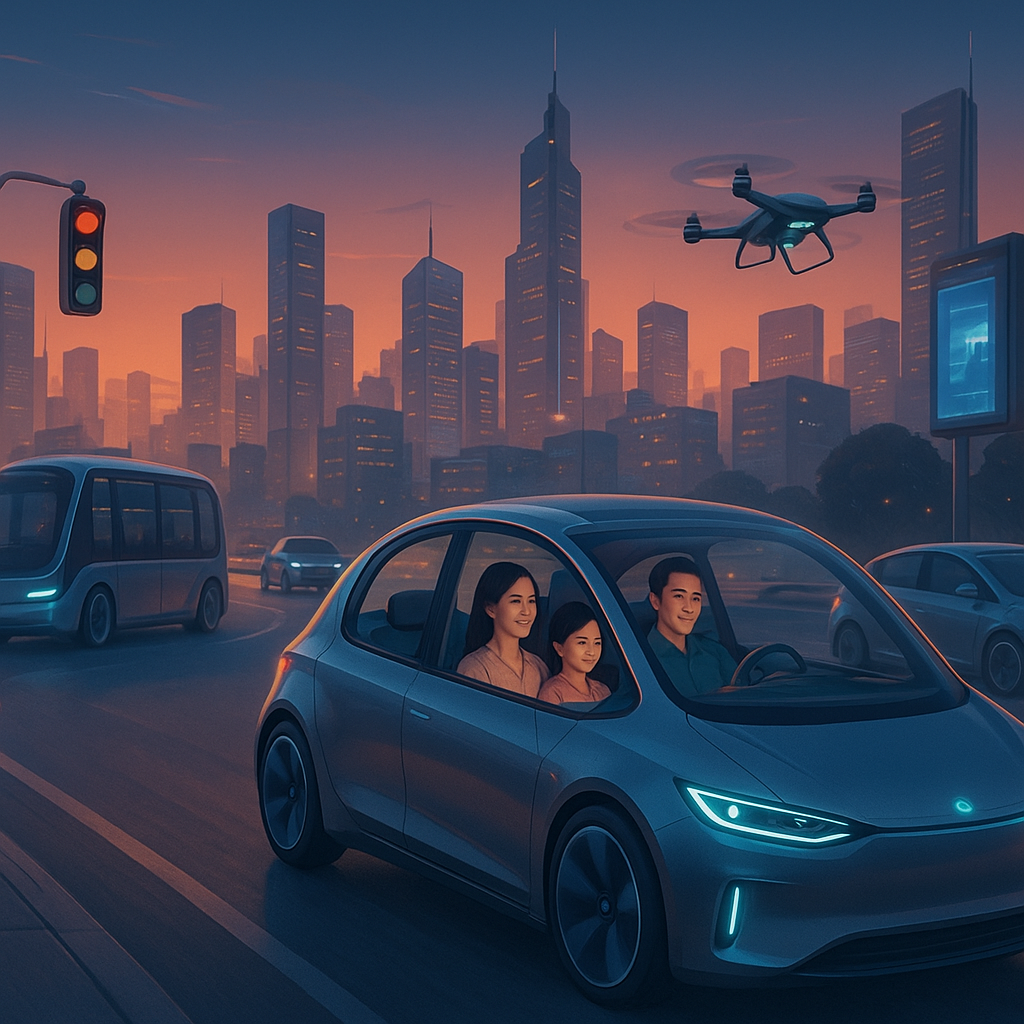
Reimagining Commutes: A Glimpse into a Driverless Morning
Imagine stepping out of your home in 2026, summoning a vehicle with a simple voice command, and watching a sleek, fully autonomous car glide silently to your doorstep. It’s a scene unfolding in cities worldwide, where driverless vehicles no longer represent a distant dream but a tangible reality. This transformation is not just about convenience; it’s a profound shift affecting everything from urban planning to environmental impact and economic models.
The transportation sector, a cornerstone of global mobility and economic activity, is undergoing one of its most significant revolutions in decades. With autonomous vehicles (AVs) increasingly integrated into public and private fleets, the traditional dynamics of driving, ownership, and infrastructure are being redefined. This article explores the multifaceted evolution of transportation in 2026, focusing on the rise of AVs and their ripple effects across industries and societies.
“Autonomous technology is not merely a vehicle innovation; it’s a catalyst for systemic change in how we conceive mobility, urban spaces, and sustainability,” says Dr. Elena Martinez, a leading transportation futurist.
From Horse-Drawn Carriages to Self-Driving Cars: Tracing Transportation's Evolution
The journey to today’s autonomous vehicles is rooted in centuries of innovation. In the 19th century, horse-drawn carriages dominated urban movement until the internal combustion engine heralded the automotive age at the turn of the 20th century. The mass production techniques pioneered by Ford revolutionized access to cars, embedding personal vehicle ownership as a cultural norm, especially in the United States.
Throughout the 20th century, transportation infrastructure expanded dramatically. The Interstate Highway System in the U.S., launched in the 1950s, facilitated sprawling suburbs and long-distance commuting. Yet, the automobile’s ascendancy brought environmental challenges, congestion, and safety issues. These factors laid the groundwork for seeking smarter, cleaner, and more efficient solutions.
By the early 2000s, advances in computing power, sensors, and artificial intelligence began to converge, enabling the first experimental autonomous vehicles. Early prototypes like Google’s self-driving car laid foundations but faced hurdles including regulatory uncertainty and technological limitations. Over the past decade, breakthroughs in machine learning, lidar, and 5G connectivity have accelerated progress, making AVs commercially viable in select markets by the early 2020s.
The Autonomous Vehicle Revolution: Data and Dynamics in 2026
Today, autonomous vehicles constitute a rapidly expanding segment of the global transportation ecosystem. Industry analyses estimate that as of 2026, over 15 million AVs operate worldwide, including ride-hailing fleets, delivery bots, and private ownership models. The market is projected to exceed $150 billion annually, with key players such as Waymo, Tesla, Cruise, and Baidu driving innovation and deployment.
Several factors underpin this growth:
- Technological Maturity: Enhanced sensor arrays and AI algorithms now deliver near-perfect object recognition and decision-making, reducing accidents and improving traffic flow.
- Regulatory Frameworks: Governments across North America, Europe, and Asia have implemented clearer guidelines, facilitating safer and more widespread AV adoption.
- Consumer Acceptance: Surveys show a 68% willingness among urban populations to use autonomous ride services, reflecting growing trust and demand for convenience.
- Environmental Impact: Many autonomous fleets operate electric vehicles, contributing to lowered emissions and compliance with climate goals.
Comparing AVs to conventional cars highlights transformative benefits. For example, studies by the International Transport Forum show autonomous vehicles reduce traffic congestion by up to 40% through optimized routing and platooning. Insurance claims linked to human error dropped dramatically in cities with high AV penetration, underscoring safety enhancements.
“The shift to autonomous vehicles is not just technological; it’s a societal shift towards prioritizing safety, efficiency, and sustainability,” notes Rajesh Kumar, chief analyst at Mobility Insights Group.
2026 Breakthroughs: What’s Driving the Latest Shifts?
This year marks several pivotal developments accelerating transportation’s AV transformation. A landmark initiative is the launch of nationwide smart infrastructure projects in countries like Germany and South Korea, enabling vehicle-to-everything (V2X) communication that enhances real-time traffic management and hazard detection.
Furthermore, autonomous trucking has moved from pilot phases to commercial reality. Companies such as Einride and Plus have deployed hundreds of driverless freight trucks across major logistics corridors, cutting delivery times and operational costs by approximately 20%, according to logistics reports.
Urban air mobility is another emerging frontier. Electric vertical takeoff and landing (eVTOL) vehicles, some with autonomous capabilities, began limited passenger operations in cities like Singapore and Dubai, promising to alleviate ground traffic congestion.
Public transit agencies are also integrating AV technology. Autonomous buses and shuttles are being tested and deployed in controlled urban zones, improving last-mile connectivity and reducing labor costs. For instance, the city of Helsinki reported a 15% increase in public transit ridership after introducing autonomous shuttle services.
Despite these advances, challenges remain:
- Cybersecurity Risks: As vehicles become more connected, safeguarding against hacking is critical.
- Ethical and Legal Issues: Liability frameworks for accidents involving AVs are still evolving.
- Infrastructure Adaptation: Significant investments are needed to retrofit roads and traffic systems to support AVs fully.
Industry Leaders and Experts Weigh In
Voices from across the automotive and tech sectors emphasize both excitement and caution. Mary Chen, CTO at Lumina Mobility, highlights that “partnerships between automakers, tech firms, and governments are essential to scale autonomous solutions responsibly.” Collaboration is indeed a recurring theme, as no single entity can navigate the complex regulatory, technological, and societal hurdles alone.
On the consumer side, behavioral adaptation is critical. Autonomous systems must not only be safe but also intuitive, providing clear communication with passengers and other road users. Human-machine interface design has become a priority, with companies investing heavily in user experience research.
Environmental experts applaud the potential for emissions reduction but urge comprehensive lifecycle assessments. “Electric autonomous vehicles can reduce tailpipe emissions, but the environmental cost of battery production and energy sourcing must be carefully managed,” warns Dr. Anika Larsen, environmental engineer.
Meanwhile, the insurance industry is recalibrating risk models. With accident rates shifting, insurers are developing new products tailored to AV ownership and usage patterns, signaling a broader economic ripple effect.
Looking Ahead: What to Watch in Transportation’s Transformation
As this transportation revolution unfolds, several key trends warrant close attention:
- Regulatory Evolution: Watch how governments balance innovation incentives with public safety and privacy protections.
- Integration with Public Transit: The synergy between autonomous vehicles and mass transit could redefine urban mobility networks.
- Energy Transition: The pace at which AV fleets shift to renewable energy sources will impact their sustainability footprint.
- Data Privacy and Security: Ensuring user data protection will be crucial to maintaining public trust.
- Equity and Accessibility: How AV deployment addresses mobility needs for underserved communities remains a social imperative.
For consumers contemplating their next vehicle purchase, the rise of AV technology introduces new considerations. You might enjoy our Comprehensive Car Reviews: Navigating the Road to Your Next Vehicle to understand how autonomy features are influencing car designs and options. Also worth reading is Why Electric Cars Are Becoming the Only Smart Choice on the Road, which explores the intersection of electric propulsion and autonomous driving.
Ultimately, transportation in 2026 is more than vehicles—it’s a complex ecosystem reshaped by technology, policy, and societal shifts. Autonomous vehicles are at the heart of this transformation, promising safer roads, greater efficiency, and new mobility paradigms. Yet, their success depends on navigating the challenges ahead with care and foresight.