Real estate investors have traditionally chosen between residential properties, commercial units and land. Hospitality-linked property introduces another model—one in which real estate ownership is combined with professionally managed resort operations and personal lifestyle benefits.
This model is particularly relevant in Jaipur, where tourism, destination weddings, business travel and weekend leisure create multiple reasons for hospitality demand. A resort villa can therefore be viewed as more than a second home. It can become an asset connected with an operating hospitality ecosystem.
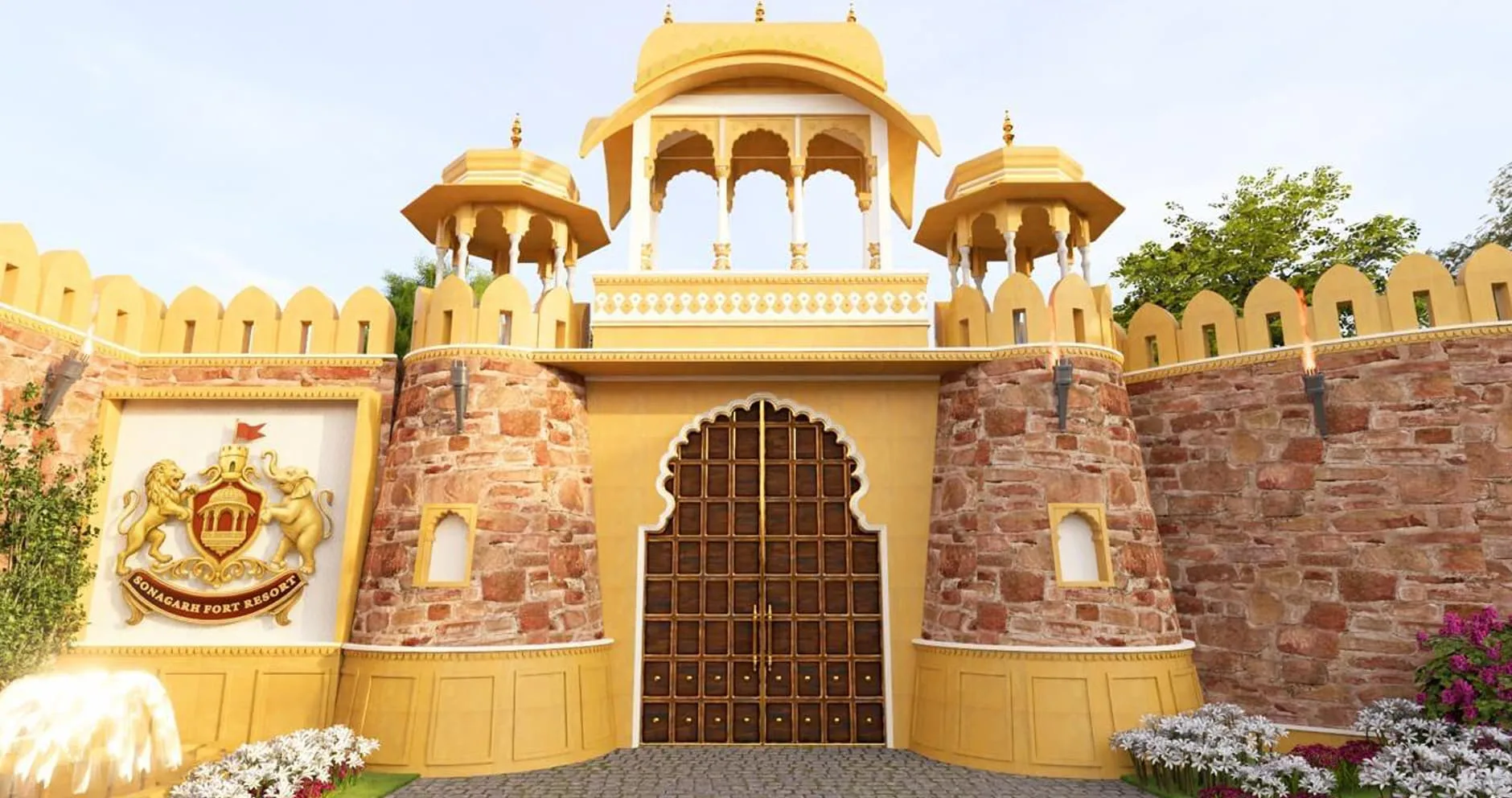
Sonagarh Fort Resort in Kukas represents this emerging category through a RERA-registered 5-star resort project that combines villa ownership, assured returns, complimentary stays and profit sharing.
What Is a Hospitality-Linked Property?
A hospitality-linked property is a real estate asset situated within or connected with an organised hotel or resort project.
The owner purchases a villa or similar unit, while the larger development is planned around guest stays, events, resort facilities and professional operations.
Its value may come from four areas:
- Ownership of the underlying real estate
- Defined income or return benefits
- Participation in the hospitality model
- Personal usage benefits
This creates a broader proposition than a property that remains dependent only on conventional monthly rent.
Investors exploring a real estate investment project in Jaipur can assess how these four areas contribute to the project’s complete value.
Why Is Jaipur Suitable for This Investment Model?
Jaipur attracts leisure travellers, wedding groups, business visitors and families seeking short breaks. Its combination of cultural importance, connectivity and established hospitality demand supports different categories of accommodation.
The city also benefits from road connectivity with major markets, including Delhi and surrounding regions. This strengthens its position for weekend tourism and destination events.
A hospitality-linked project can serve more than one guest segment. Resort stays, celebrations, weddings and leisure visits can all contribute to the project’s operating environment.
For investors, diversified hospitality use gives the asset a broader purpose than a unit designed around only one category of tenant.
How Does This Differ From Managing a Rental Property?
An independently owned rental property generally requires the owner to find tenants, negotiate rent, arrange maintenance, handle vacancies and manage repeated operational tasks.
A hospitality-linked resort is designed around professional management. The villa functions within a larger service and operating structure instead of being managed as a separate informal rental.
This can reduce the owner’s need for day-to-day involvement. It may appeal to people who want real estate ownership without personally managing guests or tenants.
The investor should examine the official agreement to understand how the management model, returns, usage and responsibilities are structured.
What Is the Role of Assured Return?
An assured return gives the investor a defined method of calculating income according to the applicable project terms.
Sonagarh Fort Resort presents a 7% assured-return proposition. For an investment amount of ₹60 lakh, the illustrative annual calculation would be:
₹60,00,000 × 7% = ₹4,20,000 annually
The average monthly equivalent is:
₹4,20,000 ÷ 12 = ₹35,000
This monthly figure is useful for understanding the scale of the annual benefit, while the actual payment structure should be followed according to the official agreement.
The assured return gives investors a clear financial component that can be considered alongside property appreciation and additional benefits.
How Does Profit Sharing Strengthen the Model?
Assured return provides a defined benefit, while profit sharing connects the investor with the hospitality project’s operating performance under the stated framework.
A resort can generate business through guest stays, weddings, celebrations and other hospitality activities. Profit sharing can therefore create an additional relationship between ownership and project operations.
This feature differentiates the model from a standard fixed-rent property. The owner is not only holding real estate but may also participate in the project’s commercial ecosystem according to the documented terms.
Investors should review the calculation, eligibility and distribution mechanism in the official agreement so the value can be understood clearly.
Why Are Complimentary Stays Financially Relevant?
Complimentary stays are often described as a lifestyle benefit, but they can also represent measurable economic value.
Sonagarh Fort Resort offers 12 complimentary stays. If the owner uses these stays for personal holidays, family visits or hosted occasions, the amount that would otherwise have been spent on accommodation may become an owner saving.
The calculation is:
Owner Saving = Complimentary Stays Used × Comparable Resort Tariff
If 12 comparable stays would otherwise cost ₹8,000 each:
12 × ₹8,000 = ₹96,000 in potential annual stay value
The precise value depends on usage, applicable entitlements and prevailing tariffs. Nevertheless, the calculation shows why non-cash benefits should not be ignored during an investment evaluation.
Why Does RERA Registration Build Project Confidence?
RERA registration creates a formal project identity and supports documentation-based evaluation.
Sonagarh Fort Resort is positioned as Rajasthan’s first RERA-registered 5-star resort, combining real estate ownership with a clearly defined hospitality concept.
Investors can review registration information, project documents, agreement terms and the stated ownership framework before completing their investment.
This supports a professional decision-making process in which benefits are evaluated through documentation rather than general promotional language.
Those comparing the best property projects in Jaipur may consider this registration and resort positioning an important combination.
How Can Investors Calculate Combined Annual Value?
Assured return and complimentary stay value can be combined to estimate the project’s annual economic benefit.
The formula is:
Total Annual Economic Value = Annual Assured Return + Annual Stay Value
Using a ₹60 lakh illustrative investment:
- Annual assured return at 7%: ₹4.20 lakh
- Illustrative value of 12 stays at ₹8,000: ₹96,000
- Combined annual economic value: ₹5.16 lakh
This calculation does not include profit sharing or property appreciation. Those components can add further dimensions to the overall investment model.
The formula helps investors recognise that lifestyle benefits can have a measurable financial equivalent.
How Can Property Appreciation Influence Long-Term Results?
The villa remains a real estate asset. Its future value may be influenced by the growth of Kukas, infrastructure, hospitality demand, project positioning and general market conditions.
If a ₹60 lakh property experiences an illustrative annual appreciation of 6% for ten years, the mathematical future value would be:
₹60,00,000 × (1.06)¹⁰ ≈ ₹1.07 crore
This illustration is useful for long-term planning. The actual market value will depend on future conditions.
When appreciation is considered alongside assured returns, profit sharing and stay benefits, investors gain a more complete picture of potential long-term value.
Why Does Kukas Strengthen the Hospitality Proposition?
Kukas holds an important position near Jaipur and along the Jaipur–Delhi corridor. The area is associated with resorts, destination celebrations and leisure-oriented development.
Its road connectivity can support guests arriving from Jaipur as well as travellers approaching from the Delhi side. This makes it relevant for weekend breaks, weddings and planned hospitality experiences.
A property connected with a resort in this area can benefit from both real estate growth and hospitality demand.
Location should therefore be evaluated according to the market activities it can support, not merely its geographic position.
What Type of Investor May Consider This Model?
A hospitality-linked resort property may appeal to:
- Investors seeking real estate with defined return benefits
- Professionals who prefer professionally managed assets
- Families wanting investment plus personal stays
- Buyers interested in Jaipur’s hospitality sector
- Investors seeking exposure to the Kukas growth corridor
- People who value both financial and lifestyle utility
- Long-term investors considering property appreciation
The model is especially relevant for buyers who do not want their property to remain a passive or rarely used second home.
Why Consider Sonagarh Fort Resort?
Sonagarh Fort Resort brings together key components of hospitality-linked investment:
- RERA-registered project framework
- 5-star resort positioning
- Resort villas
- 7% assured return
- 12 complimentary stays
- Profit-sharing proposition
- Professionally managed hospitality environment
- Swimming pool and resort facilities
- Destination-wedding potential
- Kukas location near Jaipur
Investors researching a villa investment project in Jaipur can study how these features work as one integrated model.
Frequently Asked Questions
What is a hospitality-linked property investment?
It is a real estate investment within a hotel or resort-oriented project where ownership is combined with professional hospitality operations and defined owner benefits.
How is it different from a residential rental property?
A conventional rental depends mainly on tenants and rent. A hospitality-linked property may combine ownership, assured return, profit sharing, managed operations and personal-stay benefits.
What annual return does Sonagarh Fort Resort offer?
The project presents a 7% assured-return proposition, subject to the applicable agreement and its official terms.
How many complimentary stays are offered?
The stated ownership proposition includes 12 complimentary stays according to the applicable usage framework.
Can the villa’s value appreciate over time?
The villa is a real estate asset, so its value may be influenced by future location growth, infrastructure, market conditions and project development.
Conclusion
Hospitality-linked properties are emerging because they combine several forms of value within one asset. Investors can consider property ownership, assured returns, operating participation, complimentary stays and potential appreciation together.
Sonagarh Fort Resort applies this model through a RERA-registered 5-star resort project in Kukas. For investors seeking an asset that connects financial objectives with professional hospitality and personal usage, it presents a structured alternative within Jaipur’s expanding real estate market.