
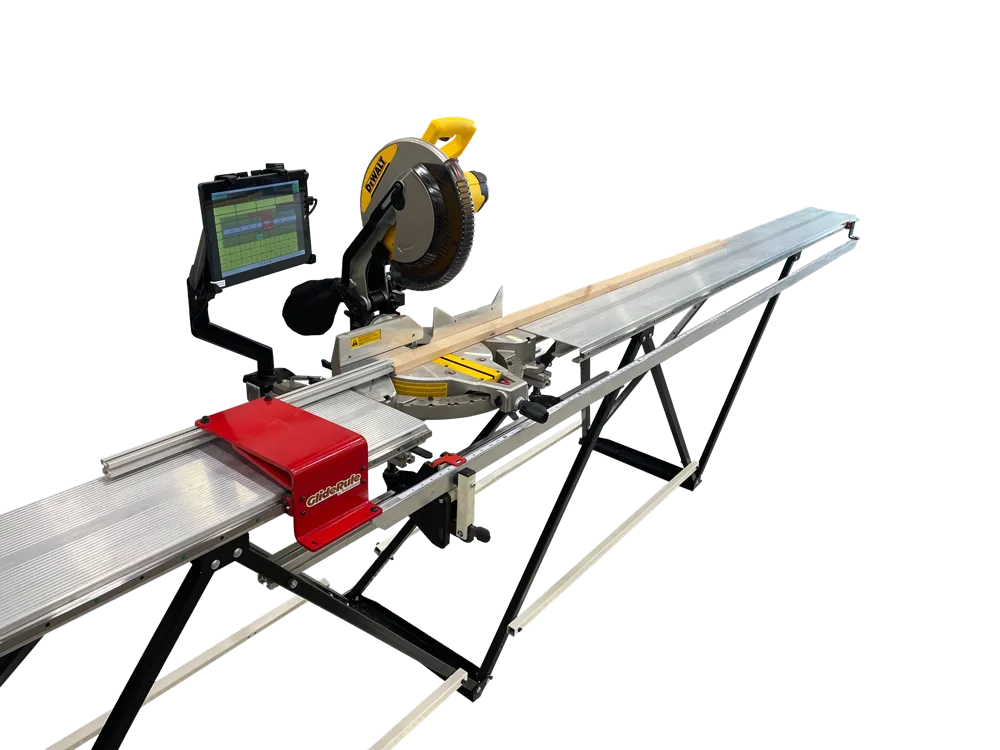
The woodworking and door manufacturing industry is going through a major transformation. Precision, speed, and consistency are no longer optional qualities but absolute requirements in modern production environments. One of the most significant shifts happening across workshops and factories is the move away from traditional manual measurement methods. Facilities that have adopted length stop measuring systems are already seeing dramatic improvements in accuracy, productivity, and overall output quality. This change is not just about upgrading tools but about rethinking how the entire production process should work.
The Problem With Manual Measurement in Door Production Essay
Although manual stop systems have been in use in the wood industry for quite some time, their effectiveness is no longer adequate for modern production needs. Manual measurements present a significant problem by creating inconsistencies throughout the production process. The margin of error in manual stop systems is high, especially with continuous use. The process of manually measuring and setting a stop requires a worker to move the stop mechanism, read the scale, and lock the stop. This multi-step process leaves room for errors that can cause doors to be produced inaccurately. Over long periods of time, multiple errors add up, resulting in significant losses for the company.
The Impact of Accuracy on Final Product
In the production of doors, one millimeter can make the difference between an accurate fit and a door that requires adjustments for proper installation. The expectation of customers and installers is absolute accuracy. This places the responsibility of precision on the manufacturers with negative consequences for any inaccuracies. Modern production requires very tight tolerances that can only be achieved using automated processes. Manual systems can prove inconsistent throughout a long workday due to human error.
Advancements in Automated Measurement Systems
Modern technology presents several options to address inconsistencies in the production process. Automated stop systems enable operators to set the preferred measurements digitally. The new positions are then automatically applied by built-in mechanisms, removing the need to manually adjust the stop mechanisms. This reduces the possibility of human error, ensuring that the doors being produced are accurate within acceptable tolerances.
Cost Reduction From Less Material Waste
One of the primary factors motivating manufacturers to adopt automated measurement technologies is the reduction of material waste. Wooden doors are made from expensive materials, and any inaccuracies in the cutting process can result in huge losses for manufacturers. Although automated processes still have room for errors, the reduction in human inconsistencies results in far fewer mistakes. These reduced costs often outweigh the initial investment in automated equipment many times over. The amount of wasted material saved by using automated measurement systems often makes them an economically viable option for manufacturers.
Production Speed Increase and Operational Efficiency
Another significant factor influencing manufacturers to adopt automated stop systems is the significant increase in production speed. Modern automated systems allow for quick repositioning of stops without requiring manual adjustment. As a result, the production process is not halted, ensuring continuous operation. This enables manufacturers to produce more products without requiring additional labor since the process does not call for manual intervention. The time saved by eliminating the manual adjustment of stops further adds to the overall efficiency of the production process.
Creating a Safer Working Environment
The elimination of manual repositioning of stops reduces the physical strain on the workers. Manual stops present a significant occupational hazard, especially when repositioning them multiple times throughout the day. By removing this step, workers can avoid the repetitive stress injury that can result from manually moving heavy stop mechanisms. The reduced physical workload also contributes to a safer and more comfortable working environment. Workers can focus on supervising the process rather than constantly adjusting the stops, resulting in safer and more comfortable working conditions for the employees.
Seamless Incorporation into Other Modern Technologies
Modern production facilities make use of digital systems that monitor the production process. This allows managers to track production rates, waste levels, and more. Automatic measurement systems can be incorporated into these systems for ease of access and efficiency in production monitoring. These features are unavailable in manual stop systems.
The Value of Investment in Automated Measurement Technologies
For manufacturers considering the adoption of automated measurement systems, the long-term benefits significantly outweigh the initial costs. This is due to the long-term value provided by these systems. Unlike manual stop systems that require constant manual adjustments, automated systems are consistent throughout their operational lifespan. The initial investment is recovered with time as a result of the reduced material waste and increased production rates.
Conclusion
The shift away from manual stop systems in door manufacturing is not simply a trend but a fundamental evolution in how quality production is achieved. As the industry continues to raise its standards and customer expectations grow more demanding, automated solutions will become the default rather than the exception. Facilities that embrace an automatic pusher system alongside advanced measurement technology will be far better positioned to compete, grow, and deliver the consistent quality that modern markets require.
Frequently Asked Questions
Why are manual stop systems considered outdated in door manufacturing?
Manual systems are prone to human error, inconsistency, and slow production speeds. As precision requirements have increased, the limitations of manual measurement have made them impractical for modern high-volume manufacturing environments.
How much improvement in accuracy can manufacturers expect after switching?
Most manufacturers report significant reductions in measurement error after adopting automated systems. The exact improvement depends on the previous setup, but even small gains in accuracy translate into meaningful reductions in material waste and rework.
Is it difficult to train workers to use automated measurement systems?
Modern automated systems are designed with user-friendly interfaces that most workers can learn quickly. The learning curve is generally shorter than expected, and productivity improvements are often noticeable within the first few weeks of operation.
Do automated systems require a lot of maintenance?
Automated measurement systems are built for industrial durability and typically require less maintenance than traditional mechanical manual stops. Routine calibration checks and standard cleaning are usually sufficient to keep them performing at peak accuracy.
Can small door manufacturing workshops benefit from this technology too?
Absolutely. While large facilities see the greatest volume-related savings, smaller workshops benefit equally from improved accuracy and reduced waste. Many systems are available in configurations suitable for operations of all sizes.