
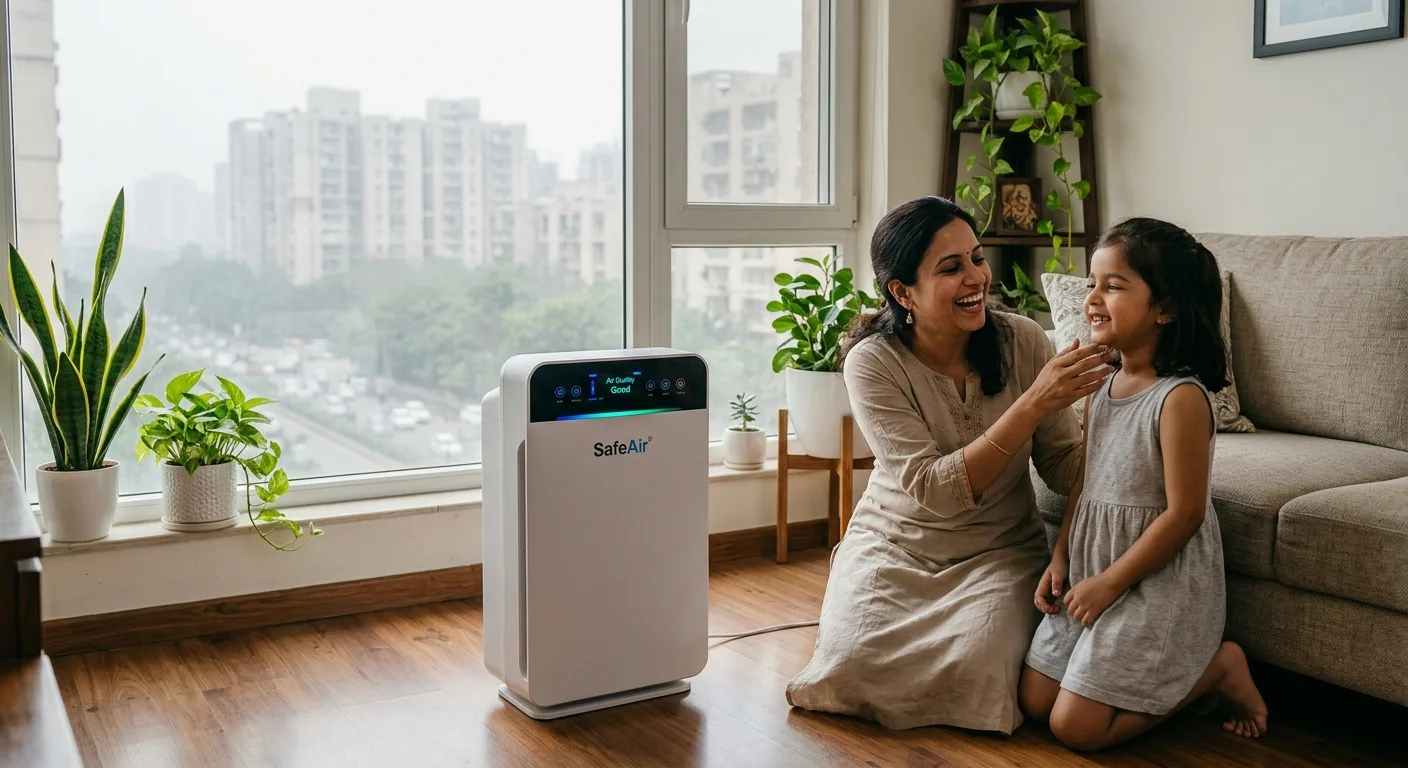
Every winter, Delhi NCR follows the same script. AQI readings shoot up, windows stay shut, and families start dealing with coughs, itchy eyes and restless nights. If you have wondered whether cleaner indoor air is worth the investment, you are not alone. This guide explains what is floating around inside your home, which pollutants matter most, and how to choose a solution that protects every room rather than just one.
Why Indoor Air Deserves Your Attention
We tend to treat pollution as an outdoor problem, but it follows us inside. Fine particles slip through door gaps, window frames and ventilation points. Everyday activities like cooking, sweeping and burning incense add more. Most of us spend the bulk of our day at home, so the air indoors shapes our daily exposure more than we realise. Children, older adults and people with respiratory conditions often feel the effects first.
This is why more families now see that an air purifier is good for health when it is chosen well and matched to the home. The goal is simple: reduce the particles you breathe in for hours every day.
Dust: The Everyday Irritant
Dust in Indian homes is relentless. Construction, traffic and dry weather mean a fine layer settles on furniture within hours of cleaning. Dust is more than a cleaning chore. It contains tiny particles that become airborne again every time you walk across a room or open a cupboard.
What to Look for in an Air Purifier for Dust
A good air purifier for dust should rely on true HEPA filtration, which captures very fine particles rather than just trapping visible lint. Look for H13 medical-grade HEPA filters and a washable pre-filter to catch larger debris. Prefer a system that supplies fresh air continuously instead of recirculating the same stale air. Low noise matters too, since you will want it running all day.
PM2.5: The Invisible Concern
PM2.5 refers to particles smaller than 2.5 microns, far finer than a human hair. You cannot see them, but they can travel deep into the lungs. During Delhi's winter months, outdoor PM2.5 levels regularly climb to several hundred. That is why tracking this number is more useful than judging air by how it looks or smells.
How to Choose a PM 2.5 Air Purifier
When shopping for a PM 2.5 air purifier, check the filter grade and its efficiency at 0.3 microns. Also check whether performance is actually measured in your home. Claims on a box are one thing, while readings taken indoors are another. Ask whether the provider will measure PM2.5 inside your home so you can see the difference for yourself.
Air Purifier for Allergies: Cutting Down Triggers
Sneezing fits, watery eyes and a blocked nose that never clears are common complaints for allergy sufferers. Pollen, dust and other airborne particles are frequent triggers. An air purifier for allergies filters these particles out of the air, so there are fewer of them to inhale. It is not a cure, and it works best alongside regular cleaning and your doctor's guidance.
The key is consistency. Allergens enter the home throughout the day, so purification has to run continuously, not for an hour before bedtime.
Single-Room Machines vs Whole-Home Protection
Most portable purifiers clean one closed room, again and again. That helps in a bedroom at night, but your family moves through the whole house all day. Covering a 3 BHK this way can take four or five units, each needing floor space, power points and regular attention. Recirculating indoor air also brings in no fresh air.
Whole-home systems take a different approach. Safe Air Haven, for example, is a centralised unit mounted outside the home, typically on a balcony or service area. It draws in outdoor air, passes it through a washable pre-filter and two H13 HEPA filters, and supplies it indoors continuously. This creates a gentle positive pressure that helps keep polluted air from seeping in while stale air is pushed out. There is no ducting inside and nothing on your floor. Installation is typically done in a single visit of a few hours.
What to Ask Before You Buy
- Is performance measured in my home, not just in a lab?
- Which filter grade is used, and how often are filters replaced?
- What warranty and service response do you get?
- Will it cover my home size? Safe Air Haven is designed for up to 1,500 sq ft per system.
Safe Air Haven, for instance, provides a written Safe Air Score comparing indoor and outdoor PM2.5. It includes filter replacement for the first 12 months and carries an 18-month warranty on the motor and PCB.
Final Thoughts
Clean indoor air is no longer a luxury in Delhi NCR. It is part of looking after your family. Whether you are shopping for an air purifier for dust, a PM 2.5 air purifier or an air purifier for allergies, focus on continuous filtration, medical-grade HEPA and measurable results. Book a free home air assessment before winter peaks, and find out what you are really breathing at home.