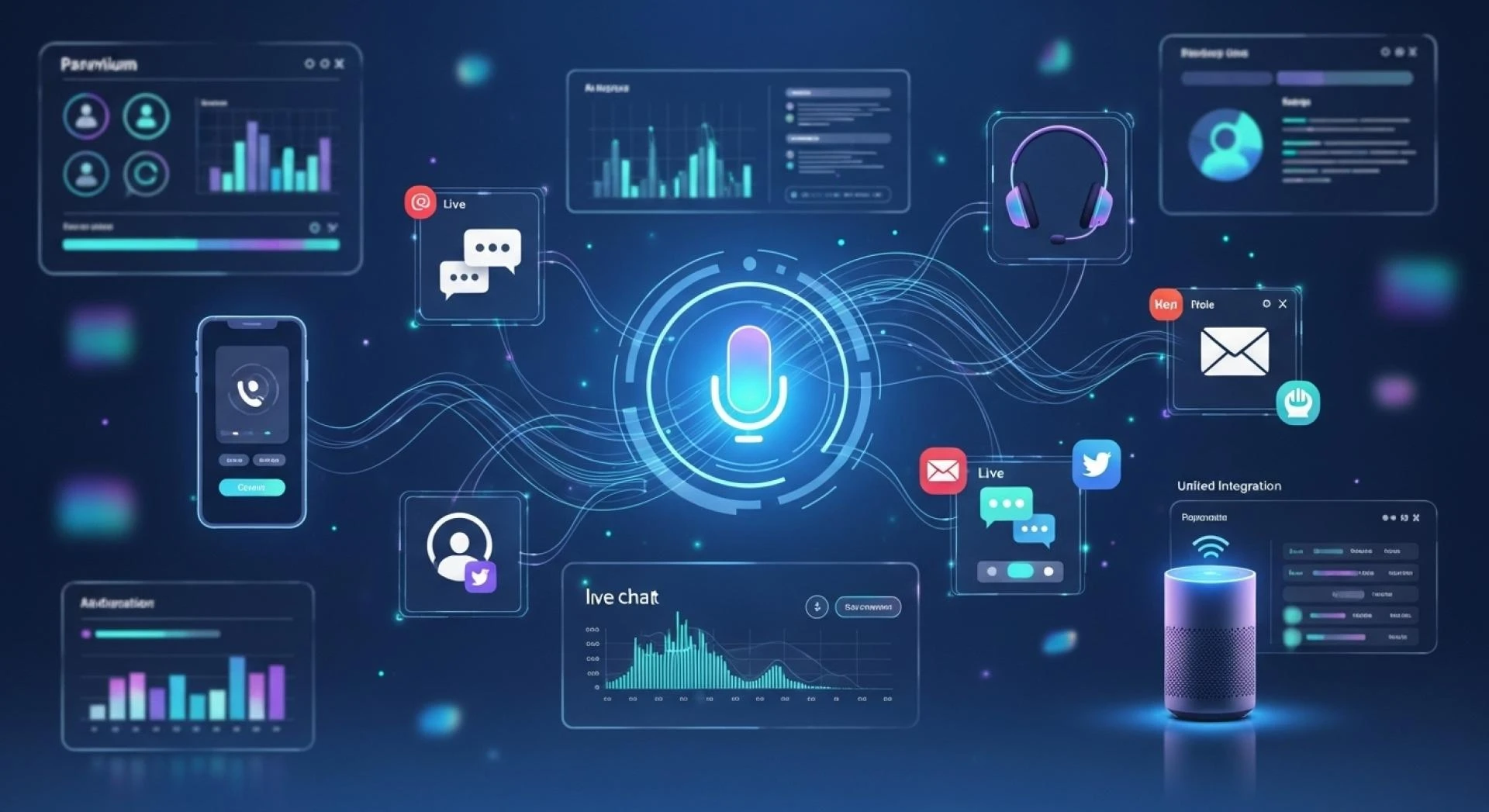
Enterprises today operate in an environment where customer expectations change rapidly and continuously. Customers want answers instantly, through the channel they prefer, at the exact moment they need support. They move from WhatsApp to website live chat, from call centers to mobile apps, and from social media support to email, expecting their experience to remain smooth and connected. This shift has transformed how brands design customer experience strategies. Traditional, fragmented service workflows can no longer keep up. This is where AI Voice Bot solutions have become essential.
AI Voice Bots are not just automated response tools. They are intelligent systems capable of understanding natural speech, recognizing user intent, responding contextually, personalizing the journey, and learning from every interaction. They support omnichannel ecosystems by ensuring that no matter which platform the customer uses, the voice bot provides consistent, instant, and efficient assistance.
This article explores why AI Voice Bot solutions play a critical role in omnichannel customer experience, how they integrate into digital ecosystems, and what business benefits they unlock for modern enterprises.
The Evolution of Customer Expectations and Engagement
Customer interaction models have undergone significant transformation.
1. From Single Channel to Multi Channel
At first, businesses operated through single channels such as phone lines or physical visits. Service was slow and often inefficient.
2. From Multi Channel to Cross Channel
Businesses then introduced more channels, such as email and websites, but these channels still existed separately.
3. The Age of Omnichannel
Today, customers expect fluid transitions between channels. A conversation that starts in a mobile app should continue seamlessly on a phone call or live chat. No repeated questions. No starting from scratch.
This integrated, uninterrupted customer journey is the core promise of omnichannel experience. Achieving this level of connectedness requires intelligence, memory, and automation. AI Voice Bots are the central engine enabling this.
What Makes AI Voice Bots Different from Traditional IVR Systems
Many organizations already have Interactive Voice Response (IVR) systems. However, those are limited to predefined menu options, often leading to frustrating user experiences. Customers must listen, choose from static menus, repeat themselves, and wait for human agent assistance.
AI Voice Bots change the game. They:
- Understand natural language instead of menu-based inputs
- Identify user intent automatically
- Retrieve relevant customer records instantly
- Provide personalized responses in real time
- Learn and improve continuously based on past conversations
They provide dynamic, context-aware support rather than rigid script-based responses. This creates a more human-like interaction while integrating smoothly into complex enterprise environments.
How AI Voice Bots Enhance Omnichannel Experiences
1. Unified Customer Interaction Layer
Customers switch between devices and communication channels frequently. AI Voice Bots ensure the conversation thread remains the same. For example, if a user starts ordering a product on a website but switches to WhatsApp, the bot continues from the same point. No loss of data. No need to repeat information.
2. Real-Time Personalization
Voice Bots access CRM records, past behavior patterns, transaction histories, and service logs. This allows them to respond based on context. For example:
- Greeting a returning customer by name
- Recommending products based on interests
- Offering support based on previous issues
This level of personalization is critical to delivering meaningful customer experiences.
3. 24/7 Availability
Customers often require support outside business hours. Human teams cannot be available all the time at scale. AI Voice Bots operate continuously and handle thousands of conversations simultaneously without delay.
4. Reduced Customer Wait Time
Long waiting queues reduce brand trust and customer satisfaction. AI Voice Bots offer immediate responses and resolve simpler queries autonomously. They also triage complex cases to human agents effectively, reducing overall waiting times.
5. Channel Consistency and Brand Voice
Voice and tone consistency across channels strengthens brand identity. AI Voice Bots maintain the same communication style whether interacting on a mobile app, call center, or chatbot interface.
Core Capabilities of AI Voice Bot Solutions
1. Natural Language Understanding (NLU)
Voice Bots interpret meaning, intent, mood, sentiment, and context using NLU models. This enables them to deliver relevant and natural responses.
2. Speech Recognition and Synthesis
Advanced speech-to-text and text-to-speech engines allow bots to converse fluently. They understand accents, adjust to pace, and respond with natural-sounding speech.
3. Conversational Memory
Bots store and reference conversation context. They do not require customers to repeat details.
4. Multi-Language Support
Bots can speak and understand several languages. This ensures global scalability.
5. Integrations with Enterprise Systems
They connect to CRMs, ERPs, payment systems, ticketing platforms, and marketing automation tools. This allows seamless process execution within conversational flow.
Key Business Benefits
1. Operational Efficiency
AI Voice Bots handle a large volume of repetitive requests such as order status, account balance, appointment booking, or password reset. This reduces workload on human agents and allows them to focus on high-value tasks.
2. Cost Reduction
Support costs decrease significantly as automation scales. Enterprises can manage millions of interactions without proportionally increasing headcount.
3. Faster Resolution Times
Bots provide real-time data processing and immediate solutions. Customers receive instant support which enhances satisfaction and trust.
4. Improved Lead Conversion
In sales contexts, Voice Bots:
- Qualify leads
- Guide customers through product selection
- Schedule follow-ups
- Provide relevant offers
They ensure no opportunity is lost.
5. Stronger Customer Loyalty
When customers do not have to wait, repeat information, or struggle to find help, they stay longer with the brand. Convenience drives loyalty.
Use Cases Across Industries
Banking and Finance
- Balance inquiries
- Loan eligibility checks
- Card blocking and reissue
- Fraud alerts
Retail and E-commerce
- Personalized product recommendations
- Order tracking
- Returns and exchanges
Healthcare
- Appointment scheduling
- Patient record retrieval
- Prescription reminders
Telecom
- Plan recommendations
- Technical troubleshooting
- Bill payments
Travel and Hospitality
- Booking confirmations
- Flight or room availability inquiries
- Check-in assistance
Across all these industries, the goal remains the same: reduce effort for customers and enhance their journey.
The Role of AI Voice Bots in Future Customer Experience Strategy
AI Voice Bots are not a temporary trend. They are becoming a core component of customer service frameworks. Enterprises that adopt these solutions early gain a competitive advantage.
Future advancements will likely include:
- More emotionally intelligent bots that detect tone and sentiment accurately
- Deep personalization that goes beyond stored data to anticipate customer needs
- Unified agent-bot collaboration where human and AI support each other in real-time
- Self-learning models that continuously refine response accuracy and conversation flow
Enterprises moving towards autonomous customer experience systems will rely heavily on AI Voice Bots as their primary interaction channel.
Steps for Enterprises to Successfully Implement AI Voice Bots
- Identify high-impact use cases
- Integrate the bot into CRM and data systems for context sharing
- Train the bot using real customer interaction data
- Continuously monitor bot performance and refine dialogues
- Scale gradually across multiple channels
The implementation process should be strategic and aligned with customer experience goals.
Conclusion
AI Voice Bot solutions are no longer optional for enterprises that seek to deliver a seamless omnichannel customer experience. They bridge communication gaps, reduce friction, accelerate response times, personalize interactions, and create smooth transitions across platforms.
Customers expect real-time support and fluid movement between channels. AI Voice Bots make this possible. They empower businesses to operate with efficiency, scale without stress, and deliver service that feels human, connected, and intuitive.
Enterprises that integrate AI Voice Bots into their customer experience strategy today are not just meeting current expectations. They are preparing themselves for the future of customer engagement.