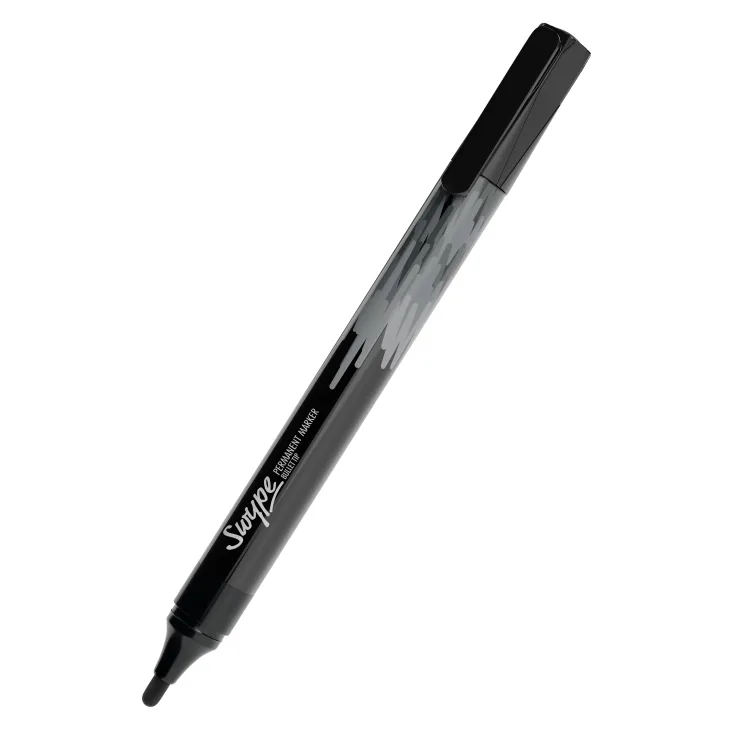
Dig through any desk drawer, junk box, or office supply tray, and there's almost always one item that outlasts everything else around it — a slightly worn Permanent Marker Pen with its cap still on, that's been used for labeling boxes, marking cables, and writing names on files for longer than anyone can remember. It's not glamorous stationery. It's just reliably there whenever something needs to be marked permanently.
Linc has been making this exact kind of everyday essential for years, and it's worth actually looking at why a Permanent Marker Pen earns a spot on almost every desk, regardless of industry. It's not exciting to buy, but it's one of the first things missed when it's not there.
Why Every Desk Eventually Needs a Permanent Marker Pen?
Pens run out. Pencils snap. Sticky notes fall off. But a Permanent Marker Pen solves a different, more specific problem — the need to write something that actually stays put, on almost any surface, without smudging the moment someone brushes past it.
Think about how often labeling actually happens in a normal week. Boxes during an office move, cables that all look identical behind a desk, files that need quick identification in a shared drawer. A regular pen simply isn't built for most of these surfaces. A Permanent Marker Pen is designed for the kinds of surfaces and tasks that everyday pens aren't always suited to.
Linc approaches its Permanent Marker Pen range with these everyday uses in mind, making it a practical choice for routine labeling, marking, and identification tasks. That consistency is exactly what Linc has built its reputation on across its broader stationery range.
What Makes a Good Permanent Marker Pen Worth Keeping?
Not every marker on a shelf deserves a spot in your bag or drawer. Some dry out within a month of first use; others bleed through paper the moment they touch it. Here's what actually separates a dependable Permanent Marker Pen from a forgettable one:
● Fast-drying ink that doesn't smear across boxes, labels, or plastic surfaces
● A fine, consistent tip that doesn't fray or widen after repeated use
● True permanence — resistance to water, light rubbing, and everyday handling
● Low odour formulation, especially important in closed office spaces or classrooms
● A cap that actually seals, since a dried-out marker is one of the most common stationery complaints
Most people only start paying attention to these details after a cheap marker fails mid-task — usually while labeling something important, at the worst possible moment.
Permanent Marker Pen vs Whiteboard Marker Pen: Knowing the Difference
Plenty of people grab whatever marker is closest without checking if it's actually the right one, and that mistake becomes obvious fast on a whiteboard. A Permanent Marker Pen used on a whiteboard leaves a mark that simply won't wipe off, turning a quick meeting note into a permanent, frustrating stain.
A whiteboard marker pen is built specifically to be temporary — designed to wipe away cleanly without leaving residue behind. A Permanent Marker Pen is built for the opposite job entirely, meant to stay exactly where it's written, no matter how many times someone tries to erase it.
Linc offers both types, making it important to keep them clearly separated. Keeping a whiteboard marker pen next to a Permanent Marker Pen can easily lead to mistakes in a busy office or classroom. It usually only takes one ruined whiteboard for that lesson to stick.
Permanent Marker Pens as Everyday Office Stationery
A functional desk runs on a handful of dependable basics, and a Permanent Marker Pen is one of the more underrated ones. It rarely gets mentioned in "essential stationery" lists, yet it shows up constantly across labeling, filing, and quick handwritten notes that need to last.
Linc includes the Permanent Marker Pen among the everyday office stationery items used for practical tasks. It handles jobs other pens simply can't — marking storage boxes before a move, labeling cables behind a workstation, writing names on shared equipment so nothing gets misplaced. Reliable office stationery items like this rarely get credit until the one time they're missing from a drawer.
Here's where a Permanent Marker Pen from Linc tends to show up most across a typical office week:
● Labeling moving boxes during office relocations or storage cleanouts
● Marking cables and chargers so nobody's untangling the wrong one behind a desk
● Writing on files and folders that need quick identification in a shared cabinet
● Signing off on delivery packages where ink needs to survive handling and weather
● Tagging shared equipment like staplers, chargers, or tools that tend to go missing
From Classrooms to Projects: Permanent Marker Pen in School Stationery
Schools and students can find plenty of uses for a Permanent Marker Pen across a single term — labeling notebooks, marking project materials, writing names on lunch boxes and supplies that tend to get mixed up between students.
For school stationery, a dependable Permanent Marker Pen genuinely matters. A marker that fades within days means smudged names and mixed-up belongings by the following week. Linc makes its markers suitable for everyday classroom use, from labeling materials to marking project work.
Conclusion
A Permanent Marker Pen rarely gets the attention it deserves, yet it quietly handles everyday jobs no other pen can — labeling boxes, marking cables, and writing names that need to stay put for good. Knowing when to reach for one instead of a whiteboard marker pen saves plenty of accidental whiteboard disasters too.
Whether it's part of daily office stationery items or a staple in every student's school stationery kit, a reliable Permanent Marker Pen earns its place through consistency, not flash. Linc continues building this small tool around exactly that dependability, which is why it keeps turning up in desks, bags, and pencil cases everywhere, term after term. It's proof that the smallest, least flashy items sitting on a desk are often the hardest ones to actually replace.