
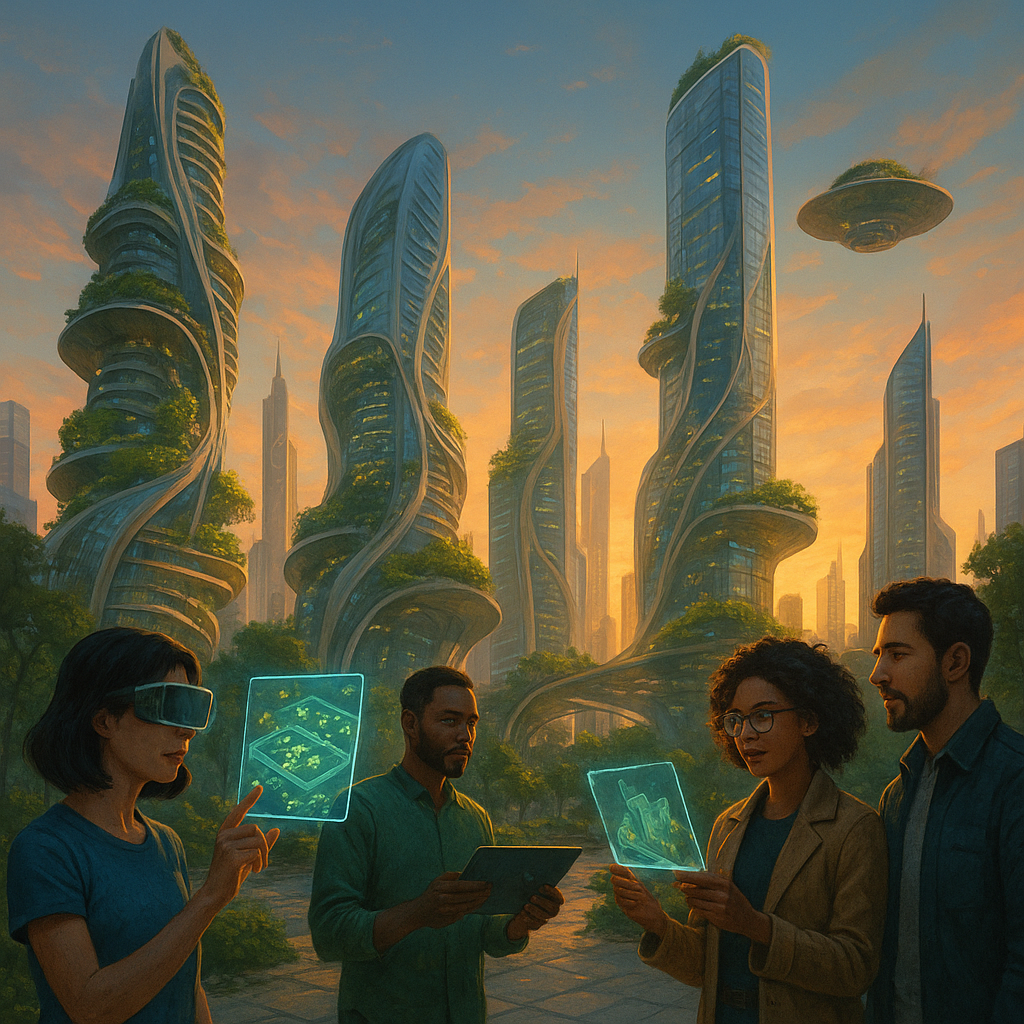
Architecture at a Crossroads: A Glimpse into a Transformative Year
As the spring of 2026 unfolds, the architectural world finds itself at a pivotal juncture, influencing real estate markets globally with unprecedented force. Cities from Tokyo to Toronto are unveiling structures that don’t just occupy space but actively respond to environmental, social, and technological imperatives. Consider the recently inaugurated EcoSpire Tower in Singapore, a 92-story skyscraper that integrates vertical farming, renewable energy generation, and AI-driven climate control systems. This building exemplifies the new architectural zeitgeist—where sustainability, adaptability, and human-centric design converge. According to the Global Architecture Review, such projects are driving a 27% surge in demand for green-certified commercial real estate as of early 2026.
The stakes are high. With urban populations projected to exceed 70% of the global total by 2040, architects and developers are under immense pressure to rethink how buildings serve both people and the planet. This year, more than ever, architecture is not just about aesthetics or functionality but about resilience and regenerative capacity.
“The role of architecture in 2026 transcends shelter; it is a catalyst for sustainable urban ecosystems.” — Dr. Lena Ortiz, Urban Sustainability Expert
Tracing the Foundations: How We Arrived at 2026’s Architectural Landscape
To appreciate 2026’s architectural breakthroughs, one must understand the trajectory that led here. Over the past decade, the industry has endured seismic shifts: the climate crisis accelerated regulatory frameworks, technological leaps democratized design processes, and social equity movements demanded inclusiveness in urban planning.
The early 2020s introduced the widespread adoption of Building Information Modeling (BIM) and digital twins, tools that enabled real-time simulations of environmental impact and user experience. By 2024, the integration of generative AI into design workflows became mainstream, reshaping everything from façade optimization to interior spatial dynamics. Concurrently, the COVID-19 pandemic highlighted the need for adaptable spaces, catalyzing a wave of flexible, mixed-use developments.
Environmental mandates, such as the 2023 United Nations Framework Convention on Climate Change’s stricter urban emissions targets, pushed architects to embrace net-zero and carbon-negative building principles. The introduction of bio-based materials, like mushroom mycelium composites and carbon-sequestering concrete, shifted industry standards. These innovations not only reduce the carbon footprint but also enhance buildings’ lifecycle performance.
“The last five years have been a crucible for architectural innovation, where sustainability and technology fused to redefine design paradigms.” — Marco Silva, Principal Architect at GreenForm Studio
2026 in Focus: Data-Driven Insights and Emerging Trends
This year, architecture’s impact on real estate is quantifiable and multifaceted. According to the International Real Estate Federation’s 2026 report, green-certified buildings now command an average 15% rent premium and 30% higher occupancy rates compared to conventional structures. The demand for these buildings has sparked a surge in investments, with $1.2 trillion flowing into sustainable urban development projects worldwide in the first quarter alone.
Several key trends are defining the sector:
- Smart Adaptive Architecture: Buildings equipped with AI sensors that continuously optimize energy use, lighting, and air quality have become standard rather than novelty.
- Biophilic Integration: Incorporating natural elements into design to enhance occupant well-being is now a measurable contributor to productivity and health.
- Modular Prefabrication: Off-site construction techniques utilizing precision robotics reduce waste and construction timelines by up to 40%, according to industry estimates.
- Urban Verticalism: High-rise developments that integrate agriculture, recreation, and living spaces vertically are reshaping city skylines.
- Climate-Responsive Materials: Innovations such as phase-change materials and self-healing concretes are extending building lifespans and reducing maintenance costs.
Moreover, the proliferation of mixed-reality design tools allows stakeholders to experience proposed projects in immersive virtual environments before ground is broken, facilitating better community engagement and reducing costly redesigns.
These trends are not isolated; they interlock to form a new architectural ecosystem that aligns with evolving real estate demands. Projects like the Haven District in Amsterdam, a 50-acre redevelopment featuring modular housing and integrated green corridors, exemplify this holistic approach.
Voices from the Field: Expert Perspectives on 2026’s Architectural Revolution
Insights from leaders in architecture, urban planning, and real estate underscore the complexity and promise of 2026’s developments. Dr. Amina Chowdhury, CEO of UrbanNext, highlights the social dimension: “Architecture today is a tool for social equity. Our projects prioritize affordable housing within sustainable frameworks, ensuring that innovations benefit all strata of society, not just the affluent.”
Similarly, real estate analyst Marcus Leung notes, “Investors are increasingly scrutinizing the environmental and social governance (ESG) credentials of properties. Buildings that fail to meet these standards are experiencing valuation discounts, signaling a market paradigm shift.”
Architectural firms are responding with interdisciplinary teams that include ecologists, data scientists, and sociologists, reflecting the growing complexity of design challenges. For example, the collaboration behind the Resilience Hub in Miami incorporated climate scientists to tailor flood mitigation strategies directly into the building’s core structure, setting new benchmarks for resilience in hurricane-prone regions.
The integration of AI and machine learning in design processes is another focal point. According to a 2026 survey by the Architectural Institute of America, over 65% of firms now use AI tools for at least 30% of their design work, enhancing efficiency and fostering innovation.
The Road Ahead: Future Outlook and Strategic Takeaways
Looking beyond 2026, architecture is poised to continue evolving in response to global challenges and technological advances. Experts emphasize the importance of adaptability, resilience, and human-centric innovation as guiding principles.
Key areas to watch include:
- Decentralized Construction Technologies: The rise of 3D printing and autonomous robotics promises to decentralize building processes, enabling rapid, localized construction that reduces logistical footprints.
- Enhanced Circular Economy Practices: Reuse, recycling, and materials recovery will become embedded in architectural design, minimizing waste and promoting sustainability.
- Personalized Living Spaces: AI-driven customization will create homes and offices tailored to individual lifestyles, health needs, and preferences.
- Urban-Rural Integration: New architectural models will blur boundaries between urban and rural, fostering sustainable regional development.
Real estate investors and developers should consider aligning portfolios with these emerging paradigms to capitalize on shifting market preferences. For those new to the intersection of architecture and real estate, resources like Building Foundations: A Beginner’s Guide to Architecture for Real Estate Enthusiasts provide invaluable insights.
As urban centers grapple with climate volatility, demographic shifts, and technological disruptions, architecture will remain a critical lever. Its evolution will shape not only skylines but the very fabric of communities worldwide.
Case Studies: Embodiments of 2026’s Architectural Vision
Several projects exemplify the trends and principles defining 2026:
- EcoSpire Tower, Singapore: This skyscraper integrates photovoltaic glass, vertical gardens, and AI-managed microclimates. It has reduced energy consumption by 45% relative to traditional towers and won the 2026 Green Building Innovation Award.
- Haven District, Amsterdam: A mixed-use redevelopment emphasizing modular construction and green infrastructure. It features 1,200 modular homes assembled in record time and includes extensive community gardens and water management systems.
- Resilience Hub, Miami: Designed for hurricane resilience, this building incorporates flood barriers, storm-resistant materials, and community emergency spaces. It serves as a model for coastal urban adaptation.
These examples highlight how architecture is no longer a static art but a dynamic, responsive practice integral to real estate’s future. For a broader understanding of architecture’s influence on real estate trends, readers can explore How Architecture Is Shaping Real Estate’s Next Frontier and How Architecture Shapes Real Estate’s Future Amid Global Shifts.