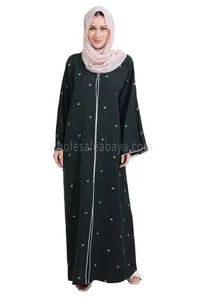
Every boutique owner who sells modest wear knows the moment: a customer flicks through the rail, likes the cut of one abaya, the colour of another and the embroidery on a third, then leaves because none of them brings all three together. The right range is not about stocking more pieces. It is about stocking the right mix of styles, fabrics and sizes for the women who actually shop with you.
This guide is written for boutique owners, online sellers and market traders buying wholesale abayas for the first time or looking to refresh an existing range. It explains the main styles, the fabrics behind them, how sizing works, and how to plan a first order that sells through rather than sitting in the stockroom.
Understanding the Main Abaya Styles
Abayas have moved a long way from a single plain black silhouette. Today's customers expect choice, and most retail ranges are built around a handful of core styles.
Open and Closed Cuts
An open abaya is worn like a long coat, fastened at the front or left loose over an outfit. It is popular with younger customers and for layering, and it is often where handwork and embroidery are concentrated along the front panels and sleeves.
A closed abaya is pulled over the head and gives full coverage without fastenings. Many customers prefer it for daily wear, prayer and travel, because it stays in place without adjustment. Closed styles also suit lace, stonework and straight-cut designs that rely on clean, uninterrupted lines.
Butterfly and Wide-Sleeve Styles
The butterfly abaya uses a wide, flowing cut where the fabric falls from the shoulders to the wrists in a single sweep. It is comfortable, forgiving across different body shapes and easy to wear, which makes it a dependable seller. Wide-sleeve closed abayas offer a similar relaxed fit with a more structured look.
Plain Classics and Embellished Pieces
A plain black abaya remains the backbone of most ranges. It sells all year, suits every age group and works as the everyday piece customers return to buy again. Plain styles in navy, grey, beige and deeper jewel tones extend that core without adding much risk.
An embroidered abaya, or one with handwork such as leaf, floral vine or motif detailing, carries a higher price point and gives your rail visual interest. These pieces drive occasion purchases for Eid, weddings and family gatherings, and they often attract customers into the store even when they leave with a plain style.Jilbabs and Inner Slip Dresses
Jilbabs offer fuller coverage, usually with an attached or separate head covering, and serve a distinct group of customers who prefer that style for prayer or daily wear. Stocking jilbab wholesale lines alongside abayas helps you serve that market without sending customers elsewhere. Inner slip dresses, worn under open or sheer abayas, are a useful add-on that increases the value of each sale.
Which Fabrics Matter Most?
Fabric decides how an abaya drapes, how it feels in different seasons and how it holds up after repeated washing. Customers notice the difference even when they cannot name the fabric.
A nida abaya is often the first choice for everyday wear. Nida is a smooth, lightweight fabric with a soft matte finish that drapes well, resists creasing and feels comfortable for long days. It works for both plain and embellished designs, which is why it makes up a large share of many wholesale collections.
Crepe and crush crepe have a slightly textured surface and a fluid fall, giving a more premium feel. They are popular for occasion pieces and closed styles with lace or stonework. Linen blends and melange fabrics bring a breathable, casual look suited to warmer months, while jacquard and foil-printed fabrics add pattern without heavy embellishment.
For a balanced range, a retailer might keep most everyday stock in nida, add crepe for premium and occasion pieces, and introduce linen blends seasonally. Ask your supplier for fabric details on every style, because two abayas that look similar in photographs can feel very different in the hand.
How Abaya Sizing Works
Abaya sizes are usually given as a length measurement in inches, measured from the shoulder to the hem. Common wholesale sizes run from 52 to 60, with 54 to 58 covering the majority of customers in many markets.
Because abayas are loose-fitting, length matters more than width for most customers. Height is the main deciding factor, so a store serving taller customers may need more 58 and 60 sizes than the average range. Before your first order, check the supplier's size chart for sleeve length and width as well as overall length, and compare it with the sizes your customers ask for most.
Many wholesalers sell abayas in packs that contain a spread of sizes. Packs reduce the risk of guessing sizes for each style, but it is worth confirming the size ratio in each pack so that it matches your customer base.
Planning Your First Wholesale Order
A first order should test demand without tying up too much cash. A practical approach is to build the range in three layers.
The first layer is core stock: plain closed and open abayas in black and two or three neutral colours, in the sizes that sell most. These pieces turn over steadily and rarely need discounting. The second layer is fashion stock: a smaller selection of embroidered, handwork and butterfly styles that refresh the rail and give customers a reason to visit. The third layer is add-ons: inner slip dresses, jilbabs and complementary pieces that lift the value of each sale.
When you buy abayas in bulk, start with fewer styles in deeper quantities rather than many styles in single units. Customers tend to come back for a style they like in a different colour, and a well-stocked core is easier to reorder. Keep notes on which styles, colours and sizes sell first, and use them to shape the second order.
Timing also matters. Demand rises sharply before Ramadan and Eid, so orders for occasion pieces should be placed well ahead of those dates to allow for production and delivery.
Choosing a Wholesale Abaya Supplier
Price is only one part of choosing a wholesale abaya supplier. The right partner makes it easier to manage stock, respond to trends and keep customers coming back.
Look for a supplier with a broad ready-stock range, so you can reorder bestsellers quickly. A low minimum order quantity is valuable for smaller boutiques and online sellers, because it lets you test new styles without committing to large volumes. Sample orders are useful too, allowing you to check fabric, stitching and sizing before placing a bigger order.
For UK retailers, abaya wholesale UK suppliers can offer shorter delivery times and simpler returns than overseas sources. Al-Haram London, for example, offers women's abayas across plain, handwork, embroidered and modern modest styles, with low minimum orders, sample products and global shipping. Whichever supplier you choose, ask about restocking times, size charts and how new collections are released.
Frequently Asked Questions
What Is the Most Popular Abaya Style for Retail?
Plain closed and open abayas in black and neutral colours are the most consistent sellers. Embroidered and handwork styles add higher-value occasion sales, especially before Eid.
Which Fabric Is Best for Everyday Abayas?
Nida is widely used for everyday abayas because it drapes well, resists creasing and is comfortable to wear for long periods. Crepe is often chosen for occasion and premium styles.
How Many Sizes Should a Small Boutique Stock?
Most boutiques start with sizes 54, 56 and 58, then add 52 and 60 based on customer demand. Reviewing which sizes sell first is the best guide for future orders.
Can I Order Samples Before Buying Wholesale?
Many wholesalers offer sample products so that retailers can check fabric quality, stitching and sizing before committing to a full order. Ask your supplier whether samples are available for the styles you are considering.
Conclusion
Abayas are no longer a single style but a varied category, with open, closed, butterfly, embroidered and handwork designs serving different customers and occasions. A successful range balances dependable plain pieces with a smaller selection of fashion and occasion styles.
When sourcing abayas, retailers should consider style variety, fabric quality, size ratios, minimum order quantities, restocking times and the availability of samples.
Starting with a focused core range, tracking what sells and reordering bestsellers quickly can help boutiques build a collection that reflects their customers' preferences while keeping stock moving through the year.