The expansion of decentralized finance has reshaped how digital assets are traded, stored, and leveraged across global markets, with perpetual futures emerging as one of the most actively used instruments in crypto trading ecosystems. Among the innovations driving this transformation, white label solutions for decentralized perpetual exchanges have gained strong relevance for founders and institutions seeking rapid market entry without building complex trading infrastructure from scratch. A white label perpetual DEX provides a ready-made foundation that can be customized, branded, and deployed with full trading functionality, liquidity mechanisms, and risk management systems already integrated. The demand for scalable trading platforms continues to grow as users expect high-speed execution, deep liquidity, and transparent on-chain settlement. In this environment, White label perpetual dex platform development has become a strategic pathway for entrepreneurs aiming to launch competitive trading platforms with reduced technical overhead while maintaining full control over branding, monetization, and user experience.
Understanding White Label Perpetual DEX Platforms
White label perpetual decentralized exchanges are pre-built trading infrastructures that allow businesses to launch derivatives trading platforms under their own brand identity. These platforms are designed to support perpetual contracts, meaning traders can hold leveraged positions without expiration dates, making them highly attractive in crypto derivatives markets.
- Pre-built trading infrastructure with customization flexibility
White label perpetual DEX platforms come with fully developed core trading modules including order matching engines, liquidity layers, and wallet integrations. This allows businesses to focus on branding and user acquisition rather than building complex systems from scratch. Customization options typically include UI/UX design, trading pairs, leverage limits, and fee structures, enabling operators to differentiate their offerings in a competitive landscape. - On-chain and off-chain hybrid architecture support
These platforms often combine decentralized settlement with off-chain performance optimization. Trades may be executed off-chain for speed and later settled on-chain for transparency and security. This hybrid model ensures that traders experience low latency while still benefiting from blockchain-based trust and verification. - Built-in risk management and liquidation systems
Perpetual trading requires advanced risk controls to manage leverage exposure. White label solutions include automated liquidation engines, margin monitoring systems, and insurance fund mechanisms. These features help maintain platform stability during high volatility periods while protecting liquidity providers from excessive risk. - Liquidity integration and market depth provisioning
Liquidity is a core requirement for any derivatives platform. White label solutions typically integrate external liquidity providers, market makers, or synthetic liquidity pools. This ensures that traders experience tight spreads, reduced slippage, and efficient order execution even during peak trading activity.
Core Functional Features Driving Trading Efficiency
Modern decentralized perpetual exchanges are designed to deliver institutional-grade trading performance while maintaining decentralized principles. The feature set included in white label systems plays a crucial role in platform competitiveness.
- Advanced order matching engines with high throughput
Matching engines are designed to process thousands of orders per second with minimal latency. They prioritize fairness and execution speed, ensuring that trades are matched based on price-time priority logic. This efficiency is critical for maintaining trader confidence and platform reliability. - Multi-asset perpetual contract support
Platforms support a wide range of trading pairs including major cryptocurrencies, altcoins, and synthetic assets. This diversification allows traders to hedge portfolios and engage in speculative strategies across multiple markets without switching platforms. - Cross-margin and isolated margin modes
Flexible margin systems enable traders to manage risk more effectively. Cross-margin allows shared collateral across positions, while isolated margin limits risk exposure to individual trades. This flexibility appeals to both conservative traders and high-risk speculators. - Real-time analytics and trading dashboards
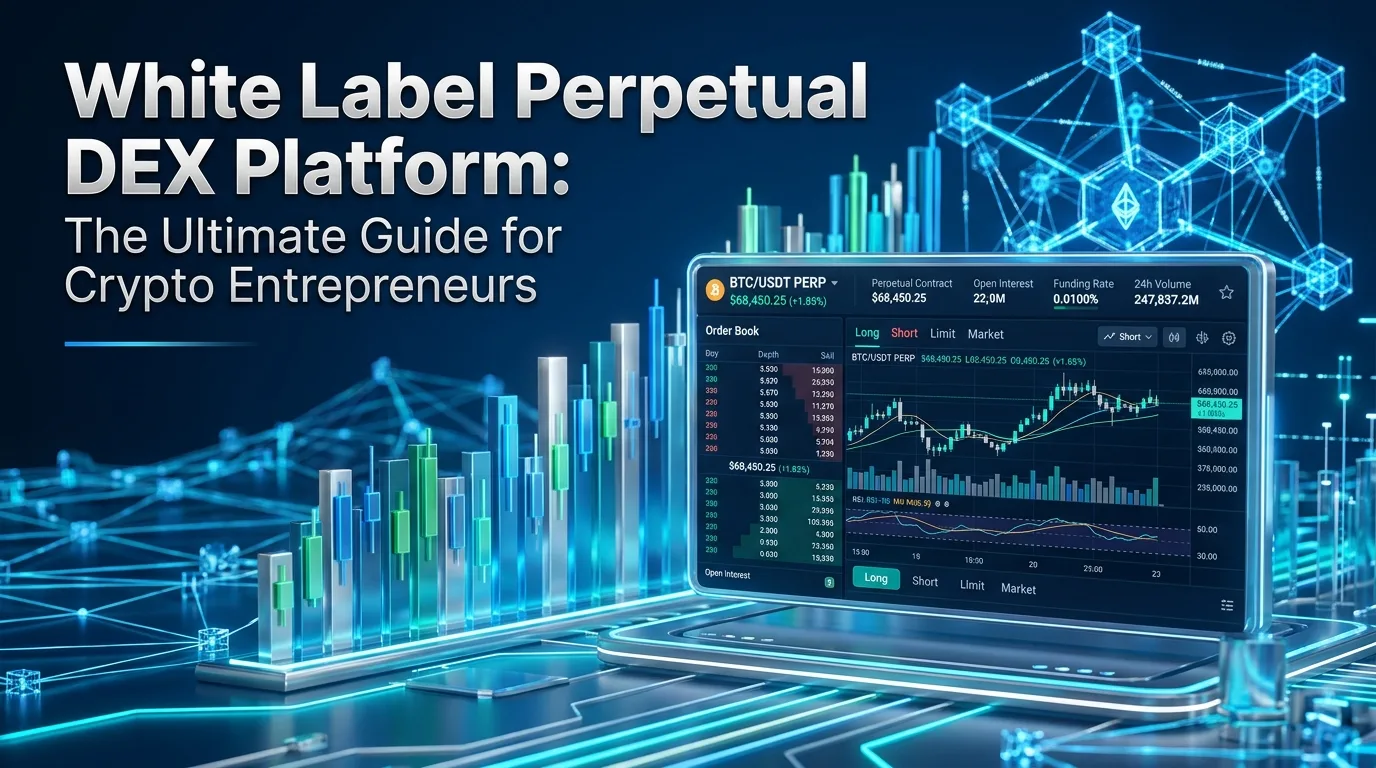
Users are provided with live charts, funding rate indicators, open interest data, and liquidation heatmaps. These insights help traders make informed decisions based on market conditions and sentiment analysis.
Strategic Benefits for Crypto Entrepreneurs
Launching a derivatives trading platform from scratch requires significant time, capital, and engineering expertise. White label solutions significantly reduce these barriers while enabling faster market penetration.
- Reduced development time and infrastructure complexity
Instead of spending years building exchange architecture, entrepreneurs can deploy a functional trading platform within weeks. This acceleration allows businesses to focus on growth strategies, partnerships, and liquidity acquisition rather than core engineering challenges. The approach aligns closely with White label perpetual dex platform development, which prioritizes speed and scalability. - Lower operational and technical costs
Building a decentralized exchange requires continuous maintenance, security audits, and infrastructure scaling. White label solutions distribute these responsibilities across providers, reducing operational overhead and allowing startups to allocate resources more efficiently. - Scalable revenue generation opportunities
Operators can implement trading fees, funding rate spreads, liquidation penalties, and premium feature subscriptions. These revenue streams scale directly with trading volume, making the model highly attractive for long-term growth. - Market differentiation through branding and UX
Even though the backend is pre-built, front-end customization enables full branding control. Entrepreneurs can design unique trading experiences that appeal to specific user segments, including retail traders, institutional clients, or niche derivatives markets.
Architecture and Technology Framework Behind DEX Platforms
The technical foundation of perpetual decentralized exchanges combines blockchain protocols, trading engines, and smart contract systems designed for performance and transparency.
- Smart contract-based settlement layers
Smart contracts handle trade settlement, collateral management, and liquidation processes. They ensure that transactions are executed transparently and without intermediaries, reducing counterparty risk and enhancing trust across the system. - Layer 2 scaling and sidechain integration
To overcome blockchain scalability limitations, many platforms use Layer 2 solutions or sidechains. These systems reduce gas fees and increase transaction throughput, enabling smoother trading experiences during high network congestion. - Oracle systems for accurate price feeds
Reliable pricing data is essential for perpetual contracts. Oracle integrations provide real-time asset pricing from multiple sources, ensuring fair liquidation and funding rate calculations. This reduces manipulation risks and enhances market integrity. - Modular microservices architecture
Backend systems are often divided into independent services such as trading engines, wallet services, analytics modules, and API gateways. This modularity improves scalability and allows developers to upgrade components without disrupting the entire platform.
Development Lifecycle and Execution Strategy
Building a decentralized derivatives platform requires structured planning, technical precision, and regulatory awareness. The process is streamlined through White label perpetual dex platform development, which provides pre-engineered components for faster deployment.
- Requirement analysis and platform customization planning
This phase involves defining target users, supported assets, leverage structure, and branding requirements. Strategic decisions made here shape the platform’s long-term positioning in the competitive derivatives market. - Integration of trading engine and liquidity systems
Developers integrate the matching engine, margin system, and liquidity pools into the white label framework. This ensures that trading execution remains stable and efficient under varying market conditions. - Smart contract deployment and security auditing
Smart contracts undergo rigorous testing and third-party audits to identify vulnerabilities. Security is prioritized to prevent exploits, especially in liquidation and collateral management modules. - Frontend deployment and user experience optimization
The user interface is designed to ensure seamless navigation, fast order placement, and intuitive trading workflows. Performance optimization ensures smooth operation even during high volatility periods.
Security, Compliance, and Risk Control Framework
Security remains one of the most critical aspects of decentralized trading platforms, particularly those handling leveraged derivatives.
- Multi-layer security architecture implementation
Platforms incorporate encryption, multi-signature wallets, and distributed storage systems. These layers protect user funds and platform data from unauthorized access or malicious attacks. - Automated liquidation and risk engine controls
Risk engines continuously monitor position health and trigger liquidations when margin thresholds are breached. This automation reduces systemic risk and ensures platform stability during market downturns. - Regulatory alignment and jurisdictional compliance
Depending on operational regions, platforms may implement KYC/AML systems and transaction monitoring tools. This helps ensure compliance with evolving global regulatory frameworks while maintaining decentralized principles. - Insurance funds and loss mitigation mechanisms
Insurance pools are used to cover deficits arising from liquidations that exceed available collateral. This mechanism protects both traders and liquidity providers from unexpected market shocks.
Monetization Models and Business Expansion Opportunities
White label perpetual trading platforms provide multiple avenues for sustainable revenue generation and ecosystem growth.
- Trading fees and funding rate earnings
A primary revenue stream comes from charging fees on each executed trade. Funding rates between long and short positions also generate continuous income for platform operators. - Liquidity provider incentives and spreads
Platforms can design incentive systems that attract liquidity providers, earning revenue from spreads while ensuring stable market depth. This creates a balanced ecosystem between traders and liquidity contributors. The effectiveness of White label perpetual dex platform development often depends on how well liquidity mechanisms are structured. - Premium features and subscription-based models
Advanced analytics, lower trading fees, and exclusive trading tools can be offered through subscription tiers. This diversifies revenue beyond transaction-based earnings. - Tokenization and ecosystem growth strategies
Native tokens can be introduced for governance, staking, and fee discounts. This encourages community participation and strengthens platform loyalty over time.
Conclusion
White label perpetual decentralized exchanges represent a strategic gateway for entrepreneurs aiming to enter the rapidly evolving derivatives trading landscape without building complex systems from the ground up. By leveraging pre-built infrastructure, scalable architecture, and advanced trading mechanisms, businesses can focus on growth, liquidity acquisition, and user engagement while maintaining full control over branding and monetization strategies. The evolution of White label perpetual dex platform development continues to redefine how trading platforms are launched and scaled, offering a balanced approach between innovation, efficiency, and market readiness for the next generation of decentralized financial ecosystems.