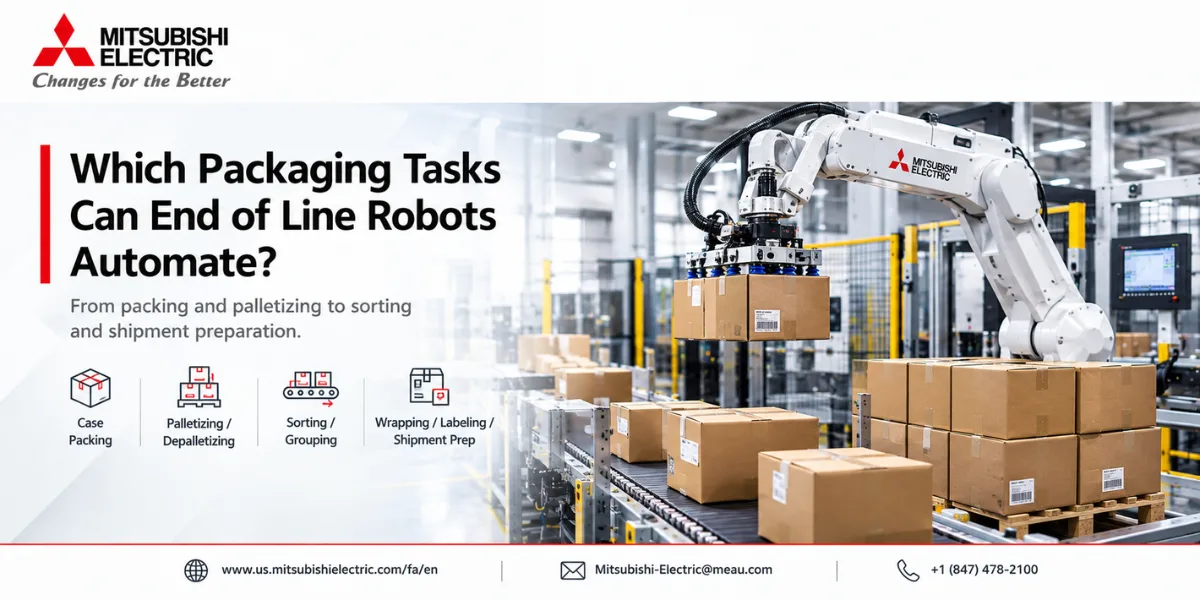
Packaging work continues after products leave the main production stage. With end of line robots, teams handle repeated tasks through steady movements. They sort finished items before storage or shipment. They also load cartons before products reach the next stage. So, automation reduces repeated handling across the packaging line.
Packaging needs change when products or orders shift during production. For example, automated line robots connect several packing steps within one workflow. Teams then spend less time repeating physical movements. It’s easier to manage that work even more so when each task follows a clear process. Its value also depends on so much as how well the setup fits the line.
Which Packaging Tasks Can End of Line Robots Handle?
With end of line robots, teams manage those steps through planned movements. Each task has different handling needs. That is why the sections below cover each main task.
1. Case Packing and Carton Loading
Robots keep each item in its required position during loading. For repeated loading work, automated line robots follow the same movement pattern. Its settings change when product shapes differ. That keeps its movement steady during repeated loading.
2. Palletizing and Depalletizing
Robots place stacking cases into planned pallet patterns. This process removes repeated lifting from routine pallet work. They then change their paths when pallet layouts change. So, the same system suits different pallet arrangements.
3. Product Sorting and Grouping
Products often need sorting before another packaging stage. Robots separate items by size, type, destination, or packaging need to then even group those items that too in set batches. That grouping keeps products ready for even so much as the next packing step. Even simple sorting needs steady movement when product flow stays busy.
4. Wrapping, Labeling, and Shipment Preparation
Robots hold products in position during labeling work. They also move finished goods after wrapping is complete. Then, those prepared goods move toward storage or shipment. That too keeps final handling within one workflow.
How Do End of Line Robots Improve Packaging Operations?
With end of line robots, teams shift those movements away from manual work. That change affects several parts of daily packaging operations. The following areas show where robotic handling fits best.
1. Consistent Handling and Placement
Repeated programs keep product placement steady across repeated packaging tasks. That consistency supports package quality during routine handling. Predictable movements also keep later packaging steps easier to manage. So much so, steady placement matters when several stages follow one another.
2. Faster Repetitive Workflows
Manual workers face repeated physical movements during long packaging tasks. Robots maintain those cycles without adding the same physical strain. Production needs also shift during different work periods. Teams then gain steadier task flow during busy production periods.
3. Reduced Manual Handling
Automation takes over repeated lifting across several packaging tasks. It also reduces product movement between different stages. Workers then focus on tasks that need direct judgment. When automated line robots handle movement, material flow becomes simpler. That change leaves less repeated work for staff. Workers spend more time checking products during routine packaging work. They step in when products need direct attention during production. They respond to process issues while machines handle routine movement.
4. Flexible Packaging Configurations
Product lines change when different items enter production. Package formats also change during regular production runs. Programmable robots adjust their movements for those changes. Their flexibility depends on suitable tools and clear programming. As much as products differ, the setup still needs to match each handling task.
What Should Manufacturers Consider Before Adding End of Line Robots?
Adding robotic equipment requires a close look that too at existing packaging work. Manufacturers need to understand production needs even so much before choosing equipment. Product traits also affect the required setup. That review shows where automation fits the existing line.
1. Production Volume and Task Repetition
Repeated tasks suit automation even more so when teams perform them throughout production. The chosen system should even then match the actual production line. Let alone larger bottlenecks, small repeated tasks deserve attention.
2. Product and Packaging Characteristics
Products ca so much as vary in size across packaging lines. Their weight goes so far as to affects how robots handle them. Product shape influences the required gripping method. Fragile items need more careful movement that too during handling. Even small differences affect how equipment handles so much as each product.
3. Integration With Existing Equipment
Robots need connections with conveyors during product movement. They also need links with sensors or control systems. Those connections support steady movement between production stages.
4. Energy and Facility Requirements
Automated equipment needs suitable power within the production space. Manufacturers should review those needs before adding equipment. Efficient equipment choices support wider data center energy efficiency goals. That too matters when digital systems support automated packaging work. As little as one poorly planned change can affect facility demands.
Frequently Asked Questions (FAQs)
1. What Products Can End of Line Robots Handle?
Most packaged goods suit robotic handling that too when their size fits the selected equipment.
2. Can Robots Work With Different Packaging Formats?
Robots handle different package types when teams adjust their tools for each product.
3. How Can Teams Prepare for Robotic Packaging?
Teams review their current workflow all so much before choosing where automation fits best.
4. What Helps Robots Handle Changing Production Needs?
Programmable movements give robots room to respond when product requirements change.
Smarter Packaging Starts With the Right Tasks
A thoughtful setup lets end of line robots handle repeated packaging movements across different tasks. They support packing after products leave the main production stage. They also manage palletizing before goods move toward shipment. Sorting separates products before their next packaging stage. Even wrapping prepares finished goods before storage. Good automation fits the existing workflow rather than simply just replacing it. So, teams keep control over tasks that need human judgment. The right setup handles as much repeated work as the production line requires.