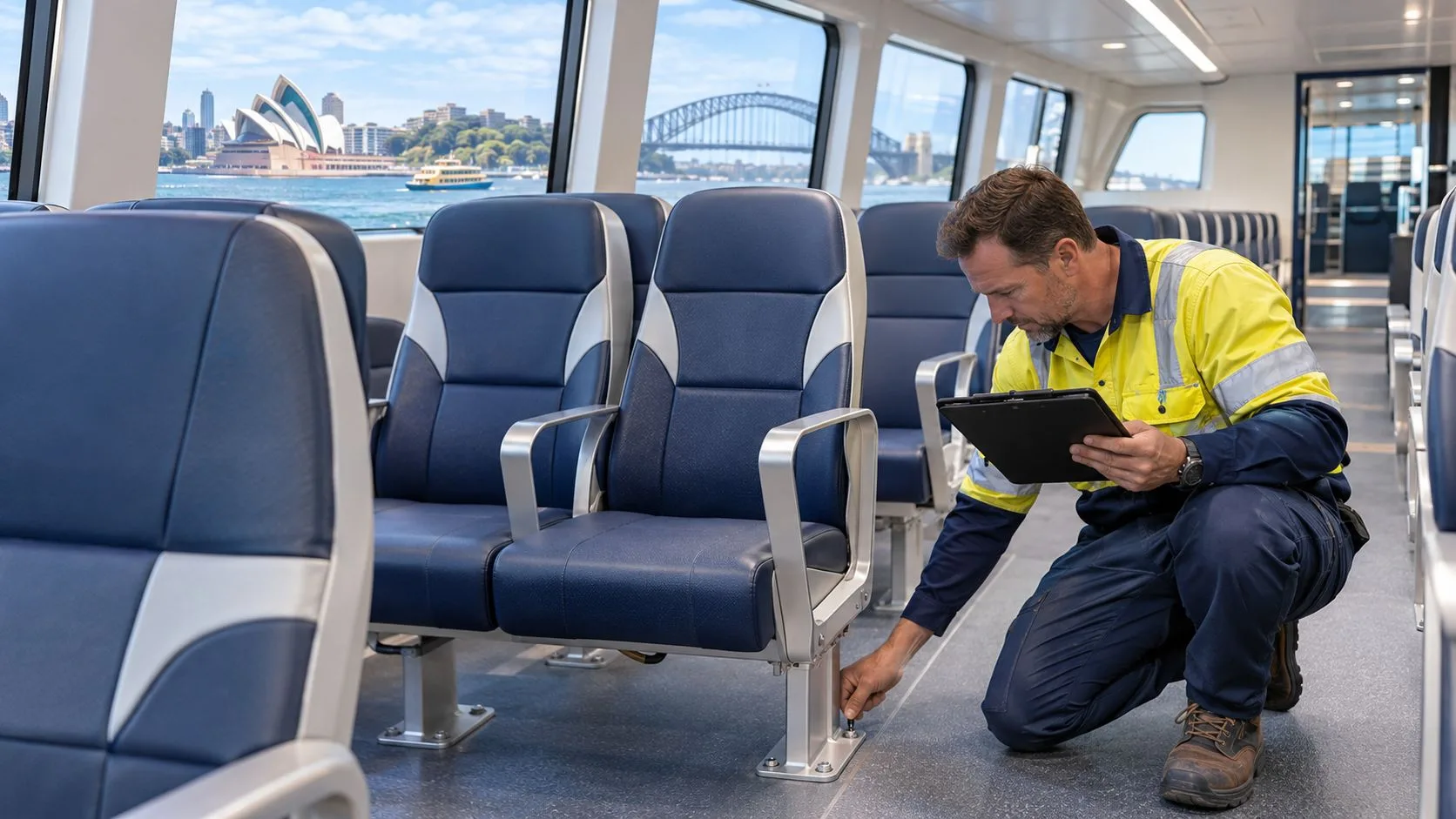
Marine Seating on Commercial Vessels in 2026
Australian passenger-vessel operators face tighter rules this year. Auditors are no longer satisfied with a generic “commercial grade” sticker; they want documented test results that line up with international crash, flame and corrosion benchmarks. Ignoring the details risks failed surveys, forced refits and – worst of all – passenger injuries.
You do not have to learn every clause verbatim, but you do need to know where your current seats stand against the latest marine seating safety standards and how to close any gaps before regulators board your vessel.
Why the Rule Book Keeps Growing
A decade ago, seat strength tests focussed on static loads. Today the conversation has shifted to dynamic forces, occupant-friendly ergonomics and integrated safety restraints. Three drivers sit behind the change:
- Electric propulsion is quieter, prompting operators to upgrade interiors rather than engines to impress passengers.
- Fleet operators want lighter frames to offset extra battery weight without losing capacity.
- High-profile incidents in neighbouring regions have pushed insurers to demand clearer proof that seats can handle rapid deceleration and fire exposure.
Standards bodies responded by tightening the weld integrity tests, adding mandatory life-cycle corrosion checks and insisting on low-smoke, low-toxicity foams.
When you combine those elements, passing certification moves from a one-off purchase decision to an ongoing maintenance commitment.
What the Standards Actually Cover
Below is a quick snapshot of the most questioned clauses during Australian flag-state inspections.
| Requirement | Common Test | Why It Matters | Typical Audit Evidence |
|---|---|---|---|
| Structural integrity | 10g dynamic sled test | Ensures the frame stays fixed during an impact | Test report from accredited lab |
| Fire performance | ISO 3582 flammability & smoke | Limits toxic fumes in confined cabins | Material data sheets + burn test certificate |
| Corrosion resistance | 1000-hour salt-spray | Extends lifespan in high-salinity routes | Coating spec + lab results |
| Occupant restraint | 3-point belt pull test | Reduces injury in sudden stops | Certified hardware rating |
| Ergonomic design | Anthropometric review | Cuts fatigue on long tourist trips | Seat sample + ergonomic report |
Certificates are only half the job. Surveyors increasingly check installation torque settings and track-mount fastener grades as well as off-vessel test data.
Spotting Seats That Meet the Brief
The quickest giveaway is the data sheet. Compliant suppliers list the exact clauses their models cover, not a vague “meets marine directives” statement. Look for:
- ADR-68 crossover approval – helpful if the same seat will appear in road-going crew shuttles.
- Explicit ISO references (e.g., ISO 5450 for spacing).
- Evidence of low total volatile organic compound emissions – critical for enclosed tourist cabins.
A red flag appears when the brochure only mentions upholstery colours and foam density. Style matters, but safety wins tenders and insurance renewals.
You can compare market options against your operational priorities:
| Operator Need | Better With a Fully Certified Seat | Risk With a Basic Seat |
|---|---|---|
| Night-time sightseeing | Built-in reading lights wired to marine spec | DIY lighting that voids warranty |
| Electric ferry weight limits | Aluminium frame under 16 kg | Steel frame adding 40 kg per row |
| School charter contracts | Documented belt pull strength | No restraint or untested lap belt |
| Five-year total cost | Coating rated to 10-year corrosion cycle | Annual repaint and hardware swap |
End-to-end compliance sometimes looks expensive on paper. After factoring labour, downtime and reputation damage from a failed inspection, it generally costs less than cycling through cheaper imports every refit.
Installation Still Makes or Breaks Compliance
Buying a certified seat does not guarantee a pass if the rails, bolts or bulkheads ignore manufacturer torque values. Two recurring mistakes surface during annual surveys:
- Mixing stainless bolts with gal-steel rails, accelerating galvanic corrosion that undermines pull-out strength.
- Replacing original lock nuts with hardware-store items that loosen under vibration.
The installation guide for ergonomic passenger seats shows the correct grade-8.8 fasteners and thread-locking compound. Following that spec means inspectors can sign off without demanding extra x-rays or destructive pull tests.
Ensure the shipyard records final torque readings in the vessel logbook. A five-minute note today spares an expensive “open panelling” order later.
Long-Term Pay-Off for Operators
Operators who move early on the stricter criteria report three practical wins:
- Insurance underwriters file fewer clarification requests, shortening renewal cycles.
- Passenger feedback highlights comfort rather than squeaks, rattles or hot vinyl.
- Secondary market brokers list vessels with certified interiors at a premium, speeding up fleet turnover plans.
Surveyors also treat proactive operators differently. When technical documentation is ready on arrival, inspections trend towards maintenance dialogue rather than adversarial fault-finding.
Recent policy updates from the Australian Maritime Safety Authority reinforce this shift. Vessels that demonstrate full material traceability and maintenance logs may qualify for rolling survey intervals, trimming downtime even further.
Ready to take the next step? Visit our Learn more to find out more.
Choosing Your Next Steps
Run a seat inventory against the latest test references before the next busy season. Map any gaps to a phased upgrade schedule aligned with dry-dock windows. Address installation torque records at the same time, and store every certificate in a digital folder linked to the vessel ID. The paperwork sounds mundane, yet it is the difference between a routine visit and a costly detention.
Invested once, compliant seating keeps paying dividends in passenger confidence, audit speed and resale leverage – advantages that compound every year the vessel stays in service.