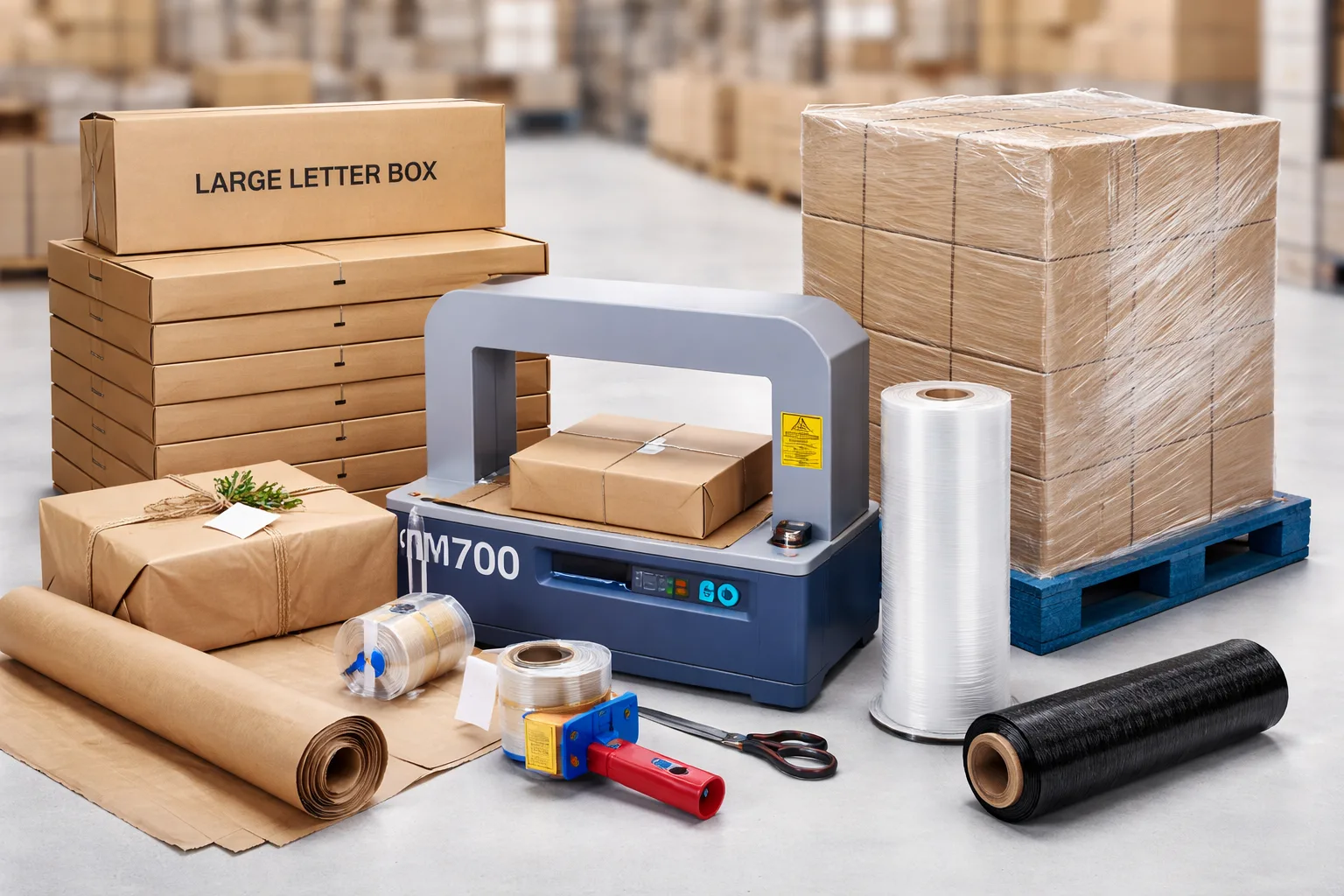
Most delivery problems do not start on the road. They usually begin at the packing table.
A product can leave the warehouse in perfect condition and still arrive scratched, crushed, or broken simply because the packaging was not strong enough for the journey ahead. That is why businesses are paying much closer attention to how products are packed rather than only focusing on shipping speed.
Over the last few years, packaging has quietly become one of the most important parts of customer experience. People notice damaged corners, torn cartons, and loose wrapping immediately. In many cases, poor packaging makes customers question the product's quality.
Good protection matters long before the parcel reaches the doorstep.
What Packaging Materials Are Helping Businesses Reduce Damage?
Corrugated Mailing Cartons
Using oversized cartons for small products is still one of the most common packing mistakes. Too much space allows items to slide around constantly during handling and transport.
That is why many online retailers now prefer large letter boxes for flat items such as books, accessories, documents, stationery, and lightweight electronics. Smaller cartons hold products more securely and also make warehouse storage easier to manage.
A few simple habits improve carton safety straight away:
- Match the box size closely to the product
- Add padding around delicate items
- Avoid forcing heavy products into thin cartons
- Reinforce corners before shipping
Packing teams working during busy seasonal sales often rely on compact cartons because they are quicker to stack, label, and dispatch.
Protective Covers for Furniture
Furniture can look perfectly fine in a showroom and still pick up scratches during a single move into a delivery vehicle. Most marks happen during handling rather than transport itself.
Protective materials like furniguard are widely used because they help shield upholstery, polished wood, and delicate surfaces from dust, friction, and accidental scuffs.
Removal companies and furniture suppliers have used protective coverings for years because repairing damaged furniture after delivery usually costs far more than preventing the damage in the first place.
For safer handling:
- Wrap sharp edges carefully
- Remove loose cushions before transport
- Avoid dragging furniture across rough flooring
- Add extra layers around polished corners
Even small precautions make expensive furniture easier to move safely.
Flexible Protective Wrapping
Fragile products rarely survive long-distance shipping without cushioning inside the box. The outer carton alone cannot absorb constant movement during sorting and delivery.
That is why foam wrap rolls remain one of the most practical materials for protecting breakable goods. The soft, layered surface helps prevent scratches while reducing pressure around delicate products.
They are commonly used for:
- Glassware
- Ceramics
- Electronics
- Framed décor
Many warehouse teams now combine foam wrapping with double-wall cartons because layered protection works far better than relying on a single material.
Reinforced Carton Sealing
A strong carton still becomes useless if the bottom opens halfway through delivery. Weak sealing remains one of the biggest causes of damaged parcels, especially for heavier products.
Professional packing teams usually reinforce stress points carefully before cartons are moved into storage or transport vehicles.
For stronger sealing:
- Double-tape heavier cartons
- Press adhesive edges firmly
- Reinforce the bottom properly
- Avoid gaps between carton flaps
Good sealing also improves stacking stability in delivery vans and on warehouse shelves.
Bubble Cushioning Layers
Bubble cushioning remains widely used because it protects products without making parcels too heavy. Smaller air pockets help prevent scratches, while larger cushioning layers absorb stronger impacts.
Retailers regularly use protective bubble layers for:
- Bottles
- Cosmetics
- Kitchenware
- Small electronics
It remains one of the simplest ways to reduce damage during everyday shipping.
Double-Wall Storage Cartons
Heavy products need stronger support than ordinary cardboard can provide. Double-wall corrugated cartons are designed for heavier loads and stacked storage conditions.
These cartons are commonly used for:
- Books
- Tools
- Kitchen appliances
- Storage items
Warehouse operators often recommend using several smaller heavy-duty cartons instead of one oversized box, which can be difficult to lift safely.
Paper-Based Void Fill
Products shift constantly when cartons contain too much space. Paper void fill helps keep items stable during transport while providing an additional protective layer inside the package.
It is often used for:
- Subscription boxes
- Handmade products
- Gift packaging
- Fragile retail items
Many businesses now prefer paper filing because it keeps packaging practical without creating unnecessary plastic waste.
Corner and Edge Protection
Corners usually absorb the first impact during loading and stacking. That is why protective edging is commonly added to mirrors, framed artwork, and furniture before transport.
Extra edge protection helps reduce pressure damage when parcels are repeatedly moved between storage points and delivery vehicles.
Stretch Wrapping Films
Stretch films help stabilise stacked cartons and pallet loads during warehouse handling. Without proper wrapping, grouped cartons can shift or collapse during transport.
Distribution centres rely heavily on stretch wrapping because stable loads are safer to store, move, and unload.
Moisture-Resistant Outer Protection
The weather is unpredictable, especially during longer delivery routes. Rain, damp storage conditions, and temporary outdoor exposure can all damage poorly protected cartons.
Moisture-resistant outer packaging adds another layer of protection during transit, especially for products stored in changing warehouse conditions before delivery.
Conclusion
Products rarely arrive safely by accident. Behind most damage-free deliveries is a combination of strong cartons, protective wrapping, proper sealing, and careful packing choices.
Good packaging does more than protect products during transit. It protects customer confidence the moment the parcel arrives.