Slips rarely have a single cause. Water, grease, worn surfaces, poor lighting and the wrong footwear often combine before a fall happens. Effective Floor Slip Prevention therefore pairs good habits with practical fixes, and knowing which Slippery Floor Solutions suit each space saves money and prevents injuries.
Where Do Most Slips Happen?
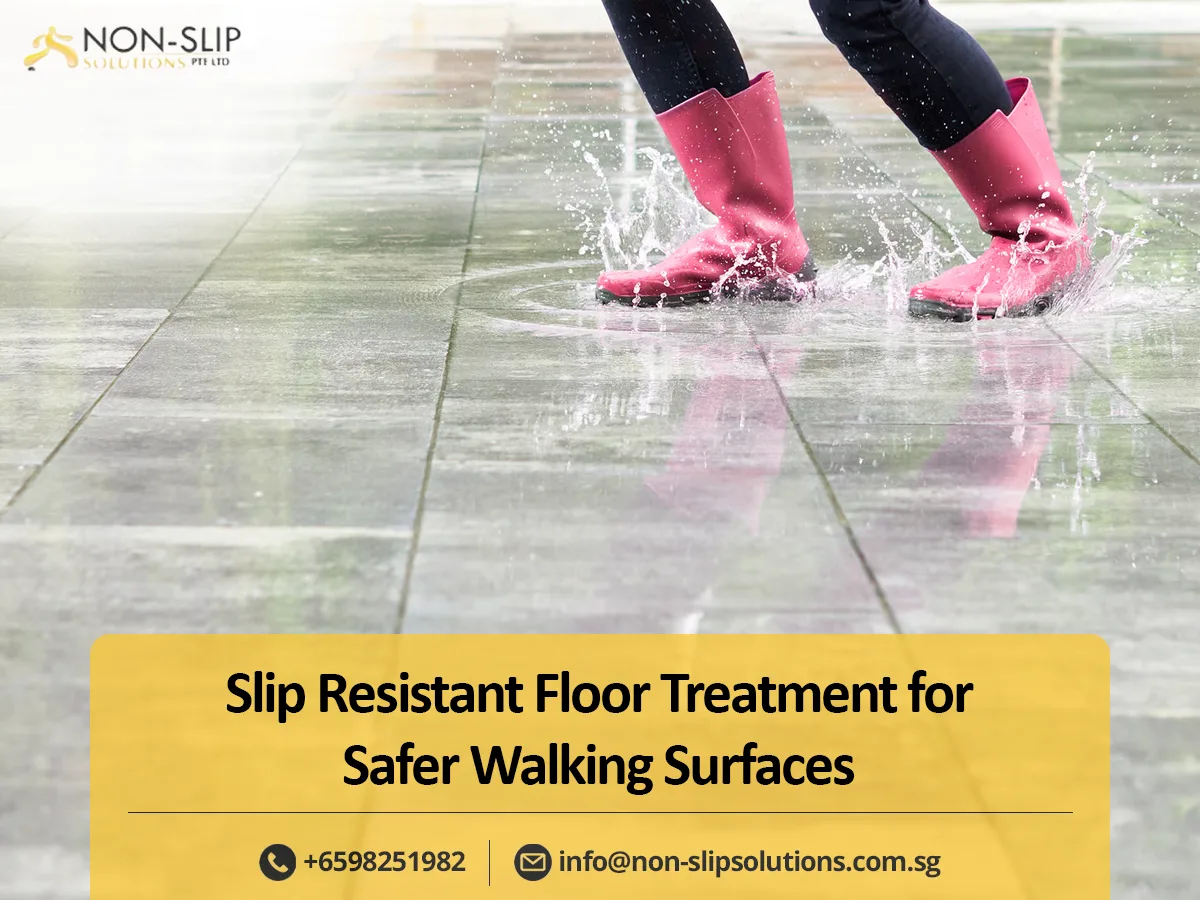
Slips are most common wherever floors get wet or greasy: bathrooms, kitchens, entrances on rainy days, pool decks and food preparation areas. Transitions between dry and wet zones are particularly risky, because people do not adjust their stride in time. Footwear plays a part too, as smooth soles offer little grip on wet tiles.
Why Prevention Pays Off:
Investing in Floor Slip Prevention brings benefits that go beyond safety:
- Fewer injuries among family members, staff and customers.
- Lower risk of liability claims for businesses.
- Less reliance on warning signs and temporary mats.
- Greater peace of mind in homes with older adults.
Practical Measures to Consider:
The most effective Slippery Floor Solutions usually combine several of these steps:
- Prompt cleaning of spills, grease and soap residue.
- Good drainage so water does not pool.
- Bright, even lighting over steps and wet areas.
- An anti-slip treatment or coating on high-risk floors.
Mistakes That Make Floors More Dangerous:
Some everyday routines raise the risk without anyone noticing:
- Mopping with too much water and leaving floors wet.
- Using polishes or cleaners that leave a slick film.
- Placing loose rugs on smooth tiles.
- Assuming a floor is safe because it feels grippy when dry.
How Does a Chemical Floor Treatment Help?
A chemical treatment tackles the surface itself. Non-Slip Solutions explains that its Sure Step treatment uses proprietary chemicals from Canada to remove the softer agents in a floor's surface at a microscopic level, leaving a texture that grips feet when wet. On dry floors the difference is minimal, and the floor's appearance usually changes very little. The company reports more than 3,500 completed projects across homes and commercial sites.
Building Safer Floors Step by Step
No single fix removes every risk. Combining good cleaning, drainage and lighting with targeted treatment gives Floor Slip Prevention the best chance of success. For tiled areas that stay slippery despite these steps, Slippery Floor Solutions from a specialist such as Non-Slip Solutions can close the gap.
FAQs
What causes most floor slips?
Wet or contaminated surfaces, such as water, grease or soap residue, are among the most common causes.
Do anti-slip mats work?
They can help in small areas, but loose mats may slide or curl and become a trip hazard themselves.
Can a floor be slippery even when dry?
Yes, polished or dusty floors can be slippery, although wet floors are generally far riskier.
How long does a floor treatment take?
A typical bathroom, or a kitchen of about 100 sq ft, can be treated in around an hour.
Does lighting affect slip risk?
Yes, poor lighting makes it harder to spot spills and changes in floor level.
Contact Us:
Non Slip Solutions
Website : http://www.non-slipsolutions.com.sg
Phone : +65 9825 1982
E-Mail : [email protected]
Address : 45 Tagore Avenue, Singapore