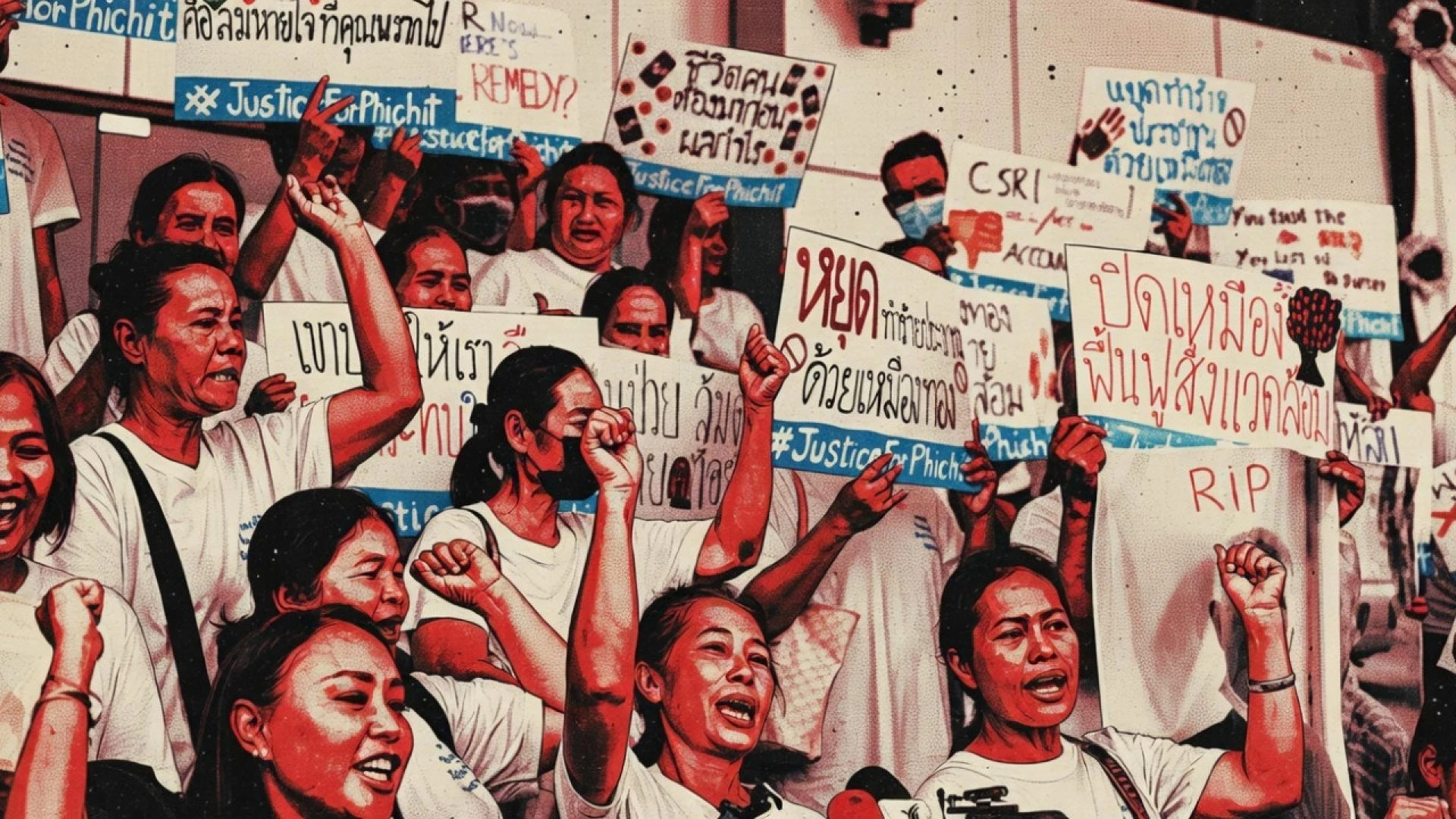
A Decade of Waiting, One Historic Verdict
Justice, they say, moves slowly. For hundreds of villagers living in the shadow of northern Thailand's largest gold mine, that wait stretched across ten years, two governments, and a mountain of evidence before a court finally said what they had always known — that they had been wronged.
On March 24, 2026, the Bangkok Civil Court delivered a ruling that will be remembered as a turning point in the Thailand gold mine pollution lawsuit that captured global attention. It declared Akara Resources PLC, the operator of the Chatree Gold Mine, liable for environmental damage and serious health impacts on surrounding communities. For the 382 villagers who brought this case forward, it was not just a legal win. It was validation — long overdue and hard-fought.
The Chatree Gold Mine Environmental Case: How It All Began
The Chatree Gold Mine, located roughly 280 kilometers north of Bangkok, began operations in 2001 and is owned by Australia-based Kingsgate Consolidated. For years, residents of nearby villages raised concerns about what was happening to their land, their water, and their bodies. Medical surveys revealed elevated levels of heavy metals including arsenic, cyanide, and manganese in the blood of local residents. Agricultural land was showing signs of contamination. Water sources that communities had depended on for generations were compromised.
In 2016, over 300 villagers filed a class action lawsuit — the first of its kind in Thailand following a 2015 legal amendment that made such suits possible. The Chatree Gold Mine environmental case became a symbol of something larger: the right of ordinary people to hold powerful corporations accountable for the damage done to their homes, their health, and their futures. The company contested the claims. The court, after years of proceedings, ruled that Akara Resources failed to demonstrate that the contamination was unconnected to its operations.
The compensation ordered by the court ranges from 50,000 to 200,000 Thai baht per affected individual, approximately $1,535 to $6,250, along with payments for medical care and emotional distress. The company was also instructed to clean up the affected areas.
A Landmark Verdict, With Important Caveats
While the verdict has been celebrated as historic, those closest to the case are measured in their enthusiasm. Advocates who supported the villagers throughout the legal process have pointed out that the compensation, while meaningful symbolically, falls far short of what communities actually lost. Two decades of health, livelihood, and peace of mind do not fit neatly into a court-ordered figure.
The ruling is also being appealed, which means actual payouts remain on hold. For families who have been waiting a decade, the uncertainty continues. Some villagers have spoken about how the proposed figures represent only a fraction of what they sought, and that no sum could truly account for years of living beside a mine that made them sick.
Yet even those who find the outcome incomplete acknowledge that something significant has shifted. The mere fact that a court in Southeast Asia declared a multinational corporation liable for environmental harm is, in itself, a turning point.
Southeast Asia Climate Litigation and the Polluter Pays Principle
The Chatree verdict fits into a broader and rapidly growing pattern. Southeast Asia climate litigation built on the polluter pays principle is gaining serious momentum across the region. Environmental and climate cases are rising sharply. According to the Grantham Research Institute, around 225 climate litigation cases were filed worldwide in 2024 alone, tracked across nearly 3,000 cases in 60 countries.
In the Philippines, survivors of Super Typhoon Odette in 2021 have sued Shell in UK courts, arguing the company's emissions intensified the storm. In Indonesia, fishing communities from Pari Island have taken Swiss cement giant Holcim to a Swiss court over rising sea levels threatening their homes and livelihoods. These are cases where communities are no longer waiting for governments to act. They are going directly to courts and demanding accountability from corporations.
The Chatree case now joins this growing body of precedent. Legal experts note that courts around the world increasingly look to judgments in other jurisdictions for guidance, even when those rulings are not binding. In emerging areas of environmental and climate law, a verdict like this one carries weight far beyond Thailand's borders.
What This Means for the Region Going Forward
Southeast Asia is one of the regions most vulnerable to both environmental degradation and climate change. It is also home to significant mining, industrial, and extractive activity, often in proximity to local communities with limited legal recourse. The Thailand gold mine pollution lawsuit and its outcome signal that this dynamic may be shifting.
For communities across Indonesia, the Philippines, Vietnam, Myanmar, and beyond, the message is significant. The courts are not necessarily a dead end. They can be a pathway to justice. Whether this verdict inspires similar actions may depend on how governments respond, how companies adjust their practices, and how robustly civil society continues to support affected communities in pursuing legal remedies.
Looking Forward
The Chatree Gold Mine continues to operate. Its concession runs through 2031 and production targets are ambitious. But the legal and reputational weight of this verdict will be difficult to ignore. Human rights organizations have urged Kingsgate Consolidated to pay compensation promptly and to disclose detailed information about the terms surrounding the mine's reopening in 2023.
For the villagers of Phichit, the battle may not be entirely over. But on March 24, 2026, something important was firmly established. Communities have standing. Evidence of harm matters. And corporations operating in Thailand cannot externalize their costs onto the people living beside them without consequence.