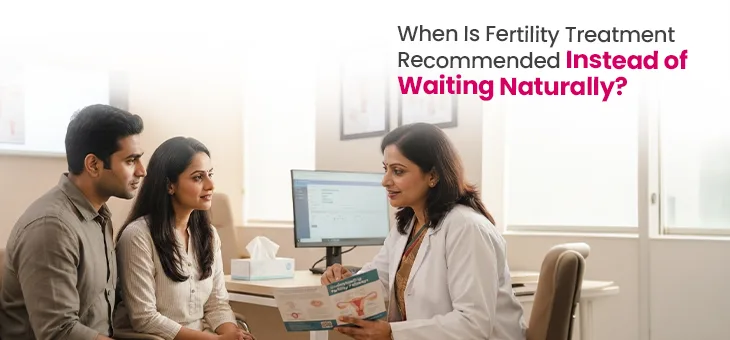
Trying to conceive naturally is often the first step for couples planning a pregnancy. For many, pregnancy may happen without medical intervention. However, there are situations where continuing to wait without understanding the reason for delayed conception may not be the best approach.
The right time to seek fertility guidance depends on several factors, including age, menstrual history, previous pregnancies, known reproductive conditions, and how long a couple has been trying to conceive.
A fertility consultation does not automatically mean treatment must begin immediately. In many cases, the first step is simply understanding whether there is a reason pregnancy is taking longer than expected.
When Should You Consider a Fertility Evaluation?
For women below the age of 35, fertility evaluation is generally considered after around 12 months of regular unprotected intercourse without pregnancy.
For women aged 35 and above, seeking fertility advice after approximately six months may be appropriate.
Women aged 40 and above may benefit from consulting a fertility specialist earlier rather than waiting for several months.
These timelines are general guidelines. Individual circumstances can make earlier evaluation appropriate.
Couples who are unsure about their next step can consult a best fertility hospital in Bangalore to understand whether continued natural attempts, further evaluation, or fertility treatment may be suitable.
When Should You Consider Seeking Help Earlier?
Not every couple needs to wait for six or twelve months before speaking with a fertility specialist.
Earlier evaluation may be useful when there are known concerns such as:
- Irregular or absent menstrual cycles
- Previous pregnancy loss
- Known reproductive health conditions
- Previous pelvic or reproductive surgery
- A fertility concern affecting either partner
- Previous fertility treatment
- Age-related fertility considerations
Seeking an earlier consultation does not mean advanced treatment will automatically be recommended.
It simply provides an opportunity to understand whether there is a factor that may be affecting conception.
Why Can Waiting Too Long Matter?
Fertility is influenced by several reproductive and medical factors.
Age is one consideration, but it is not the only one.
Ovulation, reproductive health, medical history, previous treatment, and fertility factors affecting either partner can also influence how long it takes to conceive.
Waiting without understanding why pregnancy has not occurred may sometimes delay appropriate evaluation.
A fertility consultation can help couples identify whether continued natural attempts are reasonable or whether further investigation should be considered.
Does a Fertility Consultation Mean You Need IVF?
No.
One of the biggest misconceptions about fertility care is that visiting a specialist automatically leads to IVF.
Fertility treatment is not one single procedure.
Depending on the findings, a fertility specialist may recommend:
- Continued natural attempts
- Further monitoring
- Medication
- Additional fertility evaluation
- Specific procedures
- Assisted reproductive treatment when appropriate
The recommended approach depends on the individual circumstances of the couple.
The purpose of fertility evaluation is to understand the situation first and discuss suitable options afterward.
How Do Doctors Decide Whether Fertility Treatment Is Necessary?
Several factors are considered before recommending treatment.
Medical and Reproductive History
The specialist may review:
- How long the couple has been trying to conceive
- Menstrual history
- Previous pregnancies
- Previous pregnancy loss
- Existing medical conditions
- Previous surgeries
- Previous fertility treatment
This information can help identify whether further evaluation is needed.
Age
Age can influence the timing of fertility evaluation.
This is one reason women aged 35 and above are generally advised to seek guidance sooner than younger women when pregnancy has not occurred.
Previous Fertility Concerns
If either partner already has a known reproductive health concern, the specialist may recommend evaluation earlier instead of waiting for the usual timeline.
Previous Treatment
Couples who have already undergone fertility evaluation or treatment may need a different approach depending on what was previously identified.
Can Couples Continue Trying Naturally After Seeing a Fertility Specialist?
Yes.
A fertility consultation does not automatically mean couples must stop trying naturally.
Depending on the assessment, a specialist may recommend continuing natural attempts for a certain period.
For some couples, the consultation simply provides clarity and reassurance.
For others, the findings may suggest that additional evaluation or treatment could be helpful.
The important point is that the decision to continue waiting or begin treatment should ideally be based on the couple's individual situation rather than a fixed timeline alone.
How Can Couples Prepare for a Fertility Consultation?
Before meeting a fertility specialist, couples may find it useful to think about:
- How long they have been trying to conceive
- Whether menstrual cycles are regular
- Previous pregnancies or pregnancy losses
- Relevant medical history
- Previous reproductive surgery
- Previous fertility testing or treatment
- Any known fertility concerns affecting either partner
Providing this information can help the fertility specialist understand the situation more clearly.
What Happens If Fertility Treatment Leads to Pregnancy?
When fertility treatment results in pregnancy, the focus gradually moves from conception toward antenatal and maternity care.
Pregnancy monitoring may involve regular consultations, scans, maternal health assessment, fetal monitoring, and planning for childbirth.
Women moving from fertility treatment into pregnancy care may consider the support available through a pregnancy hospital in Bangalore for continued antenatal monitoring.
The transition from fertility care to pregnancy care is an important part of the journey because the medical priorities naturally change once pregnancy is established.
Planning Maternity Care During Pregnancy
As pregnancy progresses, couples will eventually need to think about maternity and delivery planning.
Choosing a maternity hospital in Bangalore may involve considering factors such as:
- Availability of obstetric care
- Antenatal monitoring
- Pregnancy-related medical support
- Labour and delivery facilities
- Fetal monitoring
- Emergency support
- Neonatal care
- Postpartum care
Accessibility can also become increasingly important during the later stages of pregnancy.
Families searching for a maternity hospital near me can consider travel time alongside the maternity and medical support available.
Planning for Delivery
Choosing where to deliver is another important decision during pregnancy.
When researching the best hospital for delivery in Bangalore, expecting parents may want to understand:
- What obstetric support is available
- What monitoring is available during labour
- Whether neonatal support is available
- How emergency situations are managed
- What pain-management options are offered
- What postpartum care is provided
The appropriate hospital should match the individual needs of the pregnancy rather than being selected only on location or convenience.
Frequently Asked Questions
When should couples under 35 seek fertility help?
A fertility evaluation is generally considered after around 12 months of regular unprotected intercourse without pregnancy.
When should women aged 35 and above seek fertility advice?
Women aged 35 and above may consider seeking fertility guidance after approximately six months of trying without pregnancy.
Should women over 40 wait before seeing a fertility specialist?
Women aged 40 and above may benefit from seeking fertility advice earlier rather than waiting for an extended period.
Does seeing a fertility specialist mean IVF will be required?
No. A consultation may result in continued natural attempts, further evaluation, medication, another treatment approach, or assisted reproductive treatment depending on the individual circumstances.
Can couples seek fertility advice before six months?
Yes. Earlier consultation may be appropriate when there are irregular menstrual cycles, previous pregnancy loss, known reproductive concerns, previous pelvic surgery, or another known fertility factor.
Can couples still try naturally after fertility evaluation?
Yes. Depending on the findings, a fertility specialist may recommend continued natural attempts rather than immediate treatment.
Final Thoughts
There is no single timeline that applies to every couple trying to conceive.
For many couples, continuing natural attempts is reasonable. For others, age, reproductive history, irregular cycles, previous pregnancy loss, or known fertility concerns may make earlier evaluation appropriate.
Seeking fertility guidance does not automatically mean treatment must begin immediately.
A consultation can help answer an important question:
Should you continue trying naturally, or is there a reason to consider the next step?
Understanding the answer can help couples make more informed decisions rather than continuing to wait without knowing whether additional support may be useful.
For couples considering fertility treatment in Bangalore, a specialist evaluation can help identify individual fertility factors and discuss the appropriate options based on the couple's circumstances.
Medical Disclaimer: This article is intended for general educational purposes only and does not replace personalised medical advice, diagnosis, or treatment from a qualified fertility or obstetric specialist.