On many holidays, travel time is treated as something to be endured. Travellers wait at airports, complete long road transfers or spend hours moving between hotels. These periods may be necessary, but they are rarely considered part of the actual experience.
A luxury rail journey can change this relationship. Movement continues, but guests remain within the environment of their holiday. They can dine, rest, talk and observe changing landscapes while progressing towards another destination.
This concept helps explain why an integrated Indian luxury train experience should be assessed not only through the places it visits, but also through the quality and purpose of the time spent between them.
Why does ordinary transfer time feel unproductive?
Most transfers temporarily interrupt the traveller’s routine.
A typical intercity transition may involve:
- Packing and checking out
- Waiting for transport
- Moving luggage
- Travelling to an airport or station
- Completing security or boarding procedures
- Waiting for departure
- Arriving at the next destination
- Collecting luggage
- Transferring to another hotel
- Checking in and reorganising belongings
Even when each stage operates efficiently, the traveller may remain focused on procedures rather than the destination.
This is why a short geographical distance can still consume a substantial part of a holiday.
What makes onboard time different?
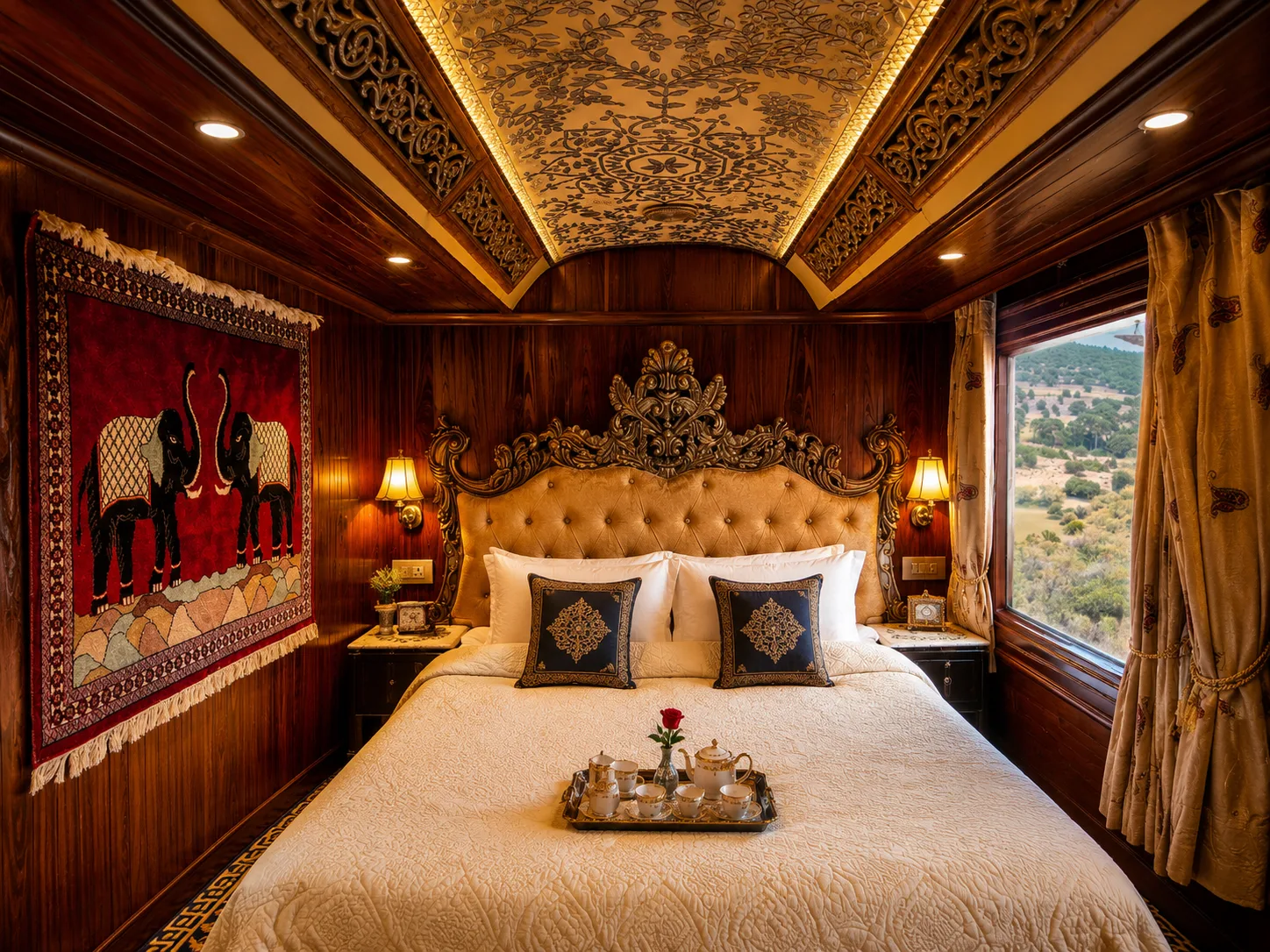
On Palace on Wheels, accommodation and movement work together. Guests do not leave their hospitality environment every time the journey progresses to another location.
Onboard time can be used for:
- Resting after an excursion
- Enjoying a meal
- Reviewing photographs
- Speaking with fellow travellers
- Reading about the next destination
- Organising clothing and essentials
- Spending private time in the cabin
- Observing changes outside the train
- Reflecting on the day’s experiences
These periods do not need constant entertainment. Their value comes from allowing travellers to recover while the journey continues.
Can rest be considered a meaningful travel experience?
Yes. Rest is frequently undervalued during ambitious itineraries.
Travellers sometimes measure a holiday by the number of attractions completed. This can produce a schedule in which every available hour is filled, leaving little time to understand or emotionally process what has been seen.
A period of rest after visiting a culturally significant destination allows travellers to think, discuss and prepare for what follows. It can prevent one experience from immediately becoming crowded by the next.
When movement and rest occur together, the traveller does not necessarily have to choose between progressing and recovering.
How does rail movement contribute to a sense of journey?
Air travel can move passengers quickly, but it often separates them from the geography between departure and arrival. Road travel offers more visual connection but may require continuous attention to traffic and transfer arrangements.
Rail movement offers another perspective. The landscape changes gradually, allowing travellers to sense progression rather than simply appearing in another location.
This gradual movement can reinforce the idea that the route itself matters. Rajasthan is not experienced only through individual monuments or cities; it is also understood through the distances, landscapes and transitions connecting them.
Why is reflection important during a cultural itinerary?
Cultural travel introduces travellers to architecture, history, food, art, traditions and living communities. When these experiences are presented too rapidly, they may become a collection of photographs without sufficient understanding.
Reflection helps visitors ask:
- What made this destination different?
- Which architectural details stood out?
- How did the landscape influence the settlement?
- What did the guide explain about its history?
- How does today’s experience connect with tomorrow’s destination?
- Which moment should be remembered rather than merely photographed?
Onboard time can provide room for these questions without requiring a separate break in the itinerary.
How can couples use time aboard the train?
Couples can use onboard intervals to compare their impressions of the day, plan what they want to focus on during the next excursion and spend time together without searching for another transfer or activity.
They may also choose independent quiet time. A connected journey does not require every moment to be shared. One traveller may read while the other reviews photographs or rests.
The value lies in having options within a continuing itinerary.
How can international travellers benefit from structured movement?
International visitors may be unfamiliar with distances, local transport arrangements and regional travel timings. Coordinating several cities independently can require considerable research.
A structured programme can reduce the number of separate arrangements they need to make. Accommodation, movement and scheduled sightseeing can function within one published journey.
Travellers must still independently manage passports, visas, insurance, arrival in India and any personal requirements. They should also allow sufficient time before embarkation and avoid creating a tight connection that could place the journey at risk.
Is every hour aboard the train intended as entertainment?
No. A well-balanced journey needs active and quiet periods.
Some travellers may want conversation and social interaction. Others may prefer privacy, rest or observation. Treating every onboard hour as a scheduled performance could reproduce the same pressure found in an overloaded land itinerary.
Unstructured time allows guests to experience rail travel at their own pace. It also helps prepare them for early departures or activity-heavy sightseeing days.
How should travellers evaluate the complete journey?
Travellers should not choose a rail holiday only because of photographs of its interiors. They should consider:
- The destinations included
- Duration of the programme
- Time spent aboard
- Excursion style
- Walking and physical requirements
- Cabin category
- Dining arrangements
- Degree of daily structure
- Current tariff and inclusions
- Personal comfort with train movement
The Palace on Wheels official travel information should be checked before booking because routes, dates, conditions and inclusions may be revised.
What does “the journey is the destination” mean in practical terms?
The phrase can sound abstract, but it has a practical meaning in rail tourism.
It means the guest experience does not stop after leaving an attraction and restart upon reaching another one. Hospitality, accommodation, dining and personal time continue while the train moves.
The hours between destinations can therefore contribute directly to the holiday. They allow guests to rest, reflect and observe rather than becoming completely occupied with another transfer.
Does travelling overnight mean passengers miss the journey?
Not necessarily. Overnight movement can serve an important purpose: it allows progress to occur while guests rest.
Travellers may complete an excursion, return to familiar accommodation and wake closer to the next scheduled experience. This can reduce the need to dedicate a full daytime period to intercity movement.
However, passengers should recognise that sleeping aboard a moving train differs from sleeping in a stationary hotel. Personal comfort and expectations should be considered honestly.
Why is connected hospitality central to the experience?
The central advantage is not simply that the train moves. It is that several elements of travel remain connected while it moves.
Accommodation, meals, service and destination access form parts of one organised programme. This integration can reduce the fragmentation often associated with multi-city travel.
The main analysis of how Palace on Wheels combines heritage, movement and hospitality explains why luxury should be measured through the complete journey rather than one physical feature.
Who is most likely to value onboard time?
This format may appeal particularly to:
- Travellers who enjoy the rhythm of rail travel
- Guests who prefer organised multi-destination journeys
- Couples seeking both shared and private time
- Heritage-focused travellers
- Visitors who want to avoid repeated hotel changes
- People who appreciate rest between excursions
- Photographers interested in changing landscapes
- First-time visitors seeking a structured introduction to Rajasthan
It may be less appropriate for travellers who want to remain several days in every destination or control every hour independently.
Final Thoughts
Travel time becomes valuable when it stops behaving like an interruption.
When guests can rest, dine, converse and reflect while continuing towards the next destination, movement becomes part of the hospitality experience. The holiday does not pause every time one city is left behind.
This is one of the defining qualities of luxury rail travel. The train does not only connect attractions geographically; it connects the emotional rhythm of the journey.
Guests experience a destination, return to a familiar environment and continue moving without starting their travel routine again. In this format, the distance between places is no longer empty time. It becomes part of the story.