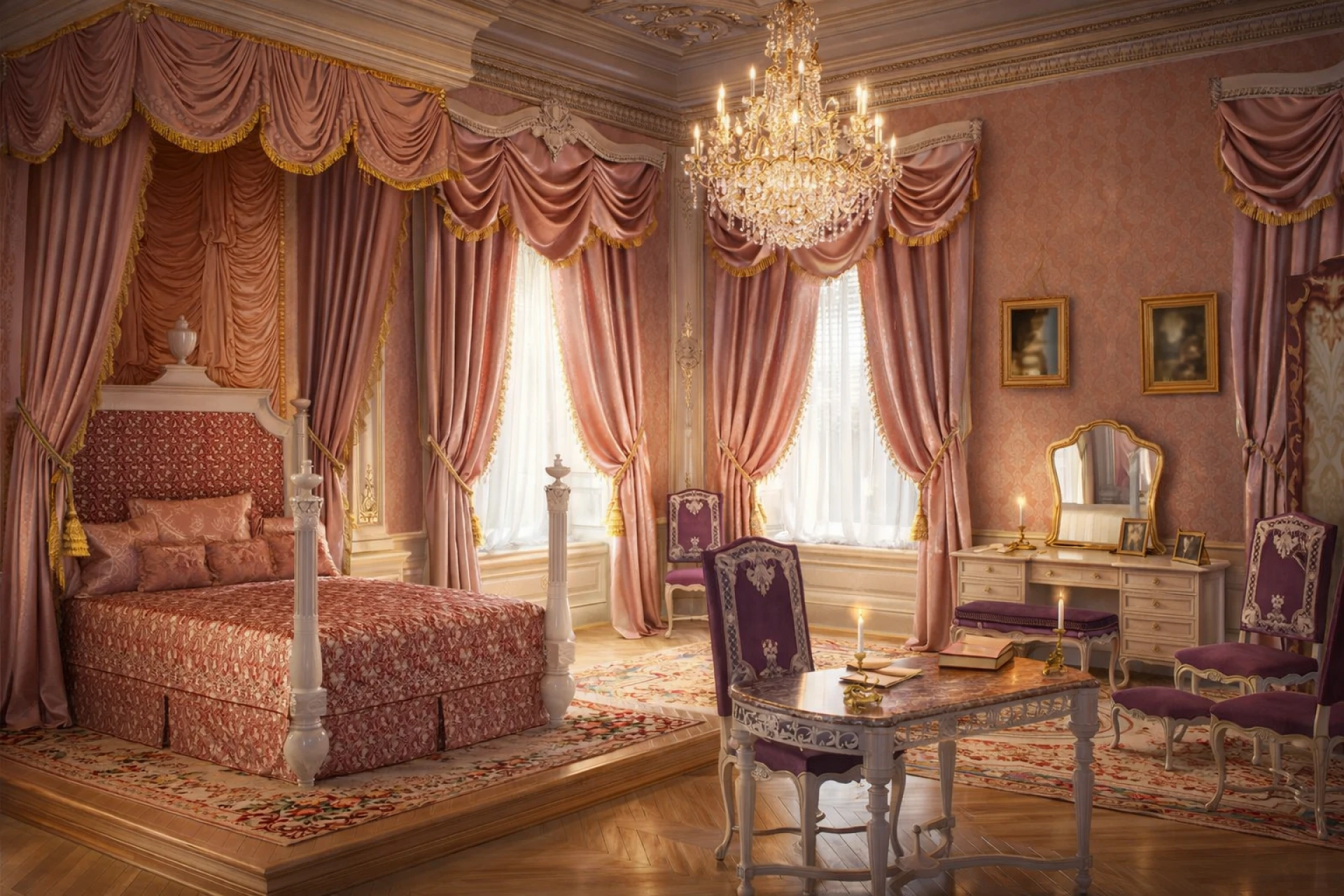
There is a moment, when you first run your hand across a truly hand-carved wooden panel, when something shifts. The surface isn't smooth in the way mass-produced furniture is smooth — polished to an antiseptic blankness. Instead, it breathes. The ridges and hollows tell a story of a hand that moved deliberately, an eye that measured intuitively, a mind that held the finished form long before the chisel ever touched the grain.
This is the experience that defines luxury carved furniture — and it is becoming, in an age of flat-pack convenience, one of the rarest and most coveted things money can buy.
The City That Built the World's Thrones
To understand carved furniture at its finest, you have to go to Saharanpur.
Tucked into the northwestern corner of Uttar Pradesh, India, this city has been synonymous with master woodcraft for over four centuries. During the Mughal era, artisans here were commissioned to create intricately carved architectural elements, screens, and furnishings for royal courts and noble residences across the subcontinent. The tradition didn't fade with the empires — it evolved, deepened, and became the beating heart of a global craft economy.
Today, Saharanpur is home to thousands of woodworking families, many of whom represent the fifth, sixth, or seventh generation of craftspeople in their lineage. The knowledge passed between them isn't written in manuals. It lives in the muscle memory of hands, in the quiet correction of a master guiding an apprentice's grip, in the intuitive understanding of how sheesham wood responds differently to a gouge than mango or teak.
Walk through the workshops here, and you'll hear the rhythmic percussion of mallets against chisels, smell the warm, clean scent of fresh-cut wood, and see walls hung with tools that look almost archaeological — worn smooth by decades of use. These are not factories. They are living ateliers, where handcrafted furniture is not a marketing phrase but simply the only way work is done.
What Makes Carved Furniture Truly "Luxury"?
The word "luxury" is perhaps the most abused term in the design world. It gets applied to anything with a high price tag, a marble countertop, or a French name. But genuine luxury furniture operates on a different plane entirely.
The Hours That Don't Show
A master carver working on a large dining table or wardrobe might spend three to five weeks on a single piece. The intricate floral motifs, geometric lattice patterns, animal figures, or classical acanthus leaf detailing that define high-end carved work cannot be rushed. There is no machine equivalent. CNC routers can approximate the look of carved wood, but they cannot replicate the subtle variations in depth and the slight organic irregularities that make hand-carved work feel alive rather than printed.
This is why discerning buyers—interior designers furnishing heritage hotels, collectors commissioning pieces for private villas, and architects sourcing statement furniture for palace restorations—are willing to invest significantly in the real thing. They understand that what they're buying isn't just an object. It's accumulated hours, accumulated skill, and accumulated heritage.
Classical Forms, Timeless Presence
The aesthetic vocabulary of carved furniture draws heavily from classical traditions—Baroque, Rococo, Mughal, and Colonial styles, each contributing to a design language that feels simultaneously historic and perpetually relevant. The cabriole leg. The carved cartouche. The shell motif. The lotus medallion. These are not trends. They have outlasted every design movement that attempted to replace them.
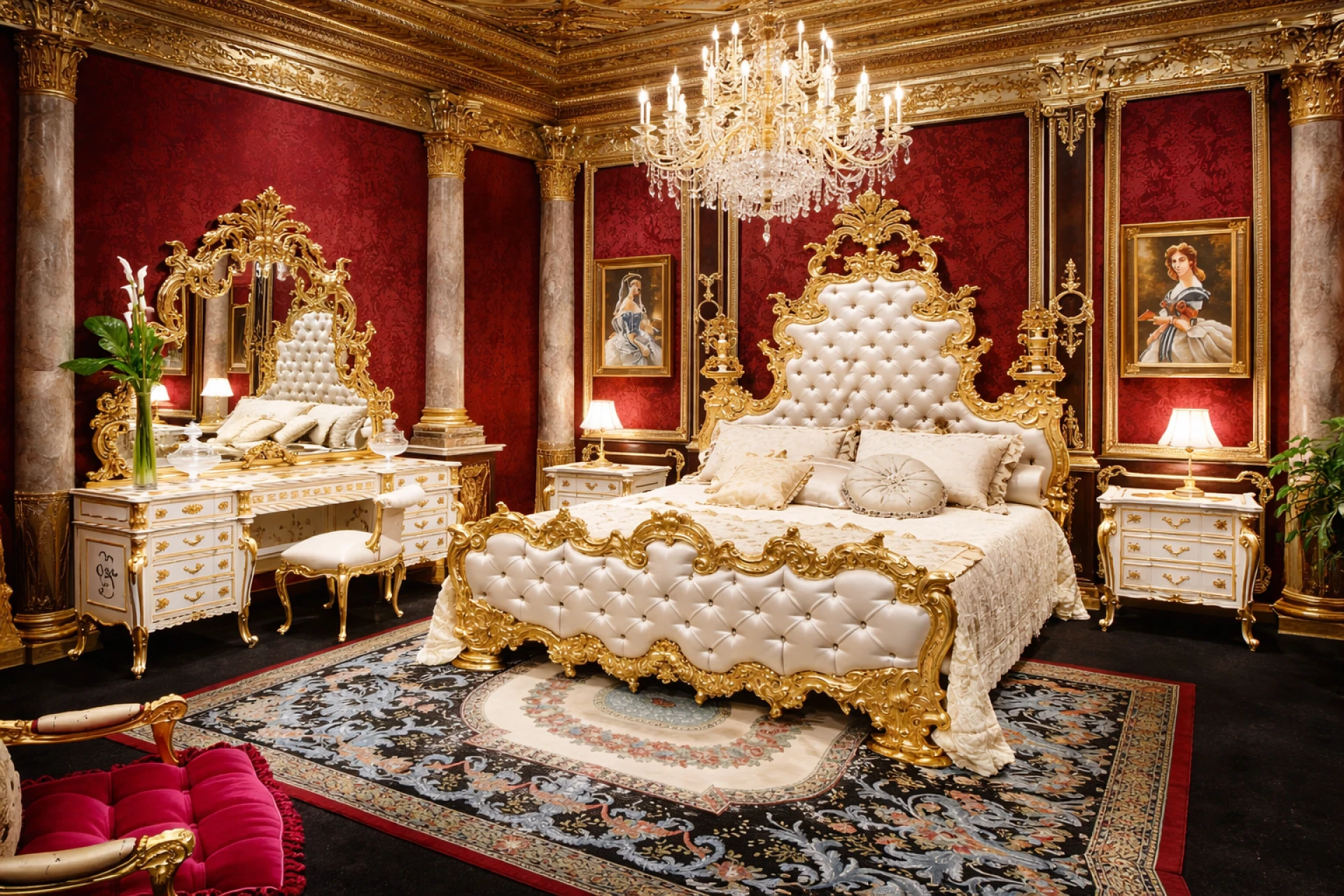
Classical furniture in this tradition doesn't compete with contemporary interiors — it anchors them. A room built around a hand-carved four-poster bed or an intricately worked console table achieves a gravity that minimalist design, for all its elegance, often cannot provide.
The Artisan's Hand: A Portrait of Living Craft
Meet, in spirit at least, the kind of craftsman who makes this work possible.
He wakes before the light changes. By the time the morning is warm, he has already been at the bench for an hour, working on a decorative panel destined for a dining room in Dubai or a library in London. He works from a paper sketch and a mental model refined over thirty years of practice. He doesn't use digital tools. He uses a set of gouges — V-tools, flat chisels, veiners—arranged in a specific order that only he could explain.
His father taught him the foundational cuts. His grandfather's tools, still sharp, hang on a peg nearby. The piece he's working on will take another two weeks. When it's done, no one will know his name — but every person who touches that panel will feel his presence in the wood.
This is the human reality behind bespoke luxury furniture: not just objects, but evidence of lives dedicated to a craft.
Royalzig: Where Saharanpur's Legacy Meets Global Design
Among the manufacturers working to bridge this ancient craft with contemporary global demand, Royalzig stands out as a brand that has taken the Saharanpur tradition seriously—not as a marketing story to be commodified, but as a living practice to be preserved and elevated.
Based in Saharanpur and serving clients across Europe, the Middle East, the Americas, and beyond, Royalzig works directly with master artisans to produce hand-carved furniture that meets the demands of luxury residential and hospitality projects worldwide. Their catalog spans everything from grand four-poster beds and ornate dining suites to carved console tables, mirror frames, and architectural joinery—each piece crafted to order and finished to the standards that high-end interior designers expect.
What distinguishes their approach is a commitment to authenticity over approximation. In a market flooded with machine-carved pieces dressed up with buzzwords, Royalzig's work is produced by hand, in the traditional workshops of Saharanpur, by craftspeople who have spent decades learning their trade.
For interior architects and private clients seeking bespoke luxury furniture — pieces that can be specified to exact dimensions, custom finishes, and site-specific design requirements — this kind of manufacturer relationship is invaluable. It means a client in a villa in the South of France or a palace in Riyadh can receive furniture that reflects a genuinely singular design vision, not a catalog compromise.
The Interior Designer's Case for Handcrafted Furniture
There's a reason that the world's leading interior designers, from the ateliers of Paris to the studios of New York and Mumbai, consistently return to carved wooden furniture as a cornerstone of their most ambitious projects.
Carved furniture creates a narrative. In spaces that are designed to evoke heritage, sophistication, or a sense of storied permanence — luxury hotels, private residences, embassy interiors, heritage restorations — the handcrafted detail signals authenticity in a way that nothing else can. It tells visitors that the people who created this space cared enough to commission a real piece.
It ages with beauty. Unlike trend-driven contemporary furniture, which dates quickly, classical carved pieces mature gracefully. The wood deepens in color, the finish develops character, and the piece becomes more rather than less interesting as the years pass.
It is, ultimately, irreplaceable. A hand-carved piece that is destroyed or lost cannot be reordered online. It was made once, by a specific pair of hands, in a specific moment. This irreplaceability is, paradoxically, one of the qualities that makes it so desirable.
A Craft Worth Protecting
The global appetite for authentically handcrafted goods is growing, even as the number of people with the skills to produce them is shrinking. The economics of craft are difficult — the hours required to produce genuinely hand-carved furniture do not lend themselves to the margins that mass-market retail demands, and the training pipeline for master carvers is long, demanding, and poorly compensated at its early stages.
This makes the choices made by buyers and specifiers more consequential than they might appear. Every commission placed with a genuine luxury furniture manufacturer working with traditional artisans is, in a small way, a vote for the survival of a craft. It is a decision to value the slow, the skilled, and the singular over the fast, the generic, and the disposable.
Saharanpur's woodworkers have survived Mughal transitions, colonial disruption, industrial competition, and the rise of flat-pack furniture. They are still here. But they need clients who understand what they're looking at — and who are willing to choose authenticity when it matters.
Finding the Exceptional: An Invitation
If you've never owned a piece of genuinely hand-carved furniture, the experience of acquiring one is unlike any other design purchase. It begins with a conversation about what you want — the room, the feeling, the function — and ends with something that will likely outlast every other object in your home.
The world of luxury carved furniture rewards the curious and the patient. It asks you to look more closely, to ask better questions, and to care about where things come from and how they were made. In return, it offers something that no algorithm, no production line, and no trend cycle can replicate: a connection to craft, to heritage, and to the irreplaceable human skill that has shaped beauty for centuries.
Whether you're designing a grand private residence, sourcing signature pieces for a hospitality project, or simply looking for something genuinely extraordinary to live with — the tradition is waiting.
This article was written in appreciation of the artisan traditions that continue to define the world's finest handcrafted furniture. For those interested in exploring a curated collection of hand-carved luxury furniture rooted in Saharanpur's centuries-old craft heritage, Royalzig offers bespoke commissions and an extensive range of classical and royal carved pieces — made the way they always have been, by hand.
Source by: https://royalzig.substack.com/p/when-a-chisel-meets-a-legacy-the