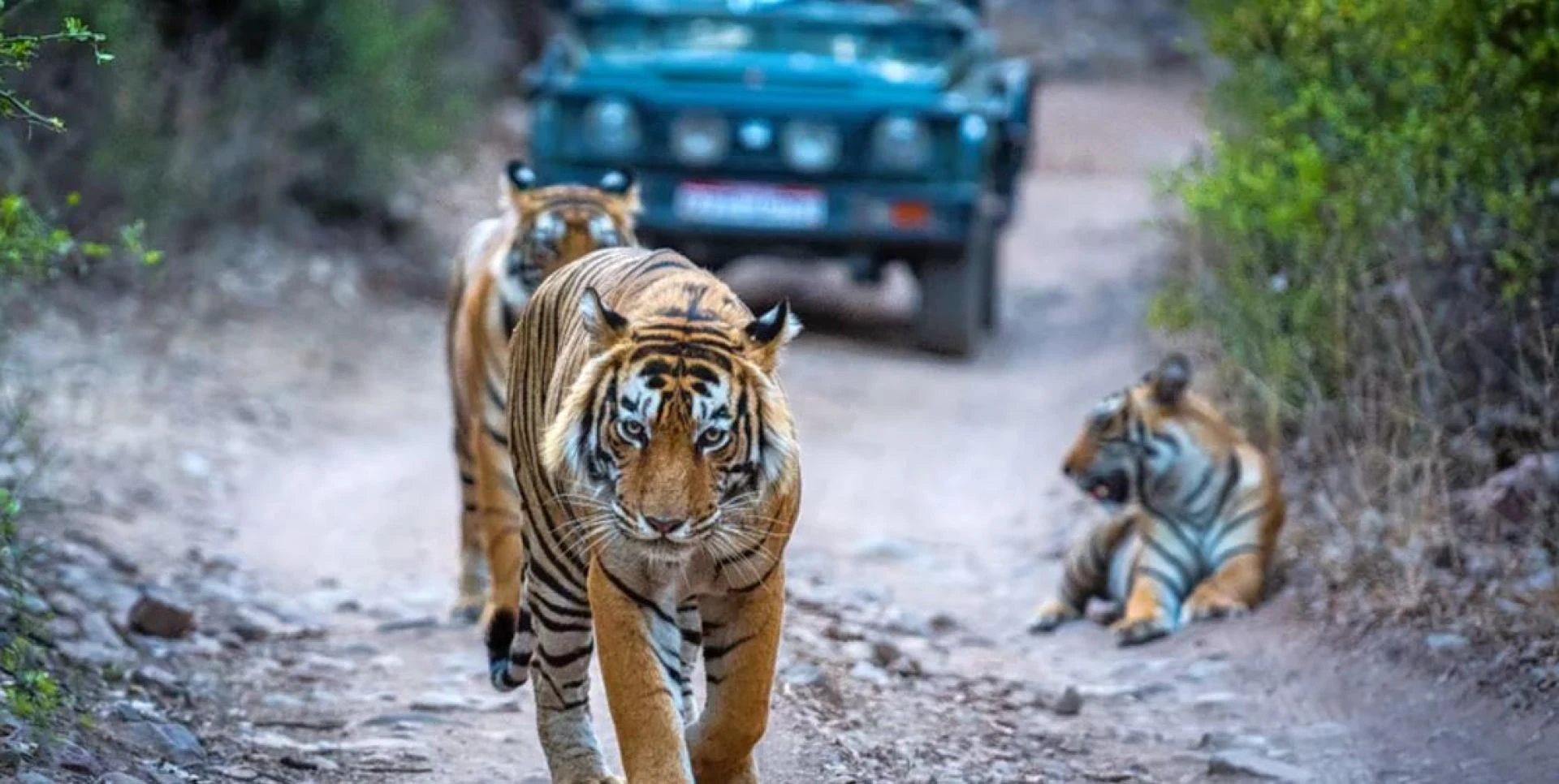

Ranthambore National Park stands out as one of the premier wilderness destinations in Northern India, renowned globally for offering high-probability sightings of the Bengal tiger in its natural habitat. Nestled between the ancient Aravalli and Vindhya hill ranges in Sawai Madhopur, this deciduous forest combines rich biodiversity with profound historical charm. From ancient ruins and lakes carpeted with lotus pads to dry scrub terrain, a venture into Ranthambore guarantees an intimate encounter with nature. To plan an unforgettable wildlife expedition, understanding the vehicle formats, booking systems, and wildlife diversity is essential.
Choosing the Right Safari Vehicle: Gypsy vs Canter
Exploring the rugged terrain of Ranthambore requires authorized safari vehicles managed under the forest department's regulatory framework. Visitors generally have two options, each serving distinct travel preferences.
The six-seater Maruti Gypsy is an open-top, four-wheel-drive vehicle favored by wildlife photographers and small groups. Its compact frame allows nimble maneuvering along narrow forest tracks, switchbacks, and sudden turns. The lower seating angle also facilitates eye-level wildlife photography, which is crucial when capturing tigers resting along dry riverbeds.
The twenty-seater Canter serves larger families and tour groups. Operating as an elevated open-top bus, it provides an expansive vantage point over tall grasslands and dense underbrush. While slightly noisier and confined to wider paths, it remains an economical, dependable option for large traveling parties. Booking either option well in advance is critical, as safaris operate in two fixed windows daily—early morning and late afternoon—with strictly capped entries per zone.
Navigating the Ten Safari Zones
The park is segmented into ten regulated safari zones to distribute vehicle traffic evenly and protect delicate forest corridors.
Zones 1 to 5 encompass the core park area and include prominent landmarks such as Malik Talao, Rajbagh Lake, Padam Talao, and the backdrop of the UNESCO-inscribed Ranthambore Fort. These zones feature extensive water bodies, historical hunting lodges, and high prey density, making them historically celebrated for frequent predator activity.
Zones 6 to 10 represent the buffer belt, established to expand the territory available for eco-tourism. These zones encompass rocky ridges, deep ravines, and plateaus. Over recent years, territorial expansions by resident tigers have made these outer sectors equally rewarding for sightings, while also providing quieter trails away from the central tourist corridors.
Mammals of Ranthambore: Beyond the Bengal Tiger
While the Royal Bengal Tiger remains the undisputed focal point of every safari, the ecosystem sustains a balanced community of predators, scavengers, and herbivores.
The Indian leopard inhabits the rocky peripheries, ravines, and higher cliff faces of the park. Because leopards actively avoid direct confrontation with larger tigers, they tend to thrive in steeper, fractured terrain.
Sloth bears are another sought-after sighting, particularly during early morning hours around ant mounds and fruiting mahua trees. Their shaggy black coats and distinct feeding habits make them an extraordinary sight along the forest tracks.
Herbivores form the backbone of the forest ecosystem. The sambar deer, Asia's largest deer species, frequents marshy lake edges feeding on water weeds. The spotted deer (chital) moves across the open woodlands in herds, remaining perpetually alert to alarm calls. Other herbivores include the nilgai (blue bull)—the largest Asian antelope—as well as the fast-moving chinkara (Indian gazelle) and wild boar.
The dry scrubland provides refuge to lesser carnivores and omnivores. Visitors frequently observe the striped hyena, golden jackal, desert fox, caracal, and the jungle cat stealthily patrolling the park boundaries during transitional twilight hours.
Aquatic Life and Reptiles
The perennial water reservoirs within the reserve serve as vital gathering hubs for reptiles. The marsh crocodile (mugger) is widespread throughout Padam Talao, Rajbagh, and Malik Talao, frequently seen basking on rocky shorelines during cooler morning spells.
The park is also home to diverse non-venomous and venomous snakes, including the Indian rock python, Russell’s viper, and common krait. Additionally, large Bengal monitor lizards are regularly spotted darting across leaf-littered forest floors.
Avian Diversity in the Deciduous Forest
Ranthambore boasts an inventory of over three hundred avian species, drawing dedicated birdwatchers throughout the year. The park supports substantial populations of crested serpent eagles, changeable hawk-eagles, and white-bellied sea eagles that hunt around the lakes.
Wetland regions attract painted storks, spoonbills, sarus cranes, and various migratory waterfowl during the winter migration window. Forest birds, including the Indian paradise flycatcher, rufous treepie, and gray francolin, are commonly spotted along the wooded trails.
Planning Logistics, Stay, and Seasons
The sanctuary welcomes visitors annually from October through June, while core zones close during the monsoon period from July to September. The winter months from November to February bring crisp morning chills and clear daylight, whereas the hotter months from April to June thin out the foliage, drawing wildlife regularly toward shrinking water points.
Securing comfortable lodging nearby completes the wilderness journey. Guests looking for tailored hospitality, tranquil garden surroundings, and direct assistance with park excursions often select a welcoming resort in Ranthambore to rest between demanding forest drives.
When mapping out your itinerary, booking an authorized jungle safari in Ranthambore should be handled months ahead of arrival due to strict permit allotments. For travelers arriving from the capital, organizing a seamless Delhi to Ranthambore tour offers a well-coordinated journey by rail or highway, transitioning effortlessly from the urban landscape into one of India’s most celebrated wildlife havens. Respecting park rules, maintaining low noise levels, and traveling with registered naturalists guarantees an enriching and ethically managed wilderness retreat.