
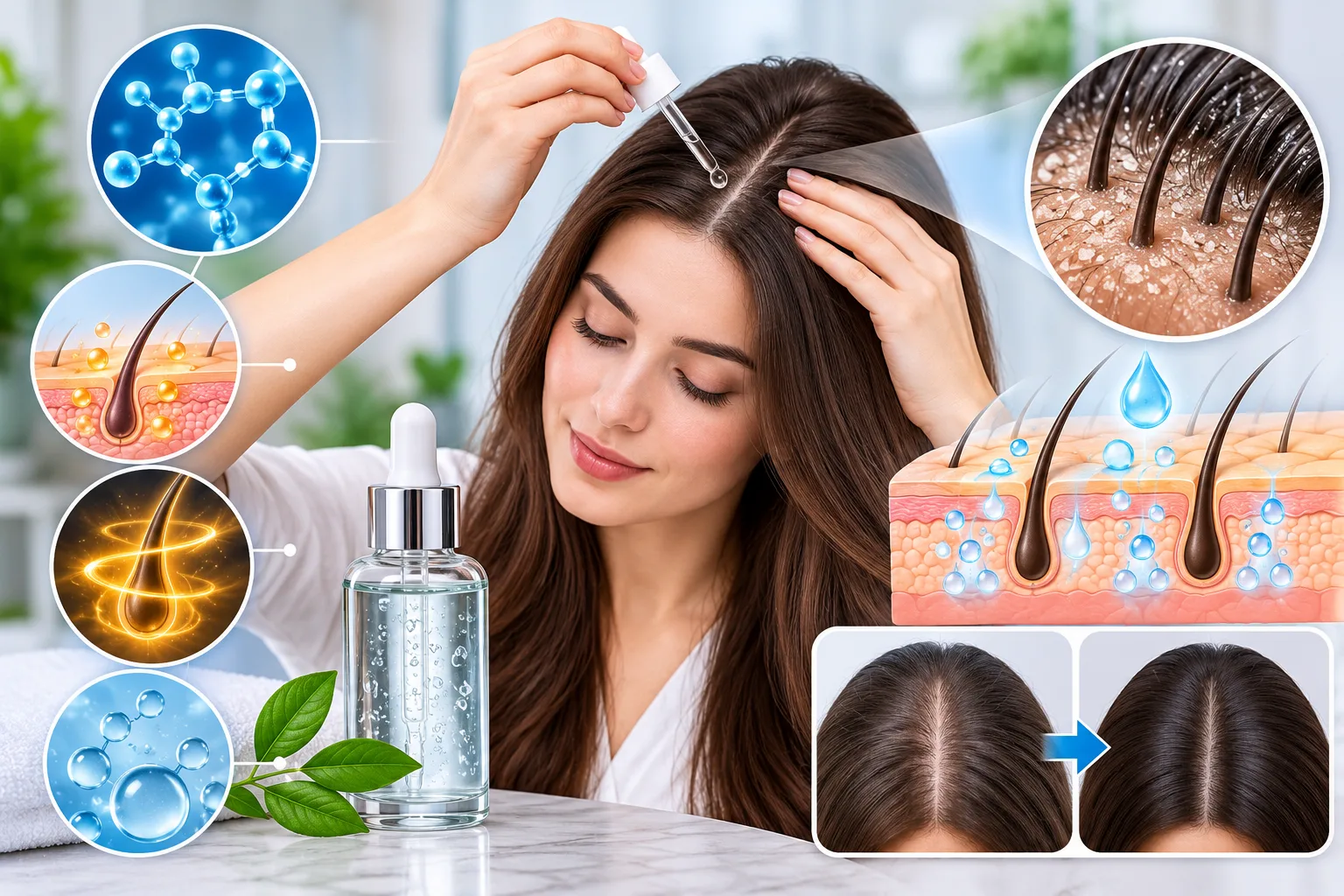
Healthy-looking hair starts with a consistent scalp care routine. While shampoos, conditioners, and hair oils receive plenty of attention, the scalp also deserves regular care. Recently, peptides have become an interesting topic in hair and scalp research because of their potential roles in cellular communication and biological processes. In particular, dual peptide scalp care combines two peptide ingredients in one approach.
For beginners, understanding dual peptide scalp care does not require an advanced knowledge of cosmetic science. Instead, learning what peptides are, how scalp serums fit into everyday routines, and how to apply products correctly can make the process easier. This guide explores the basics of peptide scalp care and explains how to establish a simple, manageable daily routine.
What Is Dual Peptide Scalp Care?
Dual peptide for scalp care refers to using a scalp care formula that contains two different peptides. Peptides are short chains of amino acids, which are the building blocks of proteins. In biological systems, certain peptides participate in communication processes and influence different cellular activities.
In cosmetic formulations, manufacturers include peptides to explore their potential benefits for skin and scalp care. A dual peptide formula combines two selected peptides rather than relying on just one. However, the purpose and effectiveness of each ingredient depend on its formulation, concentration, stability, and available scientific evidence.
Understanding Copper Peptides
Copper peptides are among the peptide ingredients receiving attention in cosmetic research. GHK-Cu is a copper-binding peptide that has been investigated for its interactions with skin-related biological processes. Researchers have explored its relationship with skin appearance, tissue responses, and cellular activity.
However, research involving skin does not automatically establish benefits for hair growth. Therefore, consumers should distinguish between laboratory findings, cosmetic ingredient research, and proven clinical results when evaluating copper peptide scalp products.
What Are GHK-Cu and AHK-Cu?
GHK-Cu and AHK-Cu are two copper-associated peptides used in discussions about cosmetic and scalp care formulations. Although both contain copper, they have different amino acid sequences and should not be considered interchangeable ingredients.
GHK-Cu has received attention in skin-related research, while AHK-Cu has also been investigated in connection with hair follicle biology. Nevertheless, more human clinical research is necessary to establish their effectiveness, ideal concentrations, and long-term results in scalp applications.
Why Are Peptides Becoming Popular in Scalp Care?
Peptides have become increasingly interesting to cosmetic formulators because they offer different possibilities for ingredient development. Rather than functioning like traditional cleansing or conditioning ingredients, certain peptides interact with biological pathways. This makes them an area of interest for researchers exploring advanced skincare and scalp care formulations.
Additionally, modern consumers increasingly look beyond conventional shampoos and conditioners. They want targeted products that complement their existing routines. Consequently, peptide serums and other specialized scalp treatments have attracted attention among people interested in maintaining a healthy-looking scalp.
Potential Benefits of Peptide-Based Scalp Formulas
Different peptides have different properties, so their potential applications depend on the ingredients included in a particular product. Some peptides are investigated for their interactions with cellular signaling, while others are studied for their possible roles in skin-related processes.
For scalp care, researchers are particularly interested in understanding how selected peptides interact with the scalp environment and hair follicles. However, these areas require further clinical investigation. A peptide serum should therefore be viewed as a specialized cosmetic product rather than a guaranteed hair growth treatment.
How Dual Peptides Differ From Single-Peptide Formulas
A single-peptide serum contains one primary peptide ingredient, whereas a dual peptide formula includes two. This combination allows formulators to incorporate ingredients with different characteristics into one product.
Nevertheless, using two peptides does not automatically make a formula more effective than using one. Ingredient compatibility, formulation quality, concentration, and stability remain important considerations. Beginners should evaluate the complete product rather than choosing a serum simply because it contains multiple peptides.
How to Choose a Dual Peptide Scalp Serum
Choosing a suitable scalp serum can feel confusing when several products make similar claims. Fortunately, beginners can simplify the process by focusing on ingredient transparency, product instructions, formulation details, and overall suitability.
A thoughtfully formulated product should clearly identify its ingredients and provide understandable directions. Moreover, consumers should avoid products that promise immediate or guaranteed hair growth without reliable supporting evidence.
Check the Ingredient List
Start by reviewing the product label. Look for the peptide names and any additional ingredients included in the formula. Some scalp serums contain peptides alongside caffeine, humectants, or moisturizing ingredients.
Each component serves a different formulation purpose. For example, humectants help attract and retain moisture, while caffeine is commonly included in cosmetic products marketed for scalp and hair care. Understanding these ingredients makes it easier to compare different formulations.
Consider the Serum Formulation
The texture and application method also matter. Lightweight, leave-on scalp serums may feel more convenient for people who prefer not to wash their hair immediately after application. In contrast, heavier formulas may not suit every scalp type or styling preference.
Check whether the product is designed for daily use and whether its instructions specify application to a clean, dry, or slightly damp scalp. Following the manufacturer's directions helps establish a consistent routine.
Building a Simple Daily Dual Peptide Scalp Care Routine
A beginner does not need a complicated collection of products to establish a scalp care routine. Consistency, gentle cleansing, and appropriate product application are more practical starting points. A simple routine also makes it easier to identify whether a particular product suits your scalp.
The following steps provide a general framework for incorporating a leave-on peptide scalp serum into everyday care.
Step 1: Cleanse Your Scalp Gently
Begin with a shampoo that suits your scalp and hair type. Cleansing helps remove accumulated oil, sweat, styling products, and everyday impurities. However, washing too aggressively or too frequently can leave the scalp feeling dry or uncomfortable.
Choose a gentle cleansing product and adjust washing frequency according to your scalp's needs. People with oily scalps may prefer more frequent washing, while those with dry hair may need a different schedule.
Step 2: Prepare Your Scalp for Application
After cleansing, gently towel-dry your hair if the serum instructions recommend applying it to a dry or slightly damp scalp. Avoid rubbing vigorously because excessive friction can cause unnecessary hair breakage and discomfort.
Next, separate your hair into manageable sections to expose the scalp. This technique makes application easier and helps distribute the product more evenly across the intended areas.
Step 3: Apply the Dual Peptide Scalp Serum
Follow the product's recommended dosage rather than assuming that applying more serum will produce better results. For example, a particular 30 mL leave-on formula may recommend approximately four to six drops once daily, but application instructions vary between products.
Place the serum directly onto the scalp using the applicator. Concentrate on the areas specified by the manufacturer, then distribute it gently with your fingertips. Avoid scratching or applying excessive pressure during the process.
Step 4: Allow the Serum to Absorb
After application, give the formula time to settle according to its instructions. Most leave-on scalp serums do not require immediate rinsing. However, always check the label because different formulations have different application requirements.
You can continue with your usual hair styling routine once the product has settled. Avoid layering several unfamiliar treatments immediately, as introducing multiple products simultaneously can make it difficult to identify the cause of irritation.
Step 5: Maintain a Consistent Routine
Consistency is an important part of any personal care routine. If a product is intended for daily application, follow its directions and avoid changing the dosage without guidance. Keep your routine simple enough to maintain comfortably over time.
Additionally, pay attention to how your scalp responds. If you experience persistent redness, itching, burning, or irritation, discontinue use and seek professional advice when necessary.
Morning vs. Evening: When Should You Apply Peptide Scalp Serum?
The ideal application time depends primarily on the product instructions and your personal schedule. Some people prefer morning application because it fits naturally into their grooming routine. Others find evening application more convenient because they have additional time to apply the serum without rushing.
Neither time is universally better. Instead, choose a consistent time that allows you to follow the recommended dosage and application method. Most importantly, avoid applying the product more frequently than directed.
Common Mistakes Beginners Should Avoid
Starting a new scalp serum routine can be straightforward, but certain habits may reduce comfort and make product evaluation more difficult. Understanding these mistakes helps beginners develop realistic expectations and avoid unnecessary complications.
Using Too Much Product
Applying extra serum does not guarantee better results. Excessive application may leave unwanted residue or increase the possibility of irritation. Always follow the manufacturer's recommended quantity and application frequency.
Expecting Immediate Results
Cosmetic products do not necessarily produce visible changes overnight. Furthermore, peptide research does not establish guaranteed outcomes for every scalp or hair type. Give a routine reasonable time for evaluation while keeping expectations realistic.
Ignoring Scalp Irritation
A product that works comfortably for one person may not suit another. Fragrance, preservatives, solvents, and active ingredients can all contribute to sensitivity in some individuals. Stop using a product if irritation develops, and consult a dermatologist if symptoms persist.
Combining Too Many Treatments
Using several serums, oils, exfoliants, and treatments simultaneously can complicate your routine. Instead, introduce new products individually. This approach makes it easier to monitor scalp tolerance and understand how each product fits into your personal care habits.
Additional Habits That Support Everyday Scalp Care
A peptide serum is only one part of a broader scalp care routine. Everyday habits also contribute to scalp comfort and overall hair maintenance. Gentle cleansing, suitable conditioning, and careful styling can help maintain a balanced approach to personal care.
Consider the following practical habits:
- Choose suitable shampoo: Select cleansing products according to your scalp's oiliness and sensitivity.
- Avoid excessive heat: Limit frequent high-temperature styling to reduce avoidable hair damage.
- Handle hair gently: Use a soft towel and avoid aggressive brushing, especially when hair is wet.
- Maintain a balanced diet: Include adequate protein and a variety of nutrient-rich foods.
- Protect your scalp: Consider sun protection when spending extended periods outdoors.
- Monitor changes: Pay attention to persistent itching, flaking, discomfort, or unusual shedding.
If you experience significant or ongoing hair loss, consult a qualified dermatologist. Hair thinning can have several causes, including hormonal changes, nutritional deficiencies, medical conditions, and genetic factors. A cosmetic scalp serum cannot replace an appropriate medical assessment.
Who Should Consider Dual Peptide Scalp Care?
Dual peptide scalp care may interest people who want to explore ingredient-focused scalp products and incorporate a specialized serum into their grooming routine. Beginners can also use this approach to learn more about cosmetic peptides and how different formulations fit into everyday personal care.
However, suitability depends on the complete formula, individual sensitivity, and product instructions. People with existing scalp conditions, damaged skin, or persistent irritation should seek professional advice before introducing specialized treatments.
Furthermore, individuals experiencing sudden or unexplained hair loss should investigate the underlying cause instead of relying exclusively on cosmetic products. Choosing treatments based on an accurate understanding of the problem is more useful than following trends or exaggerated marketing claims.
Conclusion
Dual peptide scalp care offers an interesting approach to modern cosmetic scalp formulations. Ingredients such as GHK-Cu and AHK-Cu have attracted research interest, although further clinical evidence is needed to establish their effectiveness for scalp and hair applications.
For beginners, the best starting point is a simple routine built around gentle cleansing, appropriate serum application, and consistent product use. Choose transparent formulations, follow the manufacturer's instructions, and maintain realistic expectations. Above all, remember that healthy-looking hair care involves more than one ingredient. A balanced routine and attention to your scalp's individual needs provide a practical foundation for everyday care.