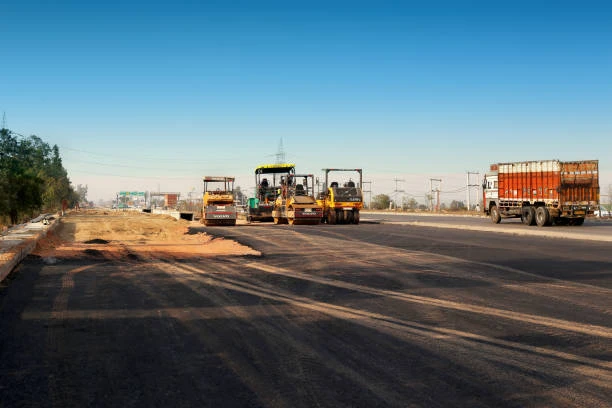
Asphalt delivery is one of the most critical phases in road construction. While mix design and material quality are fundamental, the success of a pavement is heavily influenced by how asphalt is transported, placed and compacted. Urban and regional roads present distinct delivery challenges, and understanding these differences is essential to achieving long-term durability and ride quality.
The requirements of a metropolitan arterial road differ significantly from those of a regional freight corridor. Logistics, temperature control, access constraints and environmental exposure all shape how asphalt must be managed from plant to placement.
Temperature Control from Plant to Site
Asphalt must be delivered and placed within a specified temperature range to ensure proper workability and compaction. If the material cools excessively before it reaches the paver, achieving the required density becomes difficult. This can lead to increased air voids, premature cracking and reduced pavement life.
In urban environments, haul distances may be relatively short, but congestion can introduce unpredictable delays. Stop-start traffic, signalised intersections and restricted site access can extend travel time, increasing heat loss. Effective dispatch coordination and real-time communication between plant and site teams help mitigate this risk.
Regional projects often involve longer transport distances. In these cases, insulated truck bodies, covered loads and carefully sequenced dispatch times are essential to maintaining temperature integrity. Weather conditions, particularly wind, can also accelerate cooling during placement, narrowing the compaction window.
Reliable asphalt contractors understand that temperature management is not merely procedural; it directly influences compaction efficiency and overall pavement performance.
Urban Roads: Coordination Within Constraints
Urban road construction is defined by complexity. Projects often occur within tight work zones, under restricted hours and alongside live traffic. Asphalt delivery must be synchronised precisely to avoid interruptions that affect surface uniformity.
A key factor in urban delivery is maintaining consistent truck intervals. Gaps between loads can cause the paver to stop, creating cold joints that compromise smoothness and structural continuity. Continuous feed supports stable paving speeds and improves ride quality.
Traffic management integration is equally important. Delivery vehicles must align with staged lane closures and safety controls. Poor coordination can create access bottlenecks, delaying placement and reducing productivity.
Urban pavements are typically subject to strict smoothness requirements. On high-traffic commuter routes and bus corridors, even minor surface irregularities are noticeable. Steady asphalt flow and controlled laydown rates are central to achieving a uniform finish.
Regional Roads: Distance and Environmental Exposure
Regional road projects present a different set of operational variables. Extended haul distances increase the risk of temperature drop before placement. Precise production forecasting and site readiness are therefore critical. Any delay in preparation can result in material arriving outside the acceptable limitations.
Regional roads frequently carry heavy freight and agricultural vehicles. Structural performance is therefore a primary concern. Consistent asphalt supply allows uninterrupted paving and uniform compaction, supporting even load distribution across the pavement structure.
Unlike urban settings, where multiple plants may be available within proximity, regional projects may rely on a single production source. This increases the importance of contingency planning and disciplined communication between plant operators and site supervisors.
Compaction and Timing
Compaction is where delivery practices directly translate into pavement quality. Asphalt must be rolled while within its optimal temperature window. Interruptions in supply reduce compaction effectiveness and increase density variability.
Higher air void content makes pavements more vulnerable to moisture infiltration and oxidation. Over time, this accelerates surface deterioration. Whether in metropolitan streets or regional highways, steady delivery and coordinated rolling sequences protect long-term performance.
The relationship between transport logistics and compaction efficiency cannot be overstated. Delivery consistency supports continuous paving, which, in turn, promotes uniform density and a surface finish.
Quality Assurance Across Environments
Structured quality control processes support effective asphalt delivery. These typically include:
- Temperature verification at dispatch and arrival
- Monitoring of truck spacing to maintain paving continuity
- In-situ density testing during compaction
- Surface profiling to confirm smoothness compliance
Urban projects may place stronger emphasis on ride quality metrics, while regional works often prioritise structural thickness and density consistency. In both contexts, documentation provides accountability and confirms adherence to specification.
Adapting Delivery to Local Conditions
Although urban and regional roads differ in complexity and exposure, the underlying principle remains consistent: asphalt delivery must be aligned with placement and compaction to achieve durable outcomes.
Infrastructure providers operating across diverse environments, such as road construction companies in Adelaide, must adjust delivery strategies to accommodate metropolitan congestion and outer growth, as well as regional corridors. Adapting logistics to local traffic patterns, haul distances, and climatic conditions ensures that pavement performance is protected from the plant to the finished surface.
Ultimately, successful asphalt delivery is not simply about transporting material. It is about maintaining temperature integrity, synchronising supply with site readiness and enabling effective compaction. When these elements align, both urban streets and regional highways achieve the durability and ride quality required for long-term service.