
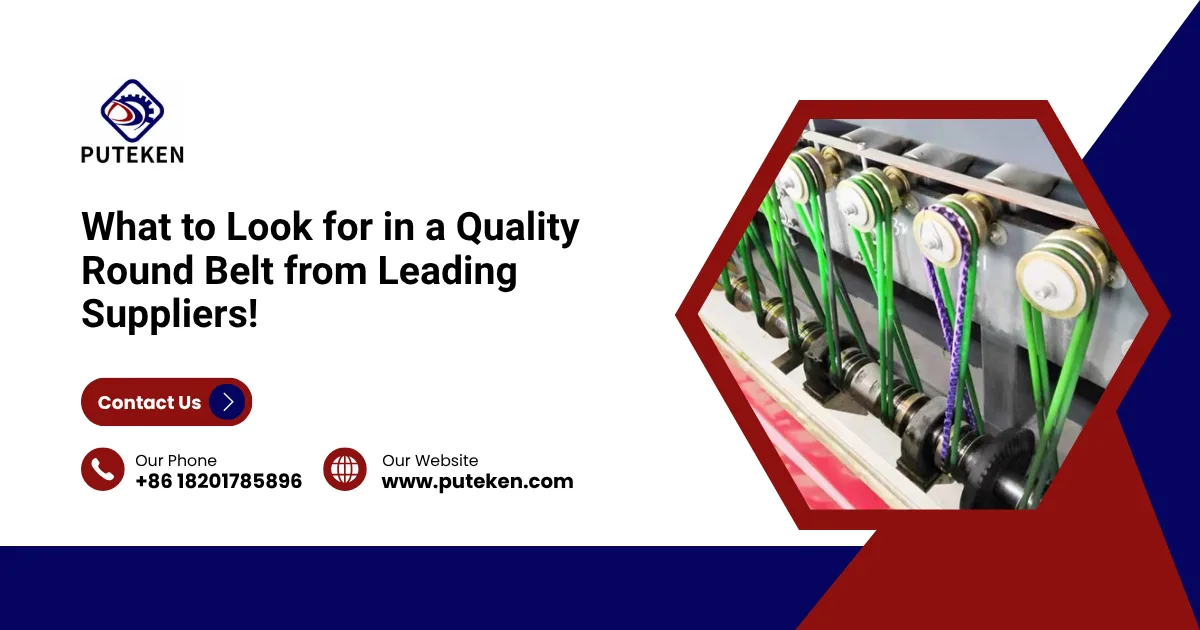
In the dynamic environment of modern manufacturing and material handling, the efficiency of your equipment often hinges on the reliability of even the most unassuming components. Among these, the round belt is frequently overlooked—yet it quietly powers everything from light-duty conveyor systems to intricate sorters, packaging machines, and food-processing equipment. Sourcing a quality round belt from leading suppliers not only ensures consistent performance but can also reduce downtime, cut maintenance costs, and drive sustainable success for your operations.
However, not all round belts are created equal. While a round belt may seem like a simple product—a loop of flexible material—the differences in raw materials, construction quality, tolerances, and supplier expertise can result in dramatically different outcomes on the production floor. With industry applications growing ever more specialized, the need to distinguish between an average round belt and a truly high-quality solution from a reputable supplier has become paramount.
Understanding the Round Belt
A round belt—also known as a drive round belt, endless round belt, or O-ring belt—is a looped belt with a circular cross-section, typically made from elastomeric compounds such as polyurethane, rubber, or sometimes silicone. It is widely used for:
- Low to medium power transmission
- Light-duty conveying and sorting
- Roller drive applications in packaging, food processing, textiles, and mail handling
- Applications requiring smooth, low-noise, and slip-capable movement
Key Features:
- Flexibility: Can navigate small pulleys, twisted drives, or complex paths.
- Customization: Available in a variety of diameters, colors, and hardness.
- Versatile Joining: Can be supplied as endless (welded), open (to be joined onsite), or connected using mechanical fasteners.
Understanding the basics of round belt operation will inform the next step: knowing what characteristics mark a truly high-quality belt.
Why Does Quality Matter in a Round Belt?
A quality round belt from a leading supplier functions as a critical reliability enhancer:
- Reduces Unexpected Downtime: Inferior belts can break, stretch excessively, or slip off, disrupting production runs.
- Improves Product Handling: Uniform surface and consistent tension prevent stuck or slipped products on conveyor lines.
- Maximizes Machine Life: Quality belts place less strain on pulleys and bearings.
For demanding industries—food processing, pharmaceuticals, electronics, and high-throughput logistics—a trusted round belt supplier is vital.
Key Factors to Look For in a Quality Round Belt
1. Material Consistency and Composition
A quality round belt begins with premium raw materials. The main options are:
- Polyurethane (PU): Industry’s gold standard. Known for excellent wear resistance, flexibility, and wide temperature range. Natural or FDA food-grade compounds are available.
- Rubber (Synthetic or Natural): Used in legacy machinery or environments needing softer, higher grip properties.
- Silicone: For high-temperature, non-stick, or sensitive applications.
The ideal belt material depends on:
- Temperature exposure
- Resistance to oil, chemicals, and moisture
- Required hardness (measured in Shore A)
- Food or pharma certifications (FDA, EC, etc.)
The best suppliers provide clarity regarding material sources, chemical formulations, and environmental compliance.
2. Dimensional Precision and Tolerance
A round belt’s diameter and cross-sectional uniformity impact the system’s tension, speed, noise, and product handling. Look for:
- Tight Diameter Tolerance: Ensures stable and consistent drive, minimizing vibration.
- Uniform Surface Texture: Smooth, defect-free surfaces reduce drag and wear.
- Precision Cut or Molded Ends: High-quality joining is essential for seamless performance.
3. Tensile Strength and Elongation
The longevity of a round belt is directly affected by its strength and ability to return to shape after stretching:
- Reinforced Cores: Some round belts contain textile or aramid fibers for higher load capacity.
- Elastic Recovery: Repeated flexing should not cause permanent elongation.
- Appropriate Hardness: Balance between strength and sufficient flexibility for pulleys and sprockets.
Test data, technical datasheets, and certifications from the supplier are markers of dependable quality.
4. Temperature and Chemical Resistance
A premium round belt from a top supplier should operate across a wide temperature range and resist degradation from:
- Oils/greases
- Cleaning agents
- UV exposure
- Ozone and other environmental stressors
Suppliers should confirm resistance ratings per material.
5. Available Joining Methods
A leading supplier will offer several joining options, such as:
- Welded/Heat Fused Joints: Seamless, strongest, and suited for endless applications.
- Mechanical Connectors/Clips: Convenient for maintenance or when frequent belt changes are required.
- Open–ended Belt: For custom onsite joining or replacements in complex machines.
High-quality welded joints should be smooth, strong, and not introduce thick or weak spots.
6. Certifications and Traceability
For food, beverage, and pharma, look for:
- FDA, EC, or other food-contact certifications
- RoHS or REACH compliance for material safety
- Lot traceability from the supplier, indicating robust manufacturing controls
7. Customization, Support, and Supply Capacity
A top supplier can match industry-specific colors, diameters, styles, and lengths, as well as supply belts in high volumes.
- Technical Support: Application engineering and troubleshooting.
- Speed of Service: In-stock inventory and reliable logistics.
- After-sales Support: Assistance in installation, training, and preventive maintenance.
Supplier Evaluation Checklist
When choosing a round belt supplier, consider these questions:
- Does the supplier provide detailed technical data and application engineering?
- Can they customize belts for color, material, and joint type?
- Do they offer rapid, consistent delivery and robust after-sale support?
- Are the belts manufactured under internationally accredited quality systems?
- Is there proof of performance via references or third-party testing?
Shanghai Puteken Transmission System Co., Ltd. stands out as a supplier that satisfies—and exceeds—each of these criteria.
Applications That Rely on a Quality Round Belt
A round belt is favored in various industries due to its versatility. Applications include:
- Conveyor belt accumulators in packaging and logistics lines
- Small product transport and sorting, such as bottles, cans, or cartons
- Agricultural equipment for gently handling produce
- Textile machinery for spinning, winding, or guiding yarns
- Light-duty power transmission in office equipment or small motors
- Pottery, woodworking, and glass transport involving flexible movement and non-marring surfaces
- Food industry for moving chocolates, bread, bakery items with food-grade belts
In each scenario, the quality of the round belt directly influences throughput, product integrity, and machine lifespan.
The Shanghai Puteken Transmission System Co., Ltd. Difference
As a leading supplier of round belts, Shanghai Puteken Transmission System Co., Ltd. delivers:
- Custom-extruded, injection-molded, or precision-cut round belts
- Material selection optimized for your environment: from standard PU to food-grade, high-temp, or antistatic variations
- Endless, open, or quick-join belt options for every maintenance and handling need
- Consistent supply and global logistics for uninterrupted production
- Technical partnership: Application advice, prototyping, installation support, and troubleshooting
Best Practices for Round Belt Installation and Maintenance
- Proper Installation: Use correct tension and pulley alignment; do not twist the belt upon installation.
- Routine Inspection: Regularly check for wear, elongation, surface cracks, or hardening.
- Cleanliness: Keep belts free from oil, dust, and debris that can cause slip or premature failure.
- Correct Joining: Ensure heat fusing or welding is performed as per standards, and store open ends with capped tips to prevent contamination.
- Replacement Timing: Replace belts at the first signs of persistent slippage, cracks, or when the tensioning range is exceeded.
A round belt may be a small part, but its impact on your operation is enormous. Discerning the difference between an average and a high-quality round belt requires attention to material, dimensional tolerance, strength, joining quality, and the technical abilities of your supplier.
Frequently Asked Questions (FAQ)
1. What is the lifespan of a round belt?
Lifespan depends on load, speed, environment, and belt quality. In general, a quality round belt from leading suppliers like Shanghai Puteken Transmission System Co., Ltd. can last from several months to years in properly maintained systems.
2. Are food-grade round belts different from standard belts?
Yes, food-grade belts are made from specially certified polyurethane or rubber compounds, free from additives that can leach or contaminate, and are easily cleaned.
3. How do you join a round belt?
Heat welding is most common for endless applications. Mechanical connectors can be used for temporary or easy onsite joining, though they may introduce minor bumps at the joint.
4. How much tension should I apply to my round belt?
Tension requirements depend on the pulley diameter, load, and belt material. Suppliers should provide guidelines, and excessive tension should be avoided to increase belt life.
5. Can I use a round belt outdoors or in wet environments?
Polyurethane round belts can handle occasional moisture but may degrade with prolonged UV or chemical exposure unless specially compounded. Consult the supplier for outdoor or wet-use belts.
6. Are colored round belts better?
Color is typically for identification or aesthetics. However, in some industries, color-coding can indicate food-grade or special-use belts.
7. Can I replace flat or V-belts with a round belt?
Only if the drive and loads are designed for round belt use; otherwise, mismatches can lead to premature failure.
8. How do I store spare round belts?
Store in a cool, dry place, away from sunlight and chemicals. Avoid sharp bends or stretching during storage.
9. What temperatures can round belts withstand?
Typical PU round belts operate from -30°C to +80°C. High-temperature or low-temperature variants are available; ask for recommendations.
10. Does Shanghai Puteken Transmission System Co., Ltd. offer custom packaging or on-site technical support?
Yes. We provide various packaging options for easy handling and can train your team in on-site belt installation or troubleshooting.