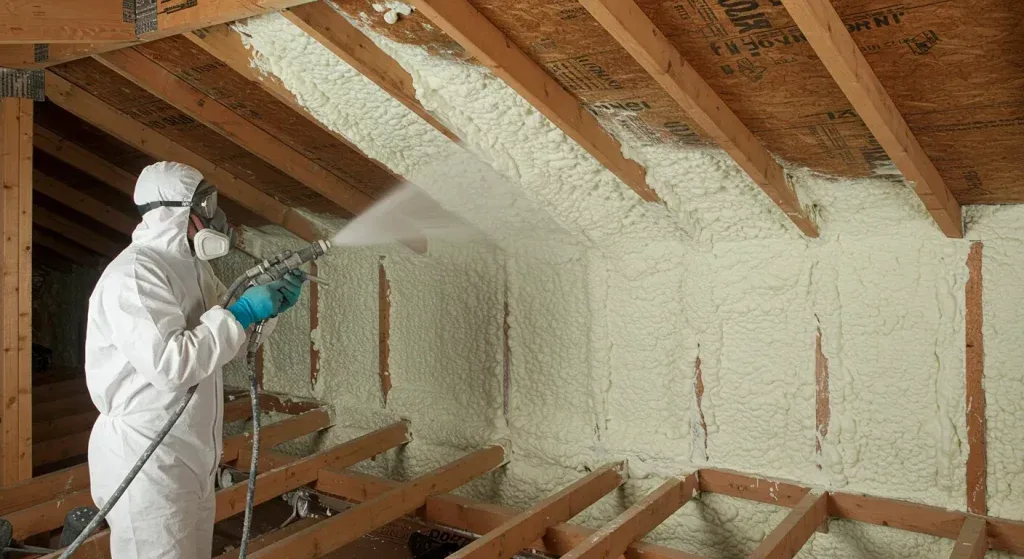
Professional spray foam insulation companies provide a superior airtight seal and structural reinforcement that traditional fiberglass or cellulose crews simply cannot achieve. While standard installers focus on filling cavities with loose material, specialized experts use chemical reactions to create a custom-fit thermal barrier. This process stops air leakage entirely, whereas traditional methods often leave gaps that allow heat to escape.
This article provides a detailed look at the technical advantages and specialized equipment used by modern insulation experts. You will learn why the right choice in material impacts long-term utility costs and home comfort. These findings are based on years of industry field experience in the demanding Minnesota climate.
1. Creating a True Air Barrier
Regular insulation crews often rely on materials that do not stop air movement. Fiberglass batts act like a filter, letting cold air pass through while only slowing down heat transfer. In contrast, spray foam insulation contractor use materials that expand to 30 or 60 times their liquid volume.
Stopping Convective Heat Loss
This expansion fills every crack, crevice, and odd-shaped gap in your walls or attic. By sealing these openings, you eliminate drafts that traditional insulation leaves behind. This is especially important in Annandale, where winter winds can push cold air through the smallest exterior punctures.
- Stops convective heat loss by sealing air leaks.
- Fills gaps around electrical outlets and plumbing stacks.
- Reduces the workload on your heating and cooling systems.
2. Managing Moisture and Condensation
Standard insulation can sometimes trap moisture against wood framing, leading to mold or rot over time. Professional companies that spray foam insulation offer closed-cell options that act as a vapor retarder. This is a level of protection that blown-in or batt insulation cannot provide on its own.
Prevention of Mold and Rot
In the humid Minnesota summers and freezing winters, the dew point often shifts inside your walls. Closed-cell foam prevents moist air from reaching cold surfaces where it would otherwise turn into liquid water. This keeps your home drier and protects the building's structural integrity.
- Closed-cell foam is water-resistant and does not absorb spills or leaks.
- Prevents condensation on the interior of rim joists.
- Eliminates the food source for mold by keeping surfaces dry.
Bonus Tip: If you have a damp crawl space, consider asking your provider about encapsulation. Combining foam with a heavy vapor barrier keeps the entire area beneath your home dry and clean.
3. Improving Structural Integrity
One of the most surprising differences is how certain materials affect a building's strength. A spray foam insulation contractor can install high-density closed-cell foam that actually increases the rack and shear strength of your walls. This makes the entire structure more rigid and resistant to high winds.
Building Longevity and Rigidity
Traditional insulation, like fiberglass or cellulose, adds no structural value. It is essentially dead weight within the wall cavity. For older homes in Annandale or new pole barns, this added rigidity helps maintain the building's shape through decades of seasonal changes.

4. Reaching Hard-to-Access Areas
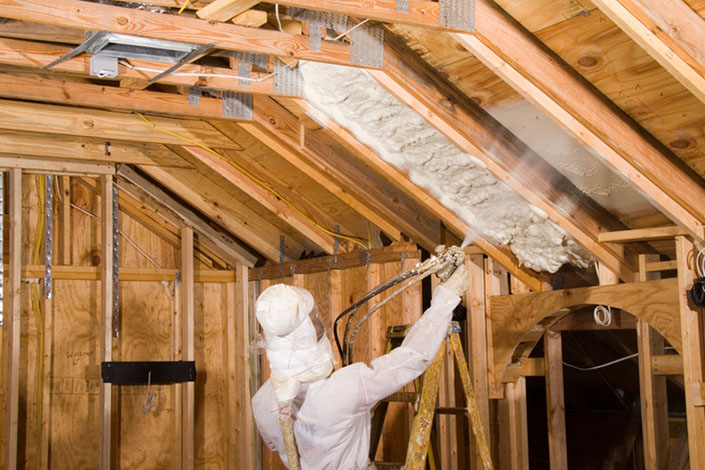
Regular crews often struggle with cathedral ceilings, narrow crawl spaces, or tiny cavities behind existing drywall. A professional foam insulation company uses specialized hoses and injection techniques to reach these spots. This ensures total coverage without needing to tear down every wall in your home.
Injection Techniques for Existing Walls
Injection foam can be pumped into finished walls through small holes, which are then easily patched. This allows you to upgrade the thermal performance of an old farmhouse without a massive renovation project. Traditional crews would likely have to remove the siding or drywall to achieve similar results.

5. Noise Reduction and Sound Dampening
While all insulation provides some sound damping, open-cell foam is particularly effective at absorbing mid- and high-frequency sounds. Regular insulation often leaves air gaps that allow sound waves to travel through the wall. Because foam fills every void, it creates a much quieter indoor environment.
Creating a Quieter Living Environment
If your home is near a busy road or you want to quiet a laundry room, this material is far more effective. It reduces the "drumming" effect of rain on a roof and keeps noise from traveling between floors.
- Open-cell foam absorbs sound waves within its cellular structure.
- Seals gaps around pipes that otherwise carry noise through the house.
- Creates a "library quiet" feel in bedrooms and home offices.
How do professional crews handle the Minnesota climate?
Minnesota weather presents unique challenges for any building project. Spray foam insulation services are designed to handle the extreme temperature swings seen in the Midwest. In the winter, the foam keeps the heat inside, preventing ice dams on the roof. In the summer, it keeps the attic heat from radiating down into your living space.
Managing the Stack Effect
A local expert understands that the "stack effect" in a home can lead to massive energy loss. They focus on the attic floor and the basement rim joists to stop this cycle. Traditional insulation often fails in these areas because it allows air to bypass the material entirely.
6. Long Term Value and Performance
When you look at the life of a building, regular insulation often sags or settles. This creates empty pockets at the top of wall cavities where heat can escape. Foam remains adhered to the surfaces where it was applied, meaning the performance you get on day one is the same performance you get twenty years later.
Financial Impact and Resale Value
Recent market data shows that high-quality insulation can increase a home's resale value by 2% to 6%. Furthermore, homes with a verified air seal often see a 15% or more reduction in monthly energy bills compared to homes with standard insulation.
Bonus Tip: Always check for local utility rebates. Many energy providers in Minnesota offer financial incentives for homeowners who upgrade to high-performance insulation because it reduces the load on the power grid.
Factors to Evaluate Before Choosing an Installer
Selecting a provider involves more than just comparing prices. You should look at the equipment they use and the training their technicians have completed. A high-quality rig ensures the chemicals are mixed at the right temperature and pressure, which is vital for a safe and effective application.
Technical Verification and Equipment
- Verify that they use calibrated proportioning machines for a perfect chemical mix.
- Ask about their experience with residential versus commercial projects.
- Ensure they provide a clear plan for ventilation during the curing process.
- Check that they offer both open- and closed-cell options to suit your specific needs.
Summary of Modern Insulation Benefits
Choosing the right material means looking beyond the initial cost and focusing on your home's overall performance. Professional installers provide a seamless barrier that stops air, moisture, and noise in ways that old-fashioned materials cannot match. By sealing your home's envelope, you protect your investment and ensure a more comfortable living environment for your family. End your search for a more efficient home by evaluating the specific thermal needs of your attic and walls today.
Request a Free Consultation for Your Next Insulation Project
If you are ready to improve your home's comfort and energy efficiency, reaching out to a specialist is the best next step. Peak Spray Foam offers a variety of solutions, including attic, wall, and crawl space services. You can contact them at (612) 482-4742 or via email at [email protected] to discuss your specific needs. Whether you are building a new home or upgrading an existing structure, their team can provide a free quote to help you understand the benefits for your property.
Common Questions About Specialized Insulation Services
What is the main difference between open and closed cell foam?
Open-cell is softer, less expensive, and excellent for soundproofing. Closed-cell is dense, provides a higher R-value per inch, and acts as a moisture barrier and structural reinforcer.
Can I stay in my home during the installation?
Most professionals recommend that people and pets leave the home for 24 hours while the foam cures. This ensures you are not exposed to any odors during the initial drying phase.
How long does the installation process usually take?
A standard attic or basement project usually takes one full day. Larger whole-home projects or commercial buildings may take several days, depending on the total square footage.
Does foam insulation attract pests or rodents?
No, foam is not a food source for insects or rodents. Because it seals the entry points they would usually use to get into your walls, it actually helps keep pests out of your home.
Is it possible to apply spray foam over old insulation?
In some cases, yes, but for the best results, it is usually recommended to remove old, dirty fiberglass or cellulose. This allows the foam to adhere directly to the wood for a perfect seal.