
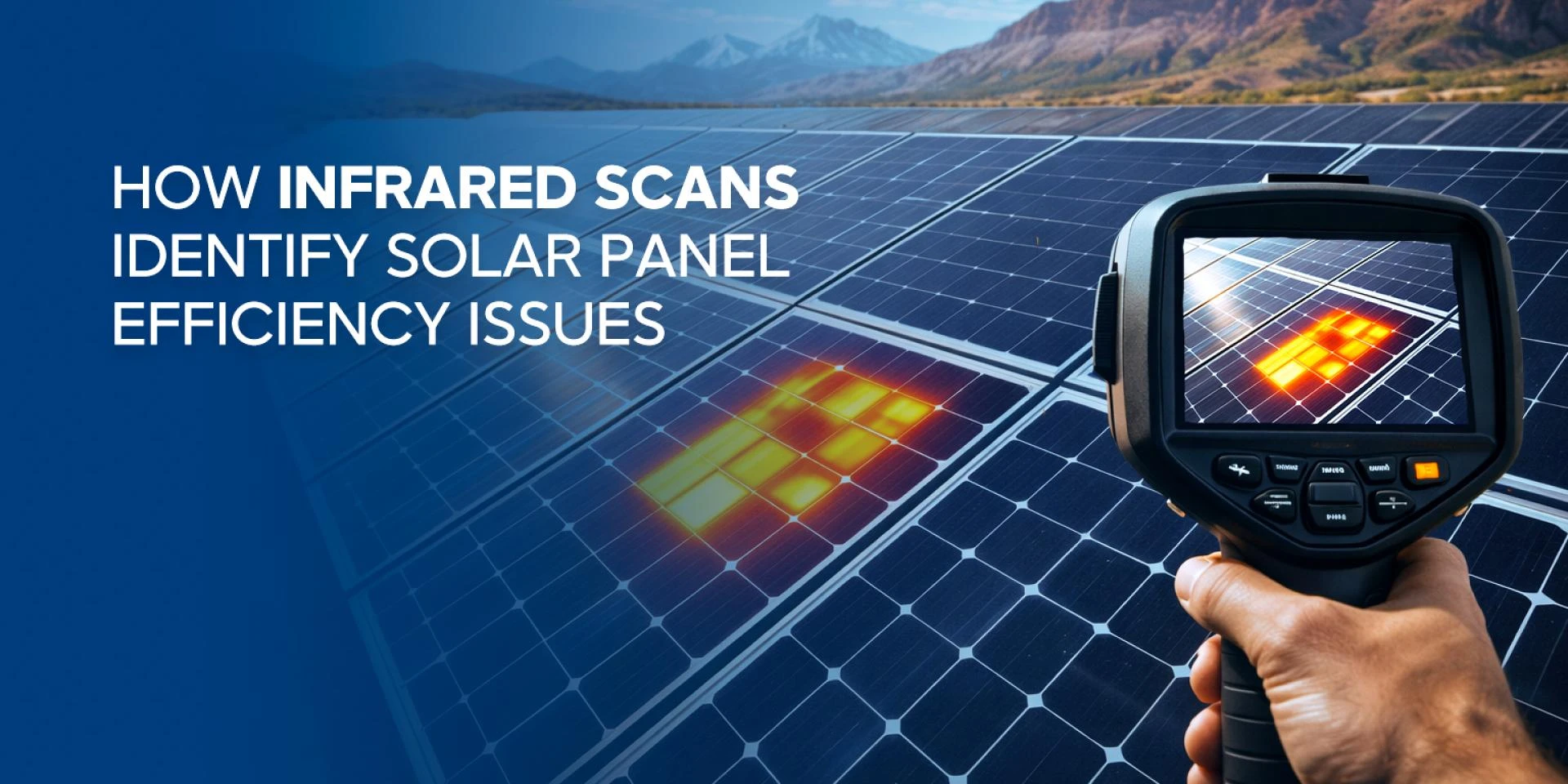
Solar energy systems are designed for long-term, reliable performance; but their efficiency can silently decline due to hidden faults. Solar panel thermal inspection is a non-invasive diagnostic method that uses infrared imaging to identify performance issues that are invisible to the naked eye. In Utah’s varied climate, this inspection method plays a critical role in maintaining system output, safety and return on investment.
What Is Solar Panel Thermal Inspection?
Solar panel thermal inspection is the process of scanning photovoltaic (PV) modules with infrared cameras to detect abnormal heat patterns. These temperature variations often indicate electrical or mechanical issues such as cell damage, connection failures, or shading problems.
Unlike visual inspections, thermal imaging evaluates how a solar panel is actually operating under load. This makes it especially valuable for both residential and commercial solar installations seeking accurate, data-driven insights into system health.
Why Thermal Inspections Matter for Solar Performance
Thermal inspections matter because heat anomalies directly correlate with energy loss and long-term equipment damage. When a panel operates inefficiently, it generates excess heat, which can accelerate degradation and reduce overall system lifespan.
In Utah, where solar panels experience high UV exposure, snow loads, and temperature swings, early detection of thermal issues helps prevent small defects from becoming costly failures. Regular inspections support consistent power generation and help system owners meet performance expectations.
Key Performance Issues Revealed by Thermal Imaging
Thermal imaging reveals specific, actionable performance issues that traditional testing often misses. Below are the most common findings and what they mean for your solar system.
Hot Spots and Cell Damage
Hot spots are localized areas of elevated temperature caused by defective or shaded cells. These can result from manufacturing defects, microcracks, or physical damage. If left unresolved, hot spots can permanently reduce panel output and increase fire risk.
Faulty Electrical Connections
Loose or corroded connections appear as distinct thermal signatures. These issues restrict current flow, leading to energy losses and potential safety hazards. Thermal inspections allow technicians to pinpoint the exact location of the fault without dismantling the system.
Inverter and Combiner Box Issues
Infrared inspections also evaluate balance-of-system components. Overheating in inverters, junction boxes, or combiner panels often signals overload conditions or failing components that can disrupt system performance.
How Utah’s Environment Impacts Solar Systems
Utah’s environmental conditions can accelerate hidden solar panel issues. High-altitude sun exposure increases thermal stress, while snow accumulation and dust can cause uneven heating across modules. These factors make thermal inspections especially relevant for accurate performance assessment.
By identifying heat irregularities during normal operation, inspectors can distinguish between environmental effects and true system defects, ensuring maintenance efforts are both targeted and effective.
Benefits for Commercial and Utility-Scale Systems
For large-scale solar installations, thermal inspections provide measurable operational and financial benefits. Even minor inefficiencies across hundreds of panels can translate into significant energy losses.
Infrared inspections support preventive maintenance strategies, reduce unplanned downtime, and help facility managers document system condition for warranty claims or compliance reporting. This is particularly valuable when combined with broader Solar Panel Thermal Inspection Utah services tailored to regional conditions.
How Thermal Imaging Improves Maintenance Decisions
Thermal data transforms maintenance from reactive to proactive. Instead of waiting for output drops or system alarms, operators can schedule repairs based on verified heat signatures and severity levels.
When integrated with broader Industrial Thermal Imaging Utah capabilities, solar inspections become part of a comprehensive asset reliability strategy, supporting not just energy production, but overall electrical system safety.
When Should a Solar Thermal Inspection Be Performed?
Solar thermal inspections are most effective during periods of stable sunlight and active power generation. They are commonly conducted:
- After installation commissioning
- During routine annual maintenance
- Following severe weather events
- When unexplained performance drops occur
Regular inspections ensure that efficiency losses are detected early, protecting both energy output and equipment lifespan.
Ending Notes
The true value of a thermal inspection lies in how its findings are applied. Clear reporting, annotated thermal images, and prioritized recommendations allow system owners to take immediate, informed action.
If your goal is to validate performance, reduce energy losses and protect your solar investment, consider solar panel efficiency testing with infrared imaging in Utah as a practical next step. It provides objective evidence of system health and helps ensure your solar panels are delivering the performance you expect, today and over the long term.