A bridal lehenga is one of the most significant outfits in an Indian wedding wardrobe. It combines traditional craftsmanship, cultural symbolism, and contemporary fashion to create a look that reflects the bride’s personality and the significance of the occasion. From intricate embroidery and luxurious fabrics to modern silhouettes and statement dupattas, bridal lehengas are available in a wide range of styles.
Choosing the right lehenga involves more than selecting a beautiful color or design. Factors such as fabric, embroidery, silhouette, comfort, wedding venue, season, and styling all influence how the outfit looks and feels throughout the celebration.
What Is a Bridal Lehenga?
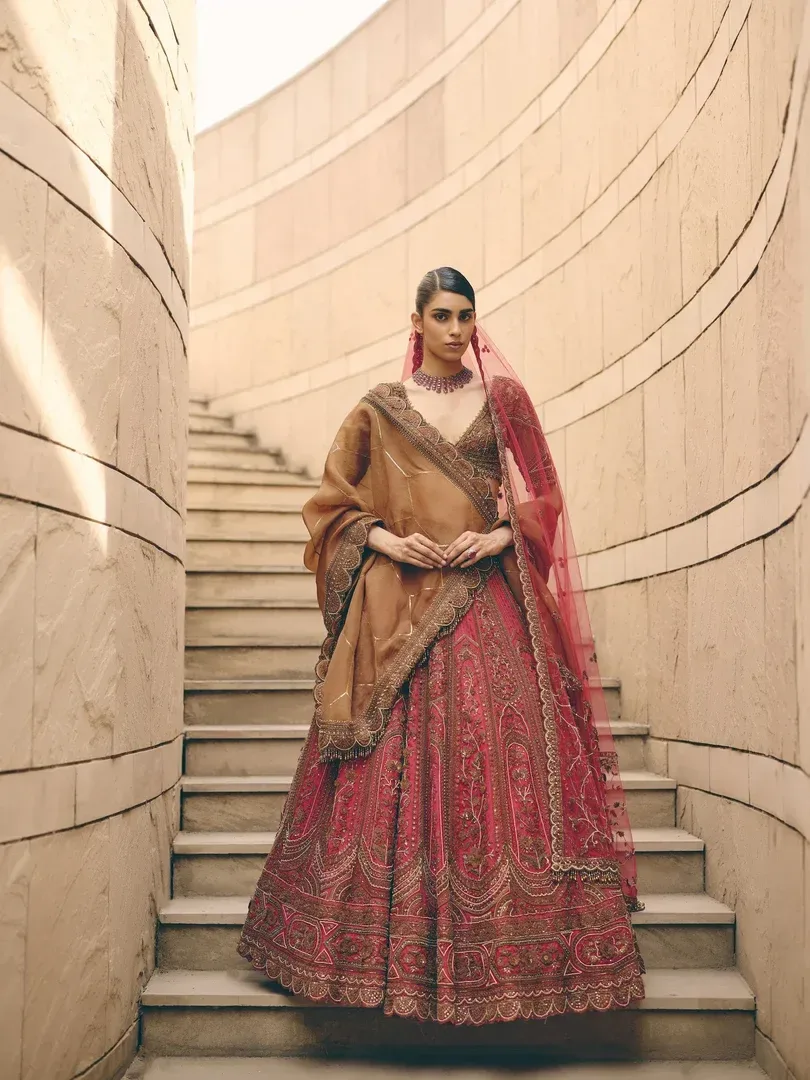
A bridal lehenga is a traditional Indian wedding ensemble generally consisting of a flared skirt, a blouse or choli, and one or more dupattas. It is typically distinguished by elaborate embroidery, decorative motifs, rich fabrics, and detailed craftsmanship.
Traditional bridal lehengas often feature techniques such as zari, zardozi, gota patti, resham embroidery, sequins, beads, or stone embellishments. Contemporary designs may combine these elements with modern cuts, unusual color combinations, or lighter fabrics.
The overall design can range from heavily embellished traditional styles to elegant, minimalist versions suited to brides who prefer a more understated appearance.
Why Is the Bridal Lehenga Important in Indian Weddings?
The lehenga has become an important part of bridal fashion because it allows designers to combine cultural traditions with changing fashion preferences. Embroidery patterns, colors, and motifs can also carry cultural and regional significance.
For many brides, the wedding outfit is selected with careful consideration because it appears in photographs, ceremonies, and celebrations that are remembered for years.
Modern bridal fashion offers greater flexibility. Brides can choose classic red and maroon shades, pastel tones, jewel colors, metallic hues, or contemporary combinations depending on their preferences and wedding theme.
How Do You Choose the Right Bridal Lehenga?
The first step is to consider the wedding ceremony and overall setting. A grand indoor wedding may suit a richly embellished lehenga, while an outdoor or daytime ceremony may call for lighter fabrics and more breathable designs.
The season also matters. Velvet and heavier textiles can work well during cooler months, while silk blends, organza, georgette, or other lighter materials may be more comfortable for warm-weather celebrations.
Comfort should never be overlooked. A bridal outfit can be worn for several hours, so the weight of the embroidery, fit of the blouse, waistband construction, and movement of the skirt are all important.
Which Colors Work Best for a Bridal Lehenga?
Red has traditionally been associated with Indian bridal fashion and continues to be a popular choice. Shades such as deep red, maroon, wine, and crimson can create a classic appearance.
However, modern brides are not limited to traditional colors. Pink, peach, lavender, champagne, ivory, gold, green, and other shades can create distinctive bridal looks.
The best color depends on personal preference, complexion, wedding décor, jewelry, and the overall aesthetic of the ceremony. Rather than following a trend, choosing a shade that feels personally meaningful can make the outfit more timeless.
What Embroidery Is Commonly Used on Bridal Lehengas?
Embroidery is one of the defining features of a bridal lehenga. Zardozi is known for its rich metallic appearance, while zari uses metallic threads to create intricate patterns.
Sequins can add shimmer without necessarily making the outfit extremely heavy. Resham embroidery uses silk-like threads to create colorful floral and decorative motifs.
Other embellishments may include beads, pearls, crystals, stones, gota, and appliqué work. The amount and placement of embellishment can significantly affect both the appearance and weight of the outfit.
How Many Dupattas Should a Bride Wear?
There is no fixed rule. A single dupatta can create a clean and comfortable appearance, while two dupattas can provide a more traditional and layered look.
One dupatta may be draped over the head, while another can be styled across the shoulder or around the arms. The choice often depends on the design of the lehenga, the wedding ceremony, and personal comfort.
For heavily embroidered outfits, balancing the embellishment of the dupattas with the lehenga can prevent the overall look from appearing visually overwhelming.
How Can You Style a Bridal Lehenga?
Jewelry is an important part of bridal styling. A traditional combination may include a necklace, earrings, maang tikka, bangles, and other ceremonial pieces.
The hairstyle can also influence the overall appearance. Braids, buns, soft waves, and traditional updos can be selected according to the neckline, dupatta placement, and jewelry.
Footwear should provide both height and comfort. Since the bride may spend many hours standing or moving during ceremonies, comfortable footwear can be just as important as its appearance.
Brands such as Payal Keyal contribute to the changing landscape of Indian occasionwear by combining traditional silhouettes and detailed craftsmanship with contemporary design influences. When exploring bridal collections, it is useful to consider construction, fabric, embroidery, and overall wearability alongside visual appeal.
Should You Prioritize Trends or Timeless Design?
Wedding fashion trends change regularly, but bridal photographs can remain meaningful for decades. For this reason, many brides choose to balance current trends with classic design elements.
A timeless color, well-proportioned embroidery, and a comfortable silhouette can help an outfit remain visually appealing long after the wedding.
Trendy details can still be incorporated through blouse styles, jewelry, dupatta draping, or smaller design elements rather than making the entire outfit dependent on a short-lived trend.
How Should a Bridal Lehenga Be Maintained?
A heavily embellished lehenga generally requires careful handling. Always follow the care instructions provided with the garment.
Professional dry cleaning may be recommended for certain fabrics and embellishments. The outfit should be stored in a cool, dry location and protected from direct sunlight and moisture.
For long-term storage, breathable garment covers are preferable. Avoid placing heavy items on top of the lehenga because pressure can damage delicate embroidery or embellishments.
Frequently Asked Questions About Bridal Lehengas
What makes a lehenga bridal?
A bridal lehenga is generally distinguished by its detailed craftsmanship, festive or ceremonial design, luxurious fabrics, and elaborate embroidery or embellishment. The exact style varies according to regional traditions and individual preferences.
Which color is best for a bridal lehenga?
Red remains a traditional favorite, but there is no universally best color. Brides can choose from red, pink, maroon, pastel, gold, green, ivory, and many other shades according to personal style and wedding aesthetics.
How early should you choose a bridal lehenga?
It is generally useful to begin exploring options several months before the wedding. This allows time for comparing designs, checking measurements, making alterations, and coordinating accessories.
Is a heavy bridal lehenga comfortable?
Comfort depends on fabric, construction, fit, and the amount of embellishment. A heavily embroidered outfit can be beautiful but may feel heavier during extended ceremonies, so mobility and fit should be considered before making a final choice.
Can a bridal lehenga be reused after the wedding?
Yes. Some brides reuse components separately for festive occasions. The blouse can be paired with a saree, the skirt can be styled with another top, or the dupatta can be worn with a different ethnic outfit.
Final Thoughts
Choosing a bridal lehenga is a balance between tradition, personal style, comfort, and practicality. The right outfit should complement the wedding setting while allowing the bride to move comfortably throughout the celebrations.
By considering fabric, color, embroidery, silhouette, dupatta styling, jewelry, and long-term care, brides can make a more informed decision. Whether the preference is for a traditional red ensemble or a contemporary pastel design, thoughtful selection can create a bridal look that feels meaningful, comfortable, and timeless.