Hay is a valuable source of fiber for cattle, sheep, goats, and other herbivorous livestock. However, loose hay can be bulky, difficult to transport, and challenging to store efficiently. Converting forage into pellets offers a practical way to improve handling, simplify feed distribution, and make better use of available storage space. For farmers and feed manufacturers considering this technology, understanding the equipment, production process, and capacity requirements is essential before making an investment.
Understanding the Role of a Hay Pellet Mill
A hay pellet mill compresses prepared forage into compact cylindrical pellets using mechanical pressure. Depending on the formulation, the raw materials may include alfalfa, grass hay, or other suitable dried forage. The finished pellets are generally easier to weigh, transport, and distribute than loose hay.
When researching a hay pellet mill for sale, buyers should look beyond the machine's advertised output. Factors such as raw material moisture, fiber length, particle size, die specifications, and motor power all influence actual production performance. A machine that performs well with one type of forage may require different operating conditions when processing another.
Raw material preparation is particularly important. Hay usually needs to be chopped and ground before entering the pellet mill. If the fibers are too long or unevenly distributed, material feeding may become inconsistent, affecting pellet formation and machine efficiency. Maintaining appropriate moisture content also helps improve pellet durability and reduce unnecessary fines.
Choosing Equipment for Alfalfa Processing
Alfalfa is widely used in livestock feeding because of its protein content, fiber, and other nutrients. Its physical characteristics, however, can vary with harvesting conditions, maturity, drying methods, and storage practices. These differences should be considered when selecting pelleting equipment.
A 3-5 t/h alfalfa pellet making machine may be suitable for a commercial forage-processing operation that requires several tonnes of pellets per hour. Nevertheless, this capacity range should be treated as a planning reference rather than a guaranteed output. Actual throughput depends on alfalfa quality, moisture, grinding fineness, die configuration, and the operating conditions of the entire system.
Before purchasing equipment, operators should determine whether they will process pure alfalfa or combine it with other feed ingredients. They should also establish the required pellet diameter, finished-product quality, and expected operating hours. These details help suppliers recommend a suitable configuration and reduce the risk of selecting an oversized or undersized machine.
How Much Production Capacity Do You Need?
Capacity planning should begin with realistic estimates of feed demand, available raw materials, and daily operating hours. A small farm producing pellets for its own livestock may need a relatively compact system, whereas a commercial manufacturer serving multiple customers may require higher throughput and more automation.
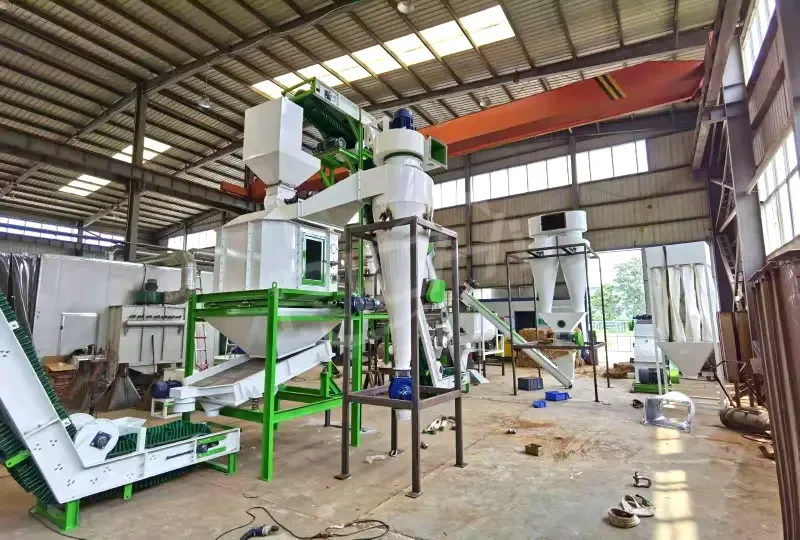
When evaluating different configurations, buyers often ask, what capacity livestock feed production line do I need to meet both current demand and future growth? The answer depends on the target daily output, the number of production shifts, the range of feed products, and the processing characteristics of the raw materials.
Related Post: https://commercialpelletmill.com/livestock-feed-production-line/
For example, a line designed for conventional grain-based livestock feed may not achieve the same throughput when processing fibrous hay. Grinding requirements, material flow, and pelleting resistance can differ significantly. Capacity calculations should therefore be based on the intended feed formulation rather than on nominal equipment ratings alone.
A reasonable expansion plan should also consider seasonal fluctuations in hay supply, electricity consumption, labor availability, and maintenance costs.
Maintaining Equipment and Pellet Quality
Routine maintenance is essential for reliable production. Operators should inspect dies, rollers, bearings, motors, and conveying systems regularly. Worn components can reduce compression efficiency, increase energy consumption, and affect pellet consistency.
Production staff should also monitor raw material moisture, pellet durability, dimensions, and the amount of fines generated during handling. Finished pellets need adequate cooling and dry storage to minimize moisture-related deterioration. Good housekeeping and dust management are important for maintaining a clean and safe working environment.
When comparing equipment options, buyers can review technical specifications, installation requirements, spare parts availability, and service support. If you are ready to compare suitable configurations, go now to the relevant equipment information pages and examine the specifications against your actual production requirements.
Making a Practical Investment Decision
The most suitable hay pellet system is not necessarily the one with the highest rated capacity. Instead, it should match the raw materials, production targets, available budget, and expected operating conditions.
Suppliers such as pellet machine for sale can be included in the evaluation process when researching forage-processing and livestock feed production equipment. Before committing to a project, request a clear equipment list, realistic capacity estimates, utility requirements, and details about installation and after-sales support.
Ultimately, successful hay pellet production depends on coordinated equipment selection and effective process management. With careful planning, producers can improve forage handling, reduce storage difficulties, and establish a production system that supports their long-term livestock feeding objectives.