Manage Equipment Heat in Restricted Spaces
Electrical substations operate continuously to distribute power across industrial facilities, commercial developments, infrastructure networks, and utility systems. Transformers, busbars, switchgear, cable connections, and associated equipment generate heat during normal operation. Managing this heat is essential for maintaining suitable operating conditions and protecting surrounding infrastructure.
However, substation projects often have limited installation space. Equipment is arranged around electrical clearances, ventilation requirements, cable routes, access paths, and safety zones. Adding thermal protection without interfering with these requirements can become a difficult engineering task.
The challenge is particularly noticeable when existing substations are upgraded. New equipment may be installed close to older structures, leaving little room for conventional insulation systems or additional protective enclosures.
Aerogel insulation can be evaluated for selected applications where reducing heat transfer with a compact installation profile is important. Its low thermal conductivity can help engineers achieve thermal resistance without relying on excessive thickness.
The important consideration is identifying where insulation is genuinely required and ensuring that it does not interfere with electrical safety, ventilation, equipment cooling, or fire-protection arrangements.
Why Heat Management Matters in Substations
Electrical equipment generates heat through normal operation. Transformers experience losses in their windings and magnetic cores, while switchgear and electrical connections can develop heat due to electrical resistance and operating loads.
These temperatures are generally managed through equipment design, cooling arrangements, ventilation, and appropriate installation clearances.
Problems can arise when heat from one component affects nearby equipment or surrounding building surfaces. In a compact substation, poorly planned thermal separation may contribute to elevated temperatures in adjacent service areas.
This is particularly relevant in indoor substations, industrial electrical rooms, and installations where equipment is positioned close to walls, partitions, or other services.
Engineers should distinguish between heat generated inside electrical equipment and heat transferred to surrounding structures. Insulation may help manage the latter, but it cannot replace the cooling systems and thermal design specified by the equipment manufacturer.
The Space Constraint in Modern Substation Design
Substation layouts must accommodate equipment access, cable termination, ventilation, inspection, and maintenance.
In urban infrastructure and industrial facilities, the available building footprint may be limited. Expanding the electrical room to create additional clearance is not always possible.
Conventional insulation can sometimes require substantial thickness, particularly where a specific thermal resistance is needed. Installing it around existing partitions or equipment housings may reduce usable space or interfere with nearby services.
A thinner material can offer greater flexibility in selected locations.
For example, consider an indoor substation where a partition separates an electrical equipment area from an adjacent occupied service room. The engineering team wants to improve the partition's thermal performance without changing the room dimensions.
A suitable compact insulation arrangement may help achieve the required thermal resistance while preserving the existing layout.
The final design must still comply with electrical separation requirements, fire regulations, access provisions, and the building's ventilation strategy.
How Aerogel Can Support Thermal Protection
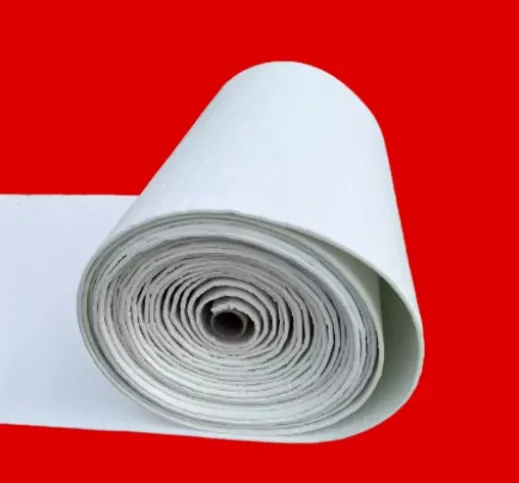
Aerogel has a highly porous structure that restricts heat transfer. Commercial products based on this technology can provide low thermal conductivity and may be suitable for applications where insulation thickness is restricted.
In substation projects, engineers can assess suitable products for selected building partitions, equipment enclosures, auxiliary service areas, and other surfaces where unwanted heat transfer is a concern.
Its main advantage is the possibility of achieving useful thermal resistance within a relatively compact installation.
However, this does not mean that electrical equipment itself should be wrapped in insulation. Transformers, switchgear, and other electrical components require manufacturer-approved cooling and ventilation arrangements. Covering heat-dissipating surfaces without approval could increase operating temperatures and create serious equipment risks.
The more appropriate approach is to identify surrounding surfaces that require thermal separation and evaluate whether a suitable insulation system can meet that requirement.
Applications Worth Evaluating
Different areas within a substation have different thermal and safety requirements. Insulation should be specified according to the purpose of each installation.
1. Electrical room partitions
Partitions separating equipment areas from adjacent rooms may require improved thermal resistance where heat transfer affects the surrounding space.
2. Auxiliary equipment enclosures
Selected non-electrical or manufacturer-approved enclosure surfaces may benefit from compact thermal protection, provided that ventilation and access requirements remain unaffected.
3. Cable service areas
Certain building surfaces around cable service routes may require thermal separation. Cable insulation, fire stopping, and electrical protection must be addressed separately according to applicable standards.
4. Transformer room building elements
Walls or partitions surrounding transformer rooms may require suitable thermal and fire-performance specifications depending on the building design.
5. Industrial substation upgrades
Existing facilities may have restricted space for additional insulation. A thin-profile product can be evaluated where it offers a practical installation advantage.
These applications require project-specific assessment. Insulation should never obstruct electrical clearances, emergency access, ventilation openings, or equipment maintenance zones.
Fire Safety Must Be Evaluated Separately
Electrical substations have strict fire-safety requirements because of the presence of electrical equipment, cables, oils in certain transformer designs, and other potential ignition sources.
Choosing a material with good thermal insulation performance does not automatically establish that it is suitable for a fire-rated assembly.
Project teams should review the required reaction-to-fire classification, smoke performance, fire resistance, and relevant test documentation.
These properties describe different aspects of fire performance. A material's reaction-to-fire rating does not prove that a complete wall or enclosure will maintain its integrity during a fire.
Where fire-rated partitions or cable penetrations are involved, the complete tested or approved assembly must be specified. Insulation must also be compatible with fire stopping, seals, fixings, and protective facings.
This is particularly important in substations where fire compartmentation is part of the overall electrical safety strategy.
Selecting the Right Product for the Installation
Material selection should begin with the thermal requirement and the surrounding operating conditions.
Before procurement, engineers and contractors should consider:
Thermal conductivity: Compare the manufacturer's documented values at relevant mean temperatures.
Required thickness: Calculate the thickness needed to achieve the specified thermal resistance.
Temperature suitability: Confirm continuous and intermittent temperature limits.
Fire performance: Review the documentation required for the specific building assembly and application.
Mechanical protection: Consider impact, handling, vibration, and potential damage during maintenance.
Moisture exposure: Check whether the installation requires vapour control, water protection, or a specific external finish.
Electrical compatibility: Ensure the material and its fixings do not interfere with electrical equipment, clearances, grounding, or ventilation.
Maintenance access: Keep inspection panels, cable routes, and service areas accessible.
These checks help prevent a common procurement mistake: choosing a material based on one performance figure without considering the complete installation.
Installation Planning in Existing Substations
Working inside an operational substation requires careful coordination.
Contractors must follow site electrical safety procedures, access restrictions, isolation requirements, and approved work permits. Insulation installation should be planned around equipment operating conditions and the facility's maintenance schedule.
Before work begins, the team should inspect the proposed surfaces, verify dimensions, identify existing coatings, and check for moisture or damage.
Installation drawings should show joints, terminations, penetrations, fixing arrangements, and protective coverings.
If insulation is being installed around existing building partitions, contractors should confirm that the additional thickness will not obstruct doors, cable access, ventilation grilles, or inspection routes.
The manufacturer's handling and installation instructions should be followed. Completed work should be inspected for gaps, loose sections, damaged edges, and incomplete protective finishes.
A properly documented installation makes future inspection and repair easier.
Comparing Initial Cost with Long-Term Value
Advanced materials may involve a higher purchase cost than conventional alternatives. Their value should be assessed against the complete project requirement.
For a substation upgrade, the cost comparison should include:
- Material procurement and transportation.
- Required insulation thickness.
- Installation labour and access arrangements.
- Protective facings and fixing systems.
- Changes required to existing structures.
- Inspection and maintenance requirements.
- Expected service life.
A compact insulation arrangement may be beneficial when it avoids costly changes to room dimensions or surrounding services.
However, if sufficient space is available and conventional insulation meets the required performance, a less expensive system may be more appropriate.
The decision should be based on thermal calculations, safety requirements, installation constraints, and lifecycle cost rather than material price alone.
Is Aerogel Suitable for Your Substation Project?
Advanced insulation is worth evaluating when a substation has restricted installation space and a clearly identified requirement to control heat transfer through selected building surfaces or approved enclosures.
It may be particularly relevant to indoor substations, industrial electrical rooms, and refurbishment projects where additional thickness is difficult to accommodate.
It is not a replacement for transformer cooling, electrical insulation, fire stopping, or dedicated fire-protection systems.
Before specifying a product, engineers should confirm its technical suitability and ensure that the proposed installation works with the electrical, mechanical, and fire-safety design.
Discuss Your Substation Insulation Requirements with DARQ Industries
Substation projects require careful coordination between thermal performance, electrical safety, fire requirements, and available installation space.
DARQ Industries offers advanced insulation material solutions for demanding thermal applications. Utility engineers, industrial project owners, electrical contractors, EPC teams, and procurement professionals can connect with DARQ Industries for technical guidance, material selection support, and project-specific installation planning.
Discuss your requirements with DARQ Industries to evaluate suitable insulation options for your electrical infrastructure.