- A piston kit is a key part of a two-wheeler engine. It works inside the engine cylinder and plays an important role in the combustion process. Selecting the correct piston kit requires more than checking its size or price. Buyers should understand the components, engine requirements and compatibility before making a decision.
- For mechanics, spare-parts distributors and automotive businesses, knowing these details can help avoid common selection mistakes.
Understanding the Main Components of a Piston Kit
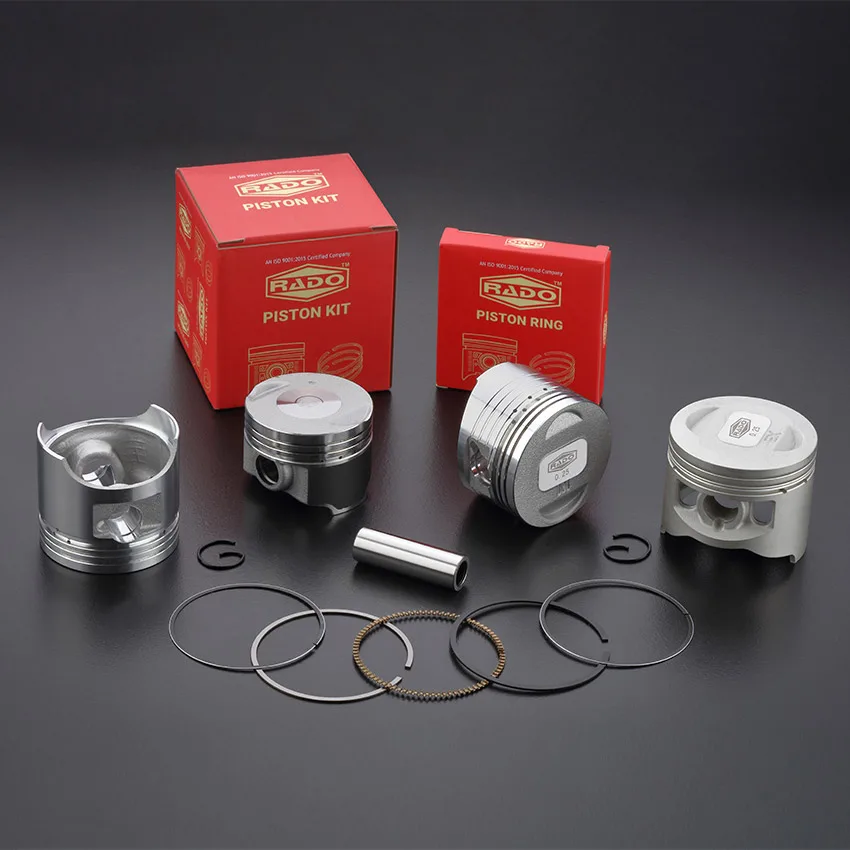
A typical piston kit includes several components that work together.
1. Piston
The piston moves up and down inside the cylinder. It receives pressure from combustion and transfers force through the connecting rod.
2. Piston Rings
Piston rings help maintain compression between the piston and cylinder wall. They also help control engine oil.
3. Piston Pin
The piston pin connects the piston to the connecting rod, allowing the assembly to move during engine operation.
4. Circlips
Circlips help hold the piston pin in its correct position and prevent unwanted movement.
Understanding these parts is important because the performance of the assembly depends on the compatibility of its components.
Four Important Checks Before Selecting a Piston Kit
1. Confirm the Engine Model
The first step is to identify the correct engine model and application. Different engines may require different piston dimensions and specifications. Never select a piston kit based only on its appearance.
2. Check the Required Dimensions
Piston diameter, cylinder dimensions and other manufacturer specifications should be checked before purchasing. Incorrect sizing can lead to fitting and operating problems.
3. Consider Material and Manufacturing Quality
Material selection and manufacturing accuracy are important factors when choosing engine components. Buyers should ask suppliers for relevant product specifications and confirm that the parts meet the requirements of the intended application.
4. Check Every Component
Do not inspect only the piston. Check the rings, piston pin and circlips as well. The complete kit should be suitable for the engine application.
Why Choosing the Right Manufacturer Matters
A suitable supplier can help buyers understand product availability, application requirements and component specifications. Distributors and workshops should look for manufacturers who can provide clear product information and communicate about different engine applications.
When comparing a Piston Kit Manufacturer, consider manufacturing experience, product range, component compatibility and the ability to understand customer requirements.
Piston Kit Manufacturing in India's Automotive Industry
- India has a large two-wheeler and three-wheeler market. This creates a continuing requirement for engine components in the replacement and aftermarket segments.
- A Piston Kit Manufacturer in India serves different buyers, including automotive spare-parts distributors, wholesalers, workshops and other businesses. Clear product specifications and correct application details help buyers select suitable components.
About RADO Engine Parts
- RADO Engine Parts is based in Rajkot, Gujarat, India. Established in 2004, the company manufactures and supplies two-wheeler and three-wheeler engine components, including piston kits, engine valves, connecting rod assemblies, camshafts and rocker arms.
- The company focuses on precision engineering and automotive component requirements.
Final Thoughts
- Selecting a piston kit should begin with checking the engine model, required dimensions and compatibility of every component. Buyers should also understand the product specifications and choose a manufacturer that can provide relevant information.
- A careful selection process helps mechanics, distributors and automotive businesses make better decisions when sourcing two-wheeler engine components.