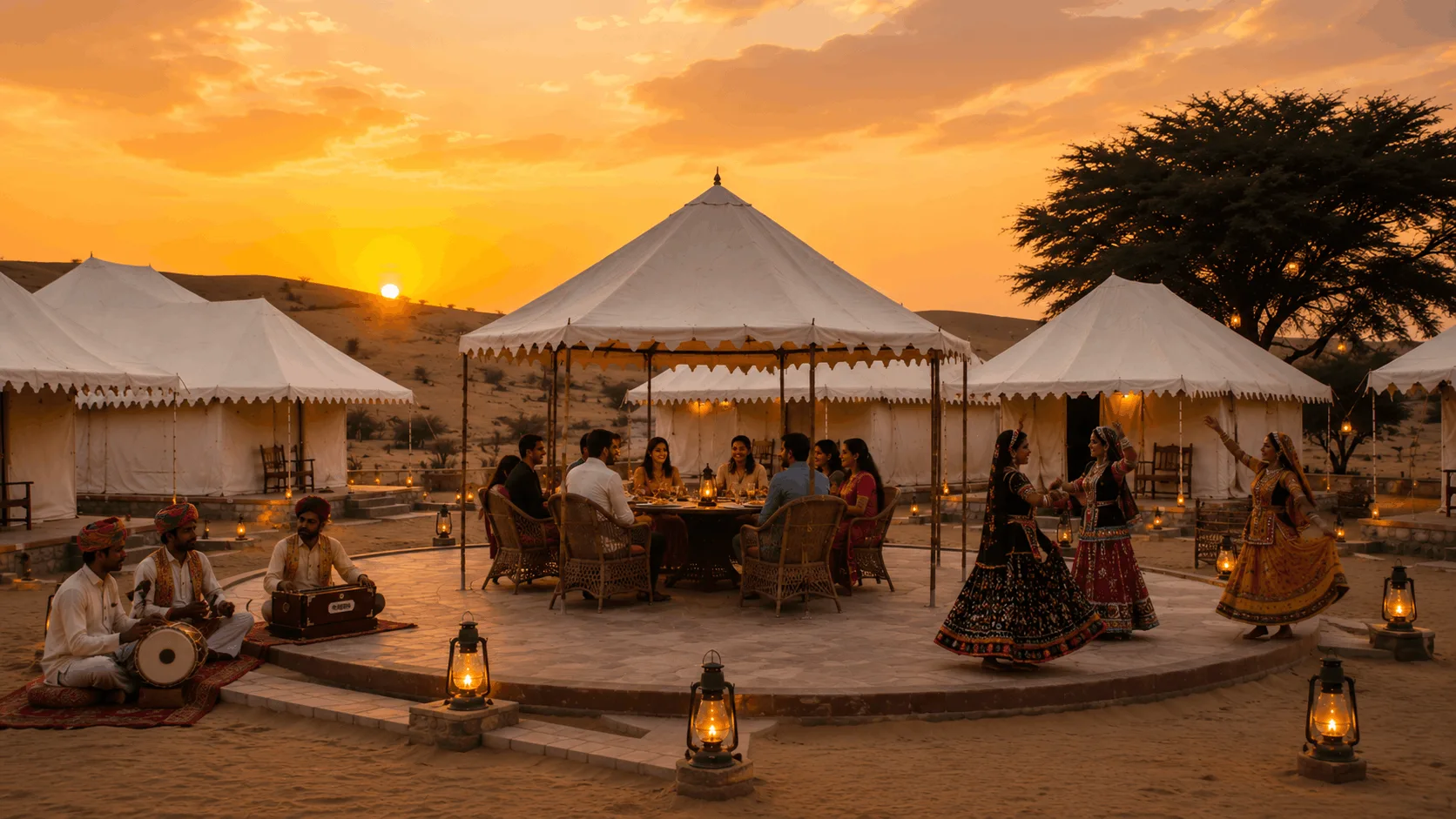
Staying in the Thar Desert is different from reserving a room in Jaisalmer city. The landscape is more open, temperatures can change noticeably between day and night, and the experience is organised around natural light, outdoor activities and cultural evenings rather than constant access to markets and urban attractions.
First-time visitors sometimes imagine two extremes. Some expect basic camping with limited comfort, while others picture a resort experience completely separated from the desert environment. Lohagarh Desert Resort lies between these assumptions by combining comfortable accommodation and guest facilities with safaris, dunes, cultural performances and quieter surroundings.
Understanding what the stay actually involves helps travellers pack correctly, select a suitable duration and avoid unrealistic expectations. The desert should not feel exactly like a city hotel because its climate, geography and atmosphere are central to the journey.
How Is a Desert Resort Different From a City Hotel?
A city hotel is normally selected for access to monuments, shopping, restaurants and transportation. Guests may spend most of the day outside and use the property mainly for sleeping.
A desert resort is itself part of the itinerary. Visitors come not only for accommodation but also for sunsets, dunes, safaris, cultural programmes and time away from urban activity. The property may therefore feel quieter and more self-contained.
Travellers should not expect to walk out of the resort directly into a commercial market or café district. Desert evenings follow a different rhythm, often centred on music, dining, bonfires during suitable weather and observation of the night sky.
A well-planned trip can combine both environments: time in Jaisalmer city for sightseeing and a separate stay in the desert for landscape and cultural experiences.
What Kind of Accommodation Is Available?
Lohagarh Desert Resort’s official information describes luxury Swiss tents and premium villa-style accommodation. Current categories, features and availability should be verified directly before booking because arrangements may change.
The accommodation is designed to provide greater comfort than basic camping. Depending on the selected category, guests can expect comfortable bedding, attached bathrooms, privacy and essential modern facilities.
A tented stay still has a different relationship with the surrounding environment from a concrete city hotel. Guests may notice wind, temperature changes or natural outdoor sounds more clearly. For many travellers, this connection forms part of the appeal.
Before confirming a Desert Stay in Jaisalmer, review current photographs, ask about the exact accommodation type and confirm which facilities are included. Do not assume that every category has an identical size or layout.
What Is the Desert Climate Really Like?
The Thar Desert does not remain hot at all hours throughout the year. Strong daytime sunlight can be followed by a significant drop in temperature after sunset, particularly during winter.
From approximately October through March, outdoor sightseeing is generally more comfortable, but winter evenings and early mornings may require warm layers. Summer temperatures can become intense and demand greater attention to hydration, shade and activity timing.
Rainfall is limited but possible during the monsoon period. Wind and dust can also affect outdoor plans. A desert resort cannot control the weather, so some activities may need to be modified, delayed or cancelled for safety.
Travellers should check a reliable forecast for the actual resort area shortly before departure. Looking only at Jaisalmer city’s general monthly averages may not explain the conditions expected on a particular day.
What Should You Pack for Lohagarh Desert Resort?
Desert packing should focus on temperature variation, sun exposure and fine sand rather than excessive luggage.
Useful items include:
- Breathable daytime clothing
- Full-sleeve options for sun protection
- Comfortable closed footwear
- Sunglasses
- Hat or head covering
- Sunscreen
- Lip balm and moisturiser
- A light jacket or warm layer
- Personal medication
- Small day bag
- Reusable water bottle where permitted
- Portable charger
- Camera or phone protection from sand
Traditional or colourful clothing can work well for photographs, but guests should also pack practical outfits for camel rides, jeep safaris and walking on sand.
Loose sandals may be comfortable within the property, while closed shoes can provide better support during outdoor activities. Winter travellers should carry warmer clothing for evenings rather than assuming that Rajasthan remains hot throughout the day.
What Happens During a Typical Resort Stay?
The exact programme depends on arrival time, season and the activities selected. A common desert experience may begin with check-in and time to settle into the accommodation.
Later in the day, guests may participate in a camel or jeep safari and spend time observing the sunset. They return to the resort for cultural performances, dinner and a quieter evening beneath the desert sky.
The following morning can offer a slower atmosphere before breakfast and departure or another day of activities. Guests staying two nights have more flexibility and do not need to compress every experience into the arrival evening.
Visitors should request the current schedule in advance. Safari timings, cultural programmes and outdoor dining arrangements can change according to daylight, weather and operational conditions.
Camel Safari or Jeep Safari: Which Should You Choose?
A camel safari provides a slower and more traditional way to observe the dunes. The elevated position and measured pace allow travellers to focus on the patterns, colours and scale of the landscape.
A jeep safari offers more movement and excitement. It can cover a broader area and may suit guests who want an adventure-focused experience.
Neither option is automatically better. Couples and photographers may appreciate the slower rhythm of a camel ride, while groups and adventure seekers may prefer a jeep. Some guests choose both because the experiences are substantially different.
People with back problems, mobility limitations, pregnancy or certain medical conditions should seek appropriate advice before participating. All activities should be arranged through experienced providers, and guests must follow safety instructions.
What Should You Expect From a Cultural Evening?
Lohagarh Desert Resort’s official activities include Rajasthani folk dance, live music and bonfire gatherings when season and weather allow.
The programme gives guests an introduction to the performance traditions of Rajasthan. Folk music and dance are not merely entertainment added to fill the evening; they represent cultural knowledge carried by practising artists.
Guests should arrive on time, allow others to see the performance and avoid standing continuously in front of seated viewers for photography. Artists should be treated with the same respect given to performers in a formal venue.
The duration and format can vary according to the operating programme. Bonfires are generally seasonal and remain subject to weather and fire-safety conditions.
Dining in a Desert Environment
A desert meal can feel distinctive because the surroundings influence the experience. Cooler evening air, cultural music and the open sky create an atmosphere that differs from a conventional restaurant.
The resort’s official information describes regional Rajasthani flavours along with selected Indian dishes. Current menus and meal inclusions should be confirmed for the booked package.
Guests with vegetarian, vegan, allergy-related or medical dietary requirements should communicate them before arrival. A serious food allergy requires specific information about the ingredient and potential cross-contact.
Hydration also deserves attention. Dry air and outdoor activity can increase water requirements even when guests do not feel heavily perspired. Drinking water should be consumed regularly, and excessive alcohol should be avoided before safari activities.
Is a Desert Stay Comfortable for Families?
A professionally managed desert resort can work well for families because it combines outdoor discovery with organised accommodation and hospitality. Children may enjoy camel rides, jeep safaris, open landscapes and cultural performances.
Parents should still supervise children throughout the property, particularly around activity vehicles, animals, bonfires and open desert areas. Young guests should not move beyond designated spaces without an adult.
Senior family members may prefer a slower schedule and require clarity about walking distance, steps and activity access. They can enjoy cultural evenings, dining and the desert atmosphere even if they do not participate in every safari.
Families should communicate age ranges and mobility needs before booking so the resort can explain which accommodation and activities may be appropriate.
Is the Resort Suitable for Couples?
The quiet atmosphere, desert sunsets and cultural evenings can make Lohagarh Desert Resort attractive to couples. Time away from traffic and crowded attractions creates room for unhurried conversations and photography.
Couples should decide whether they want a packed adventure programme or a slower stay. Scheduling several activities back-to-back can reduce the peaceful quality they expected from the desert.
A Luxury Camp Near Sam Sand Dunes should be evaluated according to privacy, accommodation comfort, activity arrangements and overall atmosphere—not only its distance from a famous dune point.
Couples marking an anniversary, birthday or other milestone should discuss any special arrangement directly with the resort rather than assuming it is included in a standard package.
How Many Nights Should You Stay?
One night can provide an introduction to the desert. Guests may arrive, participate in a safari, observe the sunset, attend a cultural programme, have dinner and depart after breakfast.
This schedule covers the principal experiences but may feel rushed. A delayed arrival can reduce the available time considerably.
Two nights allow greater flexibility. Guests can enjoy a relaxed morning, schedule additional activities and appreciate the resort without treating every hour as a transition. The longer stay can also make weather-related adjustments easier.
The right duration depends on the overall Jaisalmer itinerary. Travellers with limited time may select one night, while families, couples and photographers may find two nights more satisfying.
Can You Visit Jaisalmer City During the Same Trip?
Yes. The city and desert serve different travel purposes and should complement rather than replace each other.
In Jaisalmer city, travellers can explore the fort, historic havelis, Gadisar Lake, temples and markets. At the resort, they experience dunes, safaris, cultural evenings and the quieter atmosphere of the Thar.
The journey between the city and desert should be planned realistically. Travel time depends on the property’s location, route and road conditions. Visitors should not schedule a city tour, late departure, sunset safari and check-in within an impossibly narrow period.
A balanced itinerary gives the city and desert their own time instead of treating the resort as a quick evening stop.
What About Phone and Internet Connectivity?
Mobile and internet connectivity in desert areas can vary by network, weather and exact location. Travellers should not assume that the speed will match an urban hotel throughout the stay.
Download important booking records, maps, identification copies and emergency contacts before leaving the city. Inform family members about the itinerary if communication is important.
Guests who need to conduct video meetings or transfer large files should ask about current connectivity before booking. A leisure stay may also be an opportunity to reduce screen time and pay greater attention to the desert environment.
Connectivity claims can change as networks develop, so current information from the resort is more reliable than older reviews.
Responsible Behaviour in the Thar Desert
A desert landscape may appear empty, but it supports communities, animals and fragile vegetation. Responsible behaviour protects these surroundings.
Guests should:
- Keep plastic and food waste out of the dunes.
- Use designated safari routes.
- Avoid disturbing animals.
- Follow guides and activity operators.
- Respect local communities and performers.
- Use water carefully.
- Keep noise within designated event areas.
- Avoid removing natural materials.
- Follow bonfire safety instructions.
- Never drive independently over unknown dunes.
Photography of local people should take place only with permission. Cultural respect is as important as environmental care.
How Should You Evaluate a Desert Resort?
When selecting a Desert Resort in Jaisalmer, compare more than package price. Consider:
- Exact accommodation category
- Attached bathroom facilities
- Location and transfer arrangements
- Included meals
- Safari duration and operator
- Cultural programme
- Guest reviews
- Family and senior suitability
- Cancellation terms
- Weather backup
- Dietary support
- Activity safety
Ask for written clarification when an inclusion matters to your decision. Terms such as “luxury,” “safari” and “cultural evening” can describe different standards across properties.
What Should You Confirm Before Arrival?
Before travelling to Lohagarh Desert Resort, confirm:
- Reservation dates
- Accommodation category
- Check-in and check-out timings
- City-to-resort transfer plan
- Included meals
- Safari type and timing
- Cultural programme
- Dietary requirements
- Weather forecast
- Payment balance
- Cancellation terms
- Contact details
This preparation reduces uncertainty and allows the hospitality team to understand important requirements before guests arrive.
Expect Comfort, Culture and a Different Pace
A stay at Lohagarh Desert Resort should not feel exactly like a city holiday. Its value comes from the relationship between comfortable accommodation and the wider Thar Desert.
Guests can explore the dunes, experience different types of safaris, observe the sunset and attend cultural performances before returning to private accommodation. At the same time, they should expect seasonal weather, variable connectivity and a programme influenced by natural conditions.
Travellers who arrive prepared can appreciate this balance more fully. The desert is not merely a background for photographs—it is the environment that gives the entire stay its meaning.