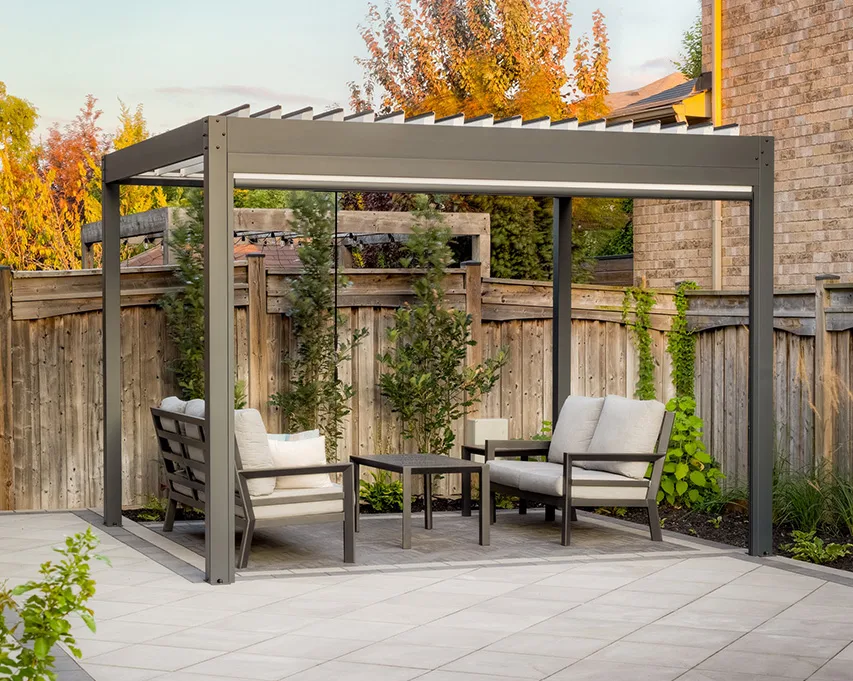
Adding an aluminum pergola is a big step toward a backyard you can use all season. Unlike a patio umbrella or a temporary shade, it is a permanent structure, built to stand up to snow, heavy rain and strong UV for years. That permanence is exactly why preparation matters. Most of what makes an aluminum pergola installation go smoothly happens well before the crew arrives. In this blog, we walk through what homeowners should sort out ahead of time: permits and property lines, ground conditions and footings, electrical planning, clearances, and scheduling around weather and landscaping.
People Also Ask
How long does it take to install an aluminum pergola?
Most aluminum pergolas are installed in 1 to 3 days. Custom models with motorization or lighting can take a little longer.
Do aluminum pergolas need a permit in Canada?
In most Canadian cities, a permit may be required if the pergola is attached to a structure or exceeds a certain size. Your municipality sets the rules, and Canadian Shade can assist with the permitting process.
Confirming Property Lines and Local Permits
Start with the paperwork, because it can hold up everything else. An attached pergola or a larger footprint is more likely to need a permit, so check with your municipality early. You don't have to sort it out alone, since Canadian Shade can help with permitting while you plan your project.
Know where your property lines sit before the site visit, too. Post placement is one of the first decisions made, and a clear picture of your lot makes it easier to position a freestanding or wall-mounted frame.
Checking Ground Conditions and Footings
A pergola is only as steady as what sits under its posts. Aluminum pergolas stay stable through freeze-thaw cycles thanks to corrosion-resistant framing and reinforced support posts, but proper anchoring and engineered load capacity make that possible. Anchoring, drainage planning and load calculations also keep the blades of an aluminum louvred pergola operating smoothly for years.
During the on-site assessment, the installer reviews the surface, drainage and post locations. If your project needs concrete footings, it is worth knowing early, since that adds a step to the schedule.
Planning Electrical Runs for Lighting and Motors
Plan powered features before the frame goes up. The Bavona louvred pergola comes standard with a motor drive for its slats, can connect to a smart home system, and can add dimmable LED lighting and motorized side screens. You can also add lighting and heaters to a custom pergola.
Motorized systems may require electrical planning, so ask for any electrical work to be listed in your estimate. Deciding what you want powered now means you plan the wiring once rather than add it later.
Measuring Clearances and Access for Installers
Every custom aluminum pergola is made to measure, so accurate dimensions matter. The Bavona, for example, comes in widths from 8'2" to 14'9" and projections from 10' to 20'. A proper assessment looks at doors, windows, railings, rooflines and furniture placement, and checks that posts sit clear of high-traffic paths.
Think about access as well. Within Ontario, your pergola arrives on Canadian Shade's own trucks or by transport, so clear a workable route to the build area and move furniture and planters out of the way beforehand.
Scheduling Around Weather and Landscaping
Spring and early summer are the busiest seasons for outdoor projects, so book your assessment early. Fall can be an excellent time to install, with comfortable temperatures and more scheduling flexibility. Your installer will choose a suitable day and flag any weather that could shift the plan.
If you're adding new landscaping, coordinate it with the pergola. A custom-made pergola is built to order and cannot be refunded once in production, so settle your layout before approving the order.
Conclusion
An aluminum pergola is built to last for years, and the preparation you do beforehand is what lets it deliver on that. When permits are in order, the ground is ready, power is planned, measurements are right and timing is set, aluminum pergola installation becomes the easy part of the project. What is left is a finished outdoor room ready for the season ahead.
If you are still deciding whether a pergola is the right fit, the answer usually starts with the space itself. Our guide on Which Shade Structure Works Best for a Patio, Deck, or Open Yard explains that a defined deck suits an aluminum pergola, while other settings may call for a different structure.
When you are ready to move forward, Canadian Shade can take your custom made pergola from first assessment to final installation. It offers thousands of customization options and free installation within its Ontario service area. Contact Canadian Shade to book a free home assessment and get your project started on the right foot.
FAQs
Can a custom aluminum pergola be designed to fit any outdoor space?
Yes. A custom pergola can be tailored to a backyard, patio, deck or commercial space. You choose the size, colour and roof type, from an aluminum louvred pergola design to a retractable or canopy roof, and can add lighting or heaters.
Does Canadian Shade install pergolas outside the GTA?
Yes. Canadian Shade installs the Bavona across Ontario, including Barrie. Outside its service area, remote installation assistance can guide you or your local contractor through an aluminum pergola installation.