Every poultry farmer knows the smell. It’s the smell of money burning—or rather, money sitting in a pile behind the barn, slowly leaching into the groundwater while you write checks for synthetic fertilizer. The litter your birds produce is packed with nitrogen, phosphorus, and organic matter that gardeners and landscapers pay good money for. So why aren’t you selling it? The answer is almost always the same: you don’t have the right equipment to turn raw, smelly litter into a clean, bagged product. And that’s a problem worth solving.
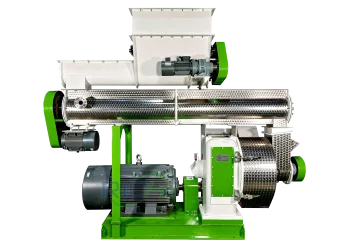
The shift from waste to product doesn’t require a factory. It requires a pelletizer. But not all pelletizers are created equal. Poultry litter is corrosive, abrasive, and inconsistent. It contains ammonia, grit, and moisture levels that swing wildly with the season. A standard feed mill will clog, rust, or crack within weeks. That’s why serious producers look for a chicken manure pellet machine for sale that was designed specifically for the job. These machines use corrosion-resistant steel, heavy-duty dies, and forced feeding systems that handle sticky, high-moisture material without constant downtime. They’re built to run shift after shift, not just for a few hours on a weekend.
Once you start comparing models, you’ll notice a wide range of capacities. Small units process a few hundred kilos per hour—enough for a small flock and a few local customers. But if you’re running a commercial broiler or layer operation, you generate hundreds of tons of litter annually. At that scale, you need something bigger. A commercial poultry manure pellet machine can push through one to twenty-six tons per hour, depending on the configuration. That capacity range means you can start small and expand without replacing the entire line. You can supply your own fields, sell to garden centers, or even accept litter from neighboring farms and turn it into a custom processing business.
The heart of any pellet line is the pellet maker machine itself. This is where the material is forced through a die under extreme pressure. The friction generates heat, which kills pathogens like Salmonella and E. coli while binding the natural fibers together. No chemical additives are needed. The pellets that emerge are hard, odorless, and stable enough to store for months. But the quality of those pellets depends on the machine’s ability to adjust die compression, roller clearance, and feed rate. Litter changes from farm to farm and season to season. A machine that runs perfectly in July may struggle in January. The ability to fine-tune the process is what separates a profitable operation from a frustrating one.
The economics are hard to argue with. Litter is free. Pellets sell for $200 to $400 per ton. The margin covers electricity, labor, maintenance, and wear parts, often paying for the equipment within eighteen months. Some growers use the pellets on their own fields and eliminate their synthetic fertilizer bill entirely. Others sell the surplus and turn a waste disposal cost into a steady revenue stream. A few have built separate businesses around custom processing.
There’s also an environmental angle. Pelletizing stabilizes nitrogen, reduces greenhouse gas emissions, and prevents nutrient runoff into waterways. Many governments offer grants or tax incentives for waste-to-value technologies, which shortens the payback even further. It’s a rare case where the financial case and the environmental case point in the same direction.
So the next time you look at that pile behind the barn, ask yourself a simple question. Is it a cost or an asset? The answer depends entirely on what you do with it. With the right equipment, you can stop paying to haul away your best fertilizer. You can start turning litter into a product that gardeners and farmers actually want. And you can do it at a scale that fits your operation, whether you keep a few hundred birds or a few hundred thousand.
You may also like:https://pelletizerextruder.com/cow-dung-pellet-making-machine/