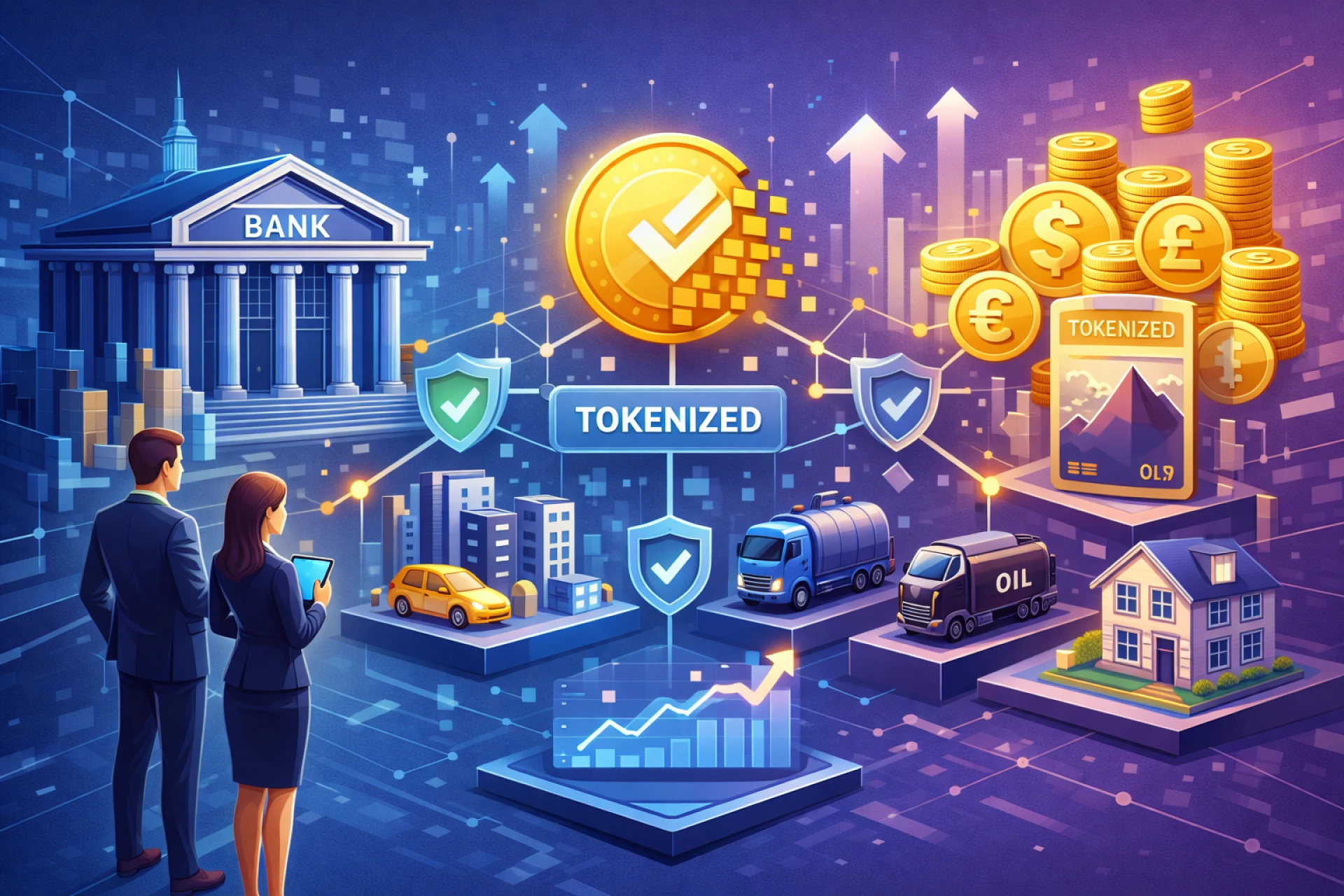
The conversation around blockchain adoption has shifted dramatically over the past few years. What was once driven largely by retail speculation is now increasingly shaped by institutional strategy, regulatory clarity, and infrastructure maturity. In 2026, one area stands out as a major confidence catalyst for large investors, asset managers, and financial institutions: Real World Asset Tokenization.
Institutional confidence is not built on hype. It is built on predictability, compliance, liquidity, and operational efficiency. Real World Asset Tokenization is now meeting these criteria at scale. From real estate and private credit to commodities and infrastructure assets, tokenized representations of physical and financial assets are becoming a core part of institutional portfolios. This shift is not experimental anymore. It reflects a structural evolution in how assets are issued, managed, and traded globally.
The Institutional Mindset Shift Toward Tokenized Assets
Institutions historically move slowly for good reasons. They manage fiduciary responsibility, regulatory exposure, and systemic risk. The growing trust in RWA Tokenization signals that these concerns are being addressed with real solutions rather than theoretical promises.
By 2026, institutions no longer view tokenization as a parallel system. Instead, it is increasingly treated as a modernization layer that enhances existing financial frameworks. Asset managers now recognize that tokenized assets can coexist with traditional custody, reporting, and compliance structures while offering new efficiencies.
The emergence of enterprise-grade Real world asset tokenization platform development has played a crucial role in this mindset shift. These platforms are no longer built for experimentation. They are engineered for scale, auditability, and long-term asset lifecycle management.
Regulatory Clarity as a Confidence Multiplier
One of the most significant drivers of institutional confidence is regulatory maturation. In earlier years, uncertainty around asset classification, custody, and investor protection slowed adoption. In 2026, regulatory frameworks in multiple jurisdictions have clarified how tokenized assets fit within existing financial laws.
Institutions now operate with clearer guidance on issues such as:
- Legal ownership representation of tokenized assets
- Compliance requirements for issuance and secondary trading
- Custody standards for digital asset securities
- Reporting and disclosure obligations
This clarity allows RWA Tokenization Company stakeholders to design compliant structures from the outset rather than retrofitting governance later. As a result, institutional investors can participate without increasing regulatory risk exposure.
Asset Transparency and Auditability at Scale
Transparency has always been a promise of blockchain technology, but institutions demand verifiable, auditable, and standardized transparency. In 2026, tokenization platforms finally deliver this in a way that aligns with institutional governance.
Tokenized assets provide real-time visibility into ownership records, transaction history, and asset performance. This is particularly valuable for complex asset classes such as private equity, infrastructure, and real estate portfolios.
For institutions, this level of transparency reduces reconciliation overhead, improves audit efficiency, and strengthens internal controls. Modern Real World Asset Tokenization Services now integrate on-chain data with off-chain verification, ensuring that tokenized representations accurately reflect real-world asset conditions.
Liquidity Expansion Without Asset Compromise
Liquidity has traditionally been one of the biggest challenges for real world assets. Many institutional-grade assets are valuable but illiquid, locking capital for extended periods. Tokenization addresses this without forcing asset owners to compromise on asset quality or control.
By enabling fractional ownership and programmable transfer rules, Real World Asset Tokenization Offerings create controlled liquidity environments. Institutions can define who can trade, under what conditions, and within which regulatory boundaries.
This selective liquidity model is especially appealing to pension funds, sovereign funds, and insurance firms that need flexibility without speculative volatility. The result is a more efficient capital allocation model that aligns with long-term investment mandates.
Institutional-Grade Infrastructure and Platform Maturity
Early tokenization efforts often failed to gain traction because infrastructure was fragmented and unreliable. In 2026, this is no longer the case. Enterprise platforms built by experienced rwa tokenization platform development company teams now offer end-to-end solutions covering issuance, compliance, custody integration, and lifecycle management.
Key infrastructure advancements include:
- Secure smart contract frameworks designed for asset longevity
- Institutional custody integrations with traditional financial systems
- Automated compliance checks embedded at the protocol level
- Disaster recovery and operational continuity mechanisms
A Real world asset tokenization platform company today operates more like a financial infrastructure provider than a technology startup. This operational maturity significantly lowers adoption barriers for institutions.
Risk Management Improvements Through Token Design
Risk management is central to institutional decision-making. Tokenization allows for new forms of programmable risk controls that are difficult to implement in traditional asset structures.
Through advanced RWA token development, institutions can embed rules directly into asset behavior. These rules may govern transferability, dividend distribution, lock-up periods, or redemption rights. This programmability reduces reliance on manual enforcement and minimizes operational risk.
In addition, tokenized structures enable better stress testing and scenario modeling. Institutions can simulate liquidity events, ownership changes, and market conditions with greater precision than traditional asset models allow.
Operational Efficiency and Cost Rationalization
Operational efficiency is another powerful driver of institutional confidence. Traditional asset management involves multiple intermediaries, manual processes, and delayed settlement cycles. Tokenization compresses these workflows into streamlined, automated systems.
By adopting RWA Tokenization Services, institutions reduce:
- Settlement time from days to minutes
- Administrative overhead linked to record-keeping
- Dependency on reconciliation across multiple systems
- Costs associated with cross-border asset transfers
These efficiencies translate directly into improved margins and faster capital deployment. Over time, they also enable institutions to manage larger and more diverse portfolios without proportional increases in operational complexity.
Cross-Border Investment Enablement
Global diversification has always been attractive to institutions, but cross-border investment introduces friction through regulatory differences, currency controls, and settlement delays. Tokenized assets simplify many of these challenges.
Through compliant Real world asset tokenization platform development, institutions can access international assets using standardized digital frameworks. Smart contracts handle compliance checks, while blockchain-based settlement reduces cross-border friction.
This capability is especially valuable in emerging markets, infrastructure projects, and private credit opportunities where traditional access barriers have historically limited institutional participation.
Data-Driven Asset Performance Insights
In 2026, data is no longer a byproduct of investment. It is a strategic asset. Tokenized systems generate continuous, structured data across the asset lifecycle. Institutions use this data to enhance decision-making and performance monitoring.
Advanced analytics layered on top of RWA Tokenization platforms enable:
- Real-time performance tracking
- Predictive maintenance insights for physical assets
- Automated valuation updates
- Enhanced portfolio risk assessment
These insights improve transparency not just for asset managers, but also for regulators, auditors, and institutional stakeholders.
Growing Ecosystem of Specialized Service Providers
Another factor reinforcing confidence is the expanding ecosystem supporting tokenization. Institutions no longer need to assemble solutions from disparate vendors. Mature RWA tokenization development company providers now offer specialized expertise across legal structuring, compliance, technology, and asset onboarding.
This ecosystem reduces implementation risk and accelerates time to market. Institutions can partner with experienced providers who understand both traditional finance and blockchain architecture, ensuring smoother integration with existing systems.
Institutional Use Cases Moving Beyond Pilots
In earlier years, institutional tokenization initiatives were often limited to pilots or proofs of concept. In 2026, real production deployments dominate the landscape. Tokenized funds, tokenized real estate portfolios, and tokenized debt instruments are now operating at scale.
These deployments demonstrate that tokenization is not just technically feasible but commercially viable. As more institutions report positive outcomes, confidence compounds across the industry.
Strategic Alignment With Long-Term Investment Goals
Institutions think in decades, not quarters. Real World Asset Tokenization aligns well with long-term objectives such as capital preservation, yield stability, and operational resilience. Tokenized assets offer improved transparency, better governance, and enhanced flexibility without undermining asset fundamentals.
This alignment makes tokenization a strategic enabler rather than a tactical experiment. Institutions increasingly view it as foundational infrastructure for the future of asset management.
Methods Institutions Use to Evaluate Tokenization Readiness
Before committing capital, institutions apply rigorous evaluation frameworks. Common assessment methods include:
- Regulatory compatibility analysis across jurisdictions
- Platform security and smart contract audits
- Asset custody and recovery mechanisms
- Governance and upgradeability structures
- Long-term platform sustainability assessments
These methods ensure that only mature and resilient tokenization solutions are adopted, further reinforcing confidence in the ecosystem.
The Role of Trust and Reputation
Trust remains a critical intangible factor. Institutions gravitate toward established RWA Tokenization Company providers with proven track records, transparent governance, and strong compliance cultures. Reputation matters as much as technology.
As the market matures, leading providers distinguish themselves through reliability, operational excellence, and long-term commitment rather than rapid experimentation.
Looking Ahead: Why Confidence Will Continue to Grow
The drivers behind institutional confidence in Real World Asset Tokenization are not short-term trends. They reflect structural improvements in regulation, infrastructure, and market understanding. As these foundations continue to strengthen, institutional participation is expected to deepen further.
Tokenization is no longer about disruption alone. It is about integration, optimization, and resilience. By 2026, institutions see it as a logical evolution of financial systems rather than a radical departure.
Final Thoughts
Institutional confidence is earned through consistency, clarity, and control. Real World Asset Tokenization has reached a point where it delivers on all three. Supported by mature infrastructure, regulatory alignment, and proven use cases, tokenization is now a trusted mechanism for managing real world assets at scale.
As more institutions embrace this shift, tokenized assets will increasingly define how capital flows, how assets are governed, and how value is unlocked in the global financial system. In 2026, confidence is no longer tentative. It is intentional, strategic, and accelerating.