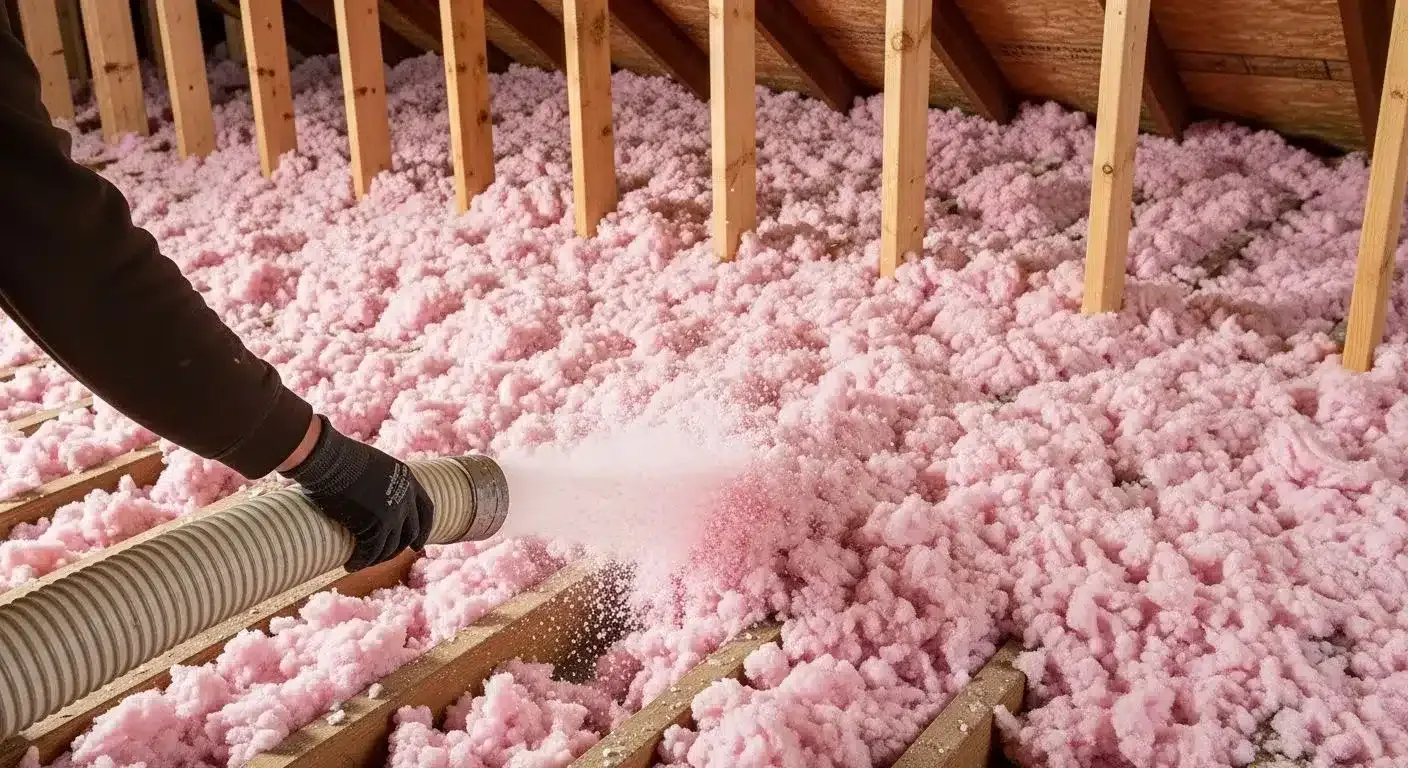
For most existing homes, blown-in attic insulation should provide around R-38 to R-60, depending on the home's climate zone, existing insulation, and applicable building requirements. The right R-value helps slow heat transfer and can improve indoor comfort throughout the year. However, there is no single R-value that works for every attic. Your location, attic condition, insulation depth, air leakage, and local requirements all affect the right insulation level.
The U.S. Department of Energy explains that recommended insulation levels vary by climate zone. Colder areas generally need higher attic R-values than warmer regions. Its current guidance lists attic recommendations from approximately R-30 in the warmest zones to R-60 in colder zones, depending on the home's existing insulation and conditions. U.S. Department of Energy insulation guidance
What R-Value Should Blown-In Attic Insulation Have?
R-value measures how well insulation resists heat flow. In general, a higher R-value provides greater resistance to heat transfer. For many existing homes, R-38 is a common starting point, while colder climate zones may call for R-49 or R-60. ENERGY STAR states that the recommended insulation level for most attics is R-38, or about 10 to 14 inches, depending on the insulation type. ENERGY STAR attic insulation guide. For existing homes, the appropriate target also depends on how much insulation is already present.
A general guide for uninsulated or under-insulated attics is:
Climate ZoneTypical Attic R-Value RangeZone 1R-30 to R-49Zone 2R-38 to R-60Zone 3R-38 to R-60Zone 4R-49 to R-60Zone 5R-49 to R-60Zone 6R-49 to R-60Zones 7–8R-49 to R-60These ranges are general guidance rather than a universal requirement. The exact target can change based on whether the attic already contains insulation, the type of heating and cooling system, the home's construction, and the applicable code.
For example, the 2021 IECC residential requirements list ceiling insulation levels ranging from R-30 in Climate Zone 1 to R-60 in Climate Zones 4 through 8 for the code's applicable residential provisions. 2021 International Energy Conservation Code insulation requirements
Why Does R-Value Matter In An Attic?
Your attic is one of the major areas where heat can move between your home and the outdoors. During summer, heat entering through an under-insulated attic can increase the cooling load on the home. During winter, heat can escape through the ceiling when attic insulation is insufficient.
Blown-in attic insulation creates a continuous layer of thermal resistance across the attic floor. When installed correctly, it helps reduce heat transfer and can make indoor temperatures more consistent. The Department of Energy also recommends combining insulation improvements with air sealing to reduce unwanted air movement and improve overall home energy performance.
How Much Blown-In Insulation Do You Need?
The required depth depends on the insulation material and its rated R-value per inch. For example, blown-in cellulose and fiberglass have different thermal properties. Their required installation depth can therefore vary even when the desired total R-value is the same.
You should not determine the required depth from inches alone. A professional installer should use the product's rated R-value, installation instructions, and target total R-value to determine the appropriate depth.
Existing insulation also affects the calculation. You may not need to remove insulation that is clean, dry, and in suitable condition before adding new blown-in material. ENERGY STAR notes that loose-fill insulation can be installed over existing insulation when the conditions are appropriate. The existing insulation should be assessed before additional material is installed.
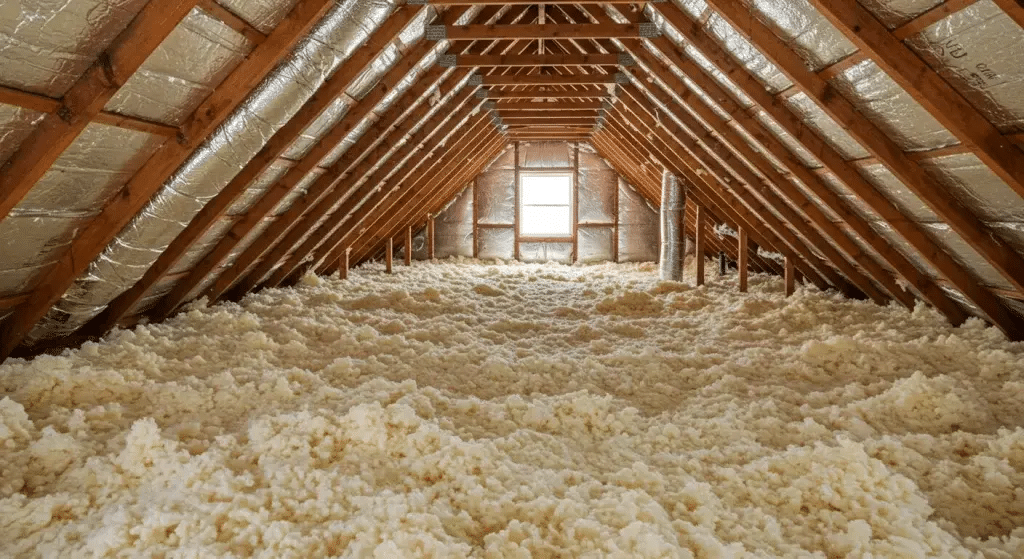
Blown-In Cellulose Vs. Fiberglass
Both cellulose and fiberglass are commonly used as blown-in attic insulation. The better choice depends on the attic, product specifications, installation method, and project requirements.
FeatureBlown-In CelluloseBlown-In FiberglassCommon attic useYesYesInstallationBlown into atticBlown into atticMaterialRecycled paper fiberGlass fiberCoverageGood coverage around obstaclesGood coverage when properly installedR-valueDepends on product and densityDepends on product and densityBest choiceDepends on projectDepends on project
Both materials can provide effective thermal insulation when correctly selected and installed. The important factor is not simply choosing between cellulose and fiberglass. The installation should achieve the required R-value, provide consistent coverage, and avoid gaps or thin areas.
Air Sealing Should Come Before Insulation
Adding more insulation does not solve every attic problem. Air can leak around plumbing penetrations, electrical openings, attic hatches, recessed lights, duct openings, and other gaps between the conditioned living space and attic. That is why air sealing should be addressed before adding blown-in attic insulation whenever applicable.
Sealing major air leaks can reduce unwanted air movement through the ceiling. It also allows the insulation layer to perform as part of a more complete attic system. Insulation and air sealing address different problems. Insulation slows heat transfer, while air sealing helps control air movement.
Signs Your Attic May Need More Insulation
You may need additional blown-in attic insulation if:
- You can easily see the attic floor joists.
- Insulation is level with or below the joists.
- The insulation has thin or uneven areas.
- Some sections have little or no insulation.
- Insulation is missing around parts of the attic.
- Certain rooms are consistently too hot or cold.
- Your heating or cooling system runs frequently.
- Existing insulation is compressed, disturbed, or uneven.
- Insulation coverage is significantly lower near the eaves.
ENERGY STAR recommends checking the insulation level across the attic and looking for areas where insulation is missing or uneven. If the insulation is only level with or below the floor joists, adding more may be appropriate.
What Happens If Attic Insulation Is Too Thin?
Insufficient insulation allows more heat to move through the attic floor. During summer, this can contribute to higher temperatures in rooms directly below the attic. During winter, heated indoor air can lose more heat through the ceiling.
You may also notice temperature differences between rooms. Some areas may feel comfortable while others remain noticeably warmer or colder. Additional insulation can reduce heat transfer, but attic performance depends on more than R-value alone. Air sealing, ventilation, moisture control, insulation coverage, and proper installation should also be considered.
Does More Insulation Always Mean Better Performance?
Not necessarily. The goal is to reach the appropriate R-value with proper coverage and installation. Simply adding more material without inspecting the attic can create unnecessary costs or installation problems.
For example, insulation should not block required ventilation paths at the eaves. Proper ventilation openings should remain clear so air can move through the intended attic ventilation system. Insulation should also be installed evenly. Thick areas next to thin areas can reduce the consistency of the thermal barrier.
Special care may also be required around recessed lights, chimneys, flues, electrical equipment, and other heat-producing components. The correct approach is to inspect the attic first and then determine the appropriate insulation depth and installation method.
Why Choose A Blown-In Attic Insulation Contractor?
Blown-in insulation requires the correct material, equipment, coverage, and installation technique. A professional blown-in attic insulation contractor can inspect the existing insulation before recommending an R-value. This can help prevent unnecessary removal and avoid installing too little or too much material.
A contractor can also identify:
- Air leaks
- Uneven insulation
- Missing insulation
- Ventilation concerns
- Attic penetrations
- Difficult areas around obstructions
- Moisture or installation concerns
Professional blown-in attic insulation services can make the project easier to evaluate and plan. The goal should be more than simply adding insulation. A properly evaluated attic should have suitable insulation coverage, appropriate air sealing, and adequate ventilation.
Choosing The Right R-Value For Your Home
The best R-value depends on several factors:
- Climate zone: Colder areas generally require higher attic R-values.
- Existing insulation: Your current insulation level affects how much additional insulation you may need.
- Insulation type: Different materials provide different R-values per inch.
- Attic design: Eaves, ventilation, access areas, and obstructions can affect installation.
- Local requirements: Applicable building codes may establish minimum insulation levels.
- Air sealing: Major air leaks should be addressed as part of the overall attic improvement.
- Installation quality: Even coverage and correct installation are essential for achieving the intended performance.
Current DOE guidance shows that attic insulation recommendations can range from R-30 in some warmer climate zones to R-60 in colder zones, depending on the home and existing insulation. For an existing home, the right question is not simply, "How many inches of insulation should I add?" The better question is, "What total R-value should my attic have after the work is complete?"
How All Foam & Insulation, LLC Can Help
At All Foam & Insulation, LLC, we understand that every attic has different insulation needs. Our team can assess your existing attic insulation, identify areas that need attention, and help determine an appropriate blown-in insulation solution.
The goal is not simply to add more material. The goal is to create consistent insulation coverage that supports better comfort and long-term performance. If your attic insulation is thin, uneven, or outdated, a professional evaluation can help you determine the right next step. Call All Foam & Insulation, LLC at (541) 826-9600 or email [email protected] to discuss your attic insulation needs.
FAQs About Blown-In Attic Insulation R-Value
Is R-38 Enough For Blown-In Attic Insulation?
R-38 is a common attic insulation target, but it may not be enough for every home. Climate zone, existing insulation, and applicable building requirements can call for a higher R-value.
Is R-49 Better Than R-38?
R-49 provides greater resistance to heat flow than R-38. However, the right target depends on your home's location, existing insulation, and attic conditions.
Is R-60 Too Much For An Attic?
R-60 is not automatically too much. It is a common target for attic insulation in several colder climate zones. The appropriate level should be based on the home's climate zone and project requirements.
How Many Inches Of Blown-In Insulation Do I Need?
There is no universal number of inches. The required depth depends on the insulation material, its R-value per inch, and your target total R-value.
Should I Remove Old Attic Insulation Before Blowing In More?
Not always. Existing insulation may remain when it is clean, dry, and in suitable condition. The attic should be inspected before deciding whether removal is necessary.
Should You Air Seal Before Blown-In Insulation?
Yes. Air sealing important attic penetrations before adding insulation can help reduce unwanted air movement and improve the overall performance of the attic insulation system.
Author & Reviewer
Author: Joe Lorenz
Joe Lorenz is the owner of All Foam & Insulation, LLC. He has provided spray foam insulation services since the company was established on January 1, 2009. His hands-on experience focuses on improving home comfort, energy efficiency, and long-term insulation performance.
Reviewer: Lily Johnson
Lily Johnson has eight years of experience in the spray foam insulation industry. Her review focuses on helping homeowners understand insulation options and make informed decisions when seeking quality insulation services.