
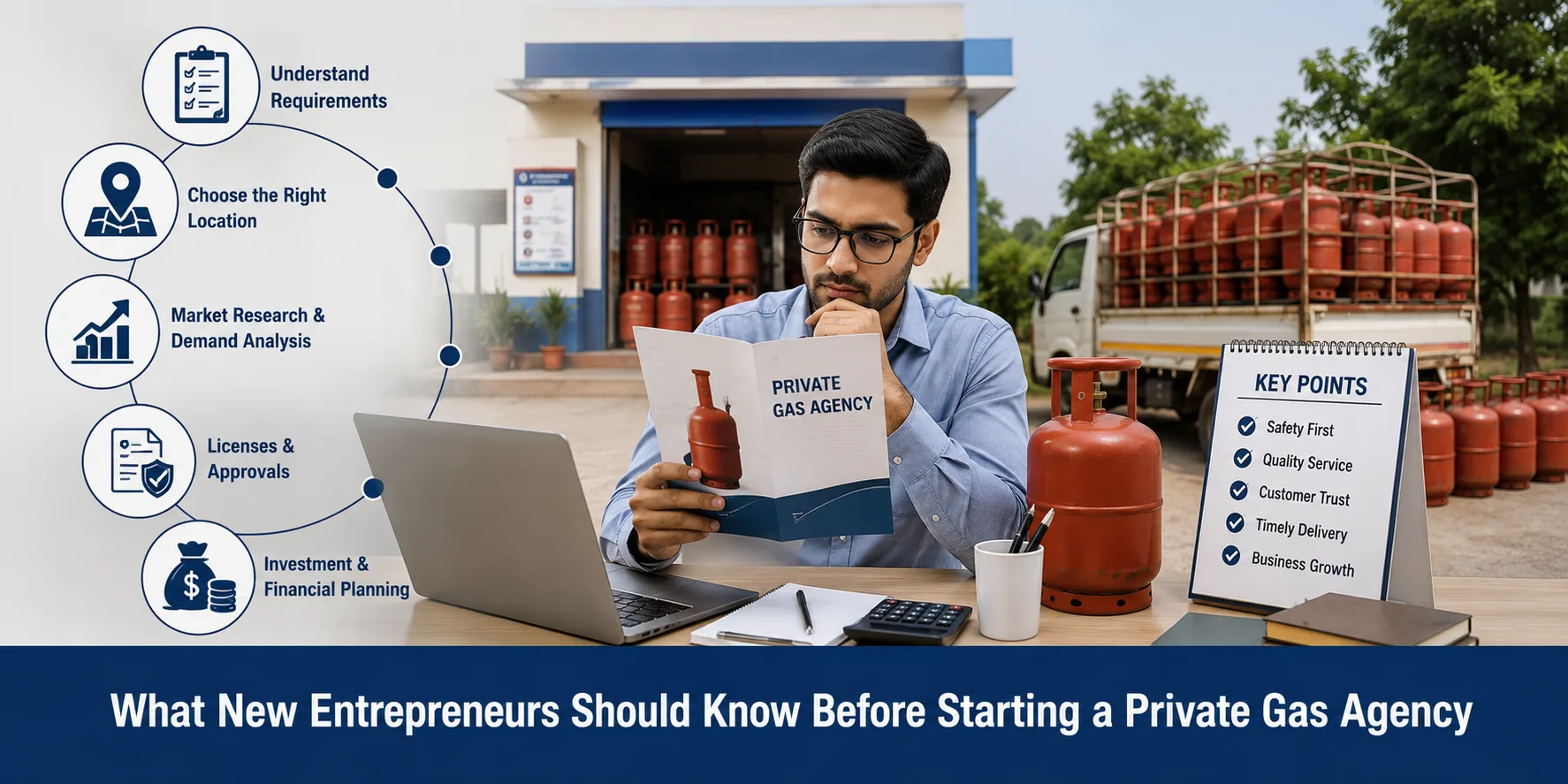
LPG is one of the most widely used fuel sources across households, restaurants, hotels, manufacturing units, and commercial establishments. But as energy demand continues to grow, many entrepreneurs are exploring opportunities in the LPG distribution sector, making a private gas agency an increasingly attractive business option.
At first glance, the business may appear hassle-free—all you need is to partner with a supplier, arrange for cylinder distribution, and serve customers. In reality, however, LPG distribution operates within a highly regulated environment where safety, compliance, logistics, and operational efficiency are just as important as sales.
This is where many first-time entrepreneurs make mistakes. They often focus on investment requirements and potential returns without fully understanding the responsibilities involved in managing LPG operations.
Before making any financial commitment, it is important to understand how the industry functions and what challenges may arise during setup and day-to-day operations. This article is all about that.
How Does a Private Gas Agency Business Actually Function?
Many first-time entrepreneurs are attracted to the LPG sector because it serves an essential market with recurring demand. While this is true, a private gas agency should not be viewed as a simple distribution business where products are purchased and resold to customers. The business operates within a supply chain that requires careful coordination between suppliers, storage facilities, delivery operations, and end users.
A private gas agency is responsible for ensuring that LPG cylinders are available when customers need them, delivered safely, and managed according to established operational and safety requirements. This means the business must continuously monitor inventory levels, plan replenishments, manage delivery schedules, address customer concerns, and maintain smooth day-to-day operations. Any disruption in these areas can directly affect customer satisfaction and business performance.
Customers expect uninterrupted supply, timely deliveries, and consistent service. If an agency struggles with inventory management, delivery efficiency, or customer support, attracting new customers becomes difficult regardless of market demand.
This is why entrepreneurs should evaluate the business from an operational perspective before evaluating its earning potential. Understanding the responsibilities involved helps create realistic expectations about the investment, infrastructure, manpower, and management systems required
1. Evaluate Whether the Business Model Works in Your Target Market
Don't Confuse LPG Demand with Business Opportunity
Every town uses LPG, but that does not mean every town can support another distributor. Before investing, entrepreneurs should evaluate customer density, refill consumption patterns, commercial demand, and existing distributor penetration. A market may have strong LPG usage yet offer little room for a new entrant if established suppliers already dominate deliveries and customer relationships.
Identify Demand Clusters Instead of Chasing Large Territories
Many new distributors assume that covering a larger area will generate higher revenue. In reality, scattered customers often increase delivery costs and reduce operational efficiency. Concentrated residential zones, commercial kitchens, hotels, and industrial users generally create a more sustainable distribution network because deliveries can be completed with lower transportation costs and faster turnaround times.
2. Understand the Operational Economics of a Private Gas Agency
Revenue Depends on Cylinder Movement, Not Cylinder Ownership
One of the most common misconceptions among first-time entrepreneurs is that purchasing more cylinders automatically increases earning potential. In practice, profitability is largely influenced by how efficiently cylinders move through the distribution cycle. Slow-moving inventory ties up capital, occupies storage space, and reduces operational efficiency.
Working Capital Often Becomes the First Major Challenge
Many entrepreneurs budget for setup costs but underestimate ongoing operational expenses. Fuel costs, manpower expenses, inventory replenishment, vehicle maintenance, and customer servicing requirements create continuous financial pressure. Without adequate working capital, even agencies operating in high-demand markets can struggle to maintain service consistency.
3. Infrastructure Decisions Can Determine Long-Term Profitability
Storage Capacity Should Match Growth Expectations
Storage infrastructure should support both current demand and future expansion. Entrepreneurs who build facilities based only on immediate requirements often face operational constraints as customer volume increases. Expanding infrastructure later is usually more expensive and disruptive than planning appropriately from the beginning.
Delivery Efficiency Impacts Operating Costs
In LPG distribution, logistics costs can significantly affect profitability. Route planning, vehicle utilization, delivery scheduling, and fuel management all influence operating margins. Agencies that optimize delivery operations typically achieve better customer service while controlling transportation expenses.
4. Supplier Reliability Can Influence Business Stability
Supply Interruptions Affect More Than Sales
A disruption in LPG supply does not simply reduce revenue for a few days. It can affect customer trust, delivery commitments, and long-term retention. Businesses that depend heavily on consistent product availability should carefully evaluate supplier capabilities before entering into commercial agreements.
Long-Term Partnerships Matter More Than Short-Term Commercial Terms
Choosing a supplier solely based on initial pricing or incentives can be risky. Entrepreneurs should also evaluate supply consistency, operational support, responsiveness, and the supplier's ability to support future business growth.
5. Customer Acquisition Costs Are Often Overlooked
Many business plans assume that customers will automatically switch to a new distributor once operations begin. In reality, acquiring customers requires effort, trust-building, and service differentiation. Residential users, restaurants, and commercial establishments often remain loyal to suppliers who consistently meet their requirements.
For this reason, entrepreneurs should calculate customer acquisition costs alongside infrastructure and operational expenses. Sustainable growth depends not only on serving customers but also on attracting them efficiently.
6. Safety and Risk Management Should Be Built Into Daily Operations
For a private gas agency, safety is not a department—it is an operating principle. Improper cylinder handling, inadequate storage practices, poor vehicle management, or insufficient employee training can create operational risks that affect both business continuity and reputation.
Successful agencies generally treat safety as part of routine operations rather than as a compliance exercise. This approach helps reduce incidents, improve operational discipline, and strengthen customer confidence.
Final Thoughts
A private gas agency can be a viable business opportunity, but success depends on much more than securing a distributorship. Market demand, supply reliability, infrastructure, working capital, and delivery efficiency all play a role in determining long-term performance.
Before investing, entrepreneurs should focus on understanding the operational and financial realities of the business. A well-planned private gas agency can always be in a better position for sustainable growth than one that enters the market based solely on demand projections.