
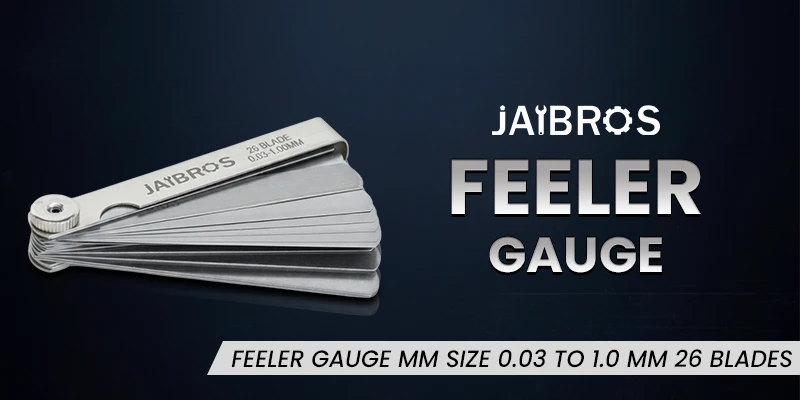
Accurate gap measurement is critical in machining, mechanical assembly, and maintenance work. Even minor variations in clearance can affect performance, durability, and safety. Among various measuring tools used in workshops, the feeler gauge stands out for its simplicity, reliability, and precision. Despite its basic design, it delivers highly consistent results when used correctly. This article explains what makes feeler gauge accurate for gap measurement and why they remain essential in modern workshops.
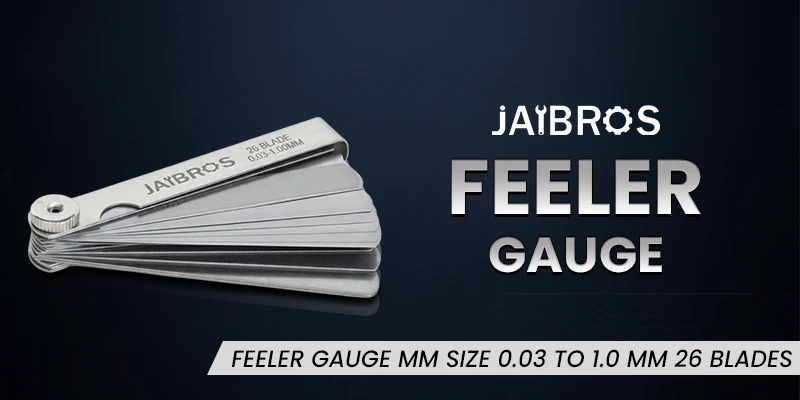
Understanding Gap Measurement Accuracy
Gap measurement accuracy depends on three main factors: tool precision, user technique, and surface condition. A measuring tool must have consistent dimensions, be easy to handle, and allow repeatable results. Feeler gauges meet these requirements through controlled manufacturing, standardized thicknesses, and straightforward usage methods.
Unlike complex digital instruments, feeler gauges provide direct physical contact with the gap, reducing the chance of electronic error or calibration drift.
Precision Manufacturing of Feeler Gauges
One of the key reasons for accuracy is how these tools are manufactured. Each blade is produced with tight dimensional tolerances, ensuring uniform thickness along its entire length. High-quality steel or alloy materials are used to prevent warping, wear, or deformation during use.
Manufacturers follow strict quality standards so that every blade in a set matches its marked value. This consistency allows machinists to trust the measurement without repeated verification.
Role of Blade Thickness Consistency
The accuracy of a feeler gauge depends heavily on blade thickness consistency. If a blade varies even slightly, it can lead to incorrect readings. Precision-ground blades maintain uniform thickness, which is why professional workshops prefer branded or certified tools over low-quality alternatives.
Using a proper feeler gauge size chart helps users quickly identify the correct blade and avoid guesswork during inspection.
Direct Contact Measurement Advantage
Unlike non-contact measuring tools, feeler gauges physically enter the gap being measured. This direct interaction allows the user to feel resistance and determine whether the clearance is within acceptable limits.
This tactile feedback is one of the strongest advantages of a feeler gauge, as it allows machinists to sense variations that might be missed by visual inspection alone.
Importance of Material Quality
Material quality plays a major role in maintaining long-term accuracy. Hardened steel blades resist bending and wear, even after repeated use. Corrosion-resistant coatings further protect the blades from moisture, oil, and workshop contaminants.
A well-maintained feeler gauge set can retain its accuracy for years when handled and stored properly.
Standardized Blade Sizes
Feeler gauges are produced in standardized increments, making measurements repeatable across different machines and workshops. Common feeler gauge sizes in mm allow compatibility with metric-based machinery and international engineering standards.
This standardisation ensures that measurements taken in one workshop can be reliably reproduced elsewhere.
Accuracy Through Proper Technique
Even the most precise tool can give incorrect results if used improperly. Accurate measurement requires:
- Clean measuring surfaces
- Gentle insertion without force
- Correct blade selection
When used correctly, the feeler gauge provides repeatable and dependable results across multiple measurements.
Use of Blade Combinations
Another factor contributing to accuracy is the ability to combine blades. When a single blade does not match the exact clearance, users can stack blades to achieve the required thickness. This method allows for precise matching of non-standard gap sizes without compromising accuracy.
Resistance-Based Measurement Control
Accuracy is also achieved through resistance-based feedback. The correct blade should slide with slight resistance but without bending. This controlled friction helps confirm that the measurement is neither too loose nor too tight.
Experienced machinists rely heavily on this tactile response to judge clearance accuracy.
Durability and Wear Resistance
Long-term accuracy depends on how well the blades resist wear. Poor-quality tools may lose thickness over time, leading to incorrect readings. High-quality feeler gauges maintain blade integrity even under frequent use, which justifies variations in feeler gauge set price across brands.
Investing in durable tools reduces replacement frequency and measurement errors.
Calibration and Verification
While feeler gauges do not require electronic calibration, periodic inspection against known standards ensures accuracy. Workshops often verify blade thickness during routine tool checks, especially for critical applications.
This simple verification process helps maintain confidence in measurements.
Environmental Stability
Feeler gauges are unaffected by temperature fluctuations, electromagnetic interference, or power supply issues. This environmental stability makes them reliable in harsh workshop conditions where electronic tools may fail or lose accuracy.
Comparison with Other Measuring Tools
Compared to calipers or micrometers, feeler gauges excel at measuring narrow gaps that are otherwise difficult to access. Their thin profile allows measurement in confined spaces without dismantling assemblies, improving both accuracy and efficiency.
Maintenance Practices That Preserve Accuracy
Proper care enhances accuracy over time:
- Clean blades after use
- Avoid excessive bending
- Store in protective cases
- Replace damaged blades promptly
These practices prevent distortion and maintain consistent thickness.
Why Workshops Still Rely on Feeler Gauges
Despite advances in digital measurement, workshops continue to rely on feeler gauges because they are:
- Simple to use
- Highly reliable
- Cost-effective
Accurate for gap measurement
Their mechanical simplicity eliminates many sources of error found in electronic tools.
Conclusion
The accuracy of feeler gauges comes from precision manufacturing, standardized blade thickness, direct contact measurement, and proper usage techniques. When combined with good material quality and correct handling, they deliver reliable gap measurements across a wide range of workshop applications. Their continued use in modern machining environments proves that simplicity and precision can go hand in hand.
About Jaibros:
Jaibros is a trusted supplier of industrial tools and machining solutions, offering reliable products designed to meet the precision and durability demands of professional workshops and manufacturing industries.
FAQs
1. Why are feeler gauges accurate for gap measurement?
Their precision-ground blades and direct contact measurement provide consistent and reliable results.
2. Can blade combinations affect accuracy?
No, when combined correctly, blade stacking maintains accurate total thickness.
3. Do feeler gauges wear out over time?
High-quality blades resist wear, but damaged or bent blades should be replaced.
4. Are feeler gauges better than digital tools?
They are more reliable for narrow gaps and harsh workshop conditions.
5. How can accuracy be maintained long-term?
Proper storage, cleaning, and avoiding blade damage help preserve accuracy.