The dining table is often the heart of a home, where families gather for celebrations and everyday meals. A well-made log wood dining table adds beauty and warmth, creating a space for lasting memories. But not every log wood table is built to handle daily use.
So what makes a superlative log wood dining table?
1. Solid Wood Construction Matters First
A True Log dining table is made from real timber, not from veneer, particleboard, or even engineered timber. Solid timber gives a table greater strength and durability than products made from composite materials.
Some hardwoods are naturally more durable than others- for example, oak, maple, walnut, hickory, and these will stand the wear of everyday use well, allowing your table to fully develop its own unique personality over time as it accrues scratches, dings, and other signs of use.
2. Craftsmanship and Joinery Define Durability
Here’s where most people get it wrong: they focus on the surface, not the build.
High-quality log wood dining tables are crafted using traditional joinery techniques such as mortise-and-tenon and dovetail joints. These features ensure a sturdier, more rigid frame than tables held together with screws or nails.
You can often feel the difference:
- No wobbling or shifting
- Tight, seamless joints
- Balanced weight distribution
This is the kind of construction that keeps a table standing firm for decades, not just years.
3. The Wood Itself Should Tell a Story
With log furniture, perfection isn’t the goal; character is.
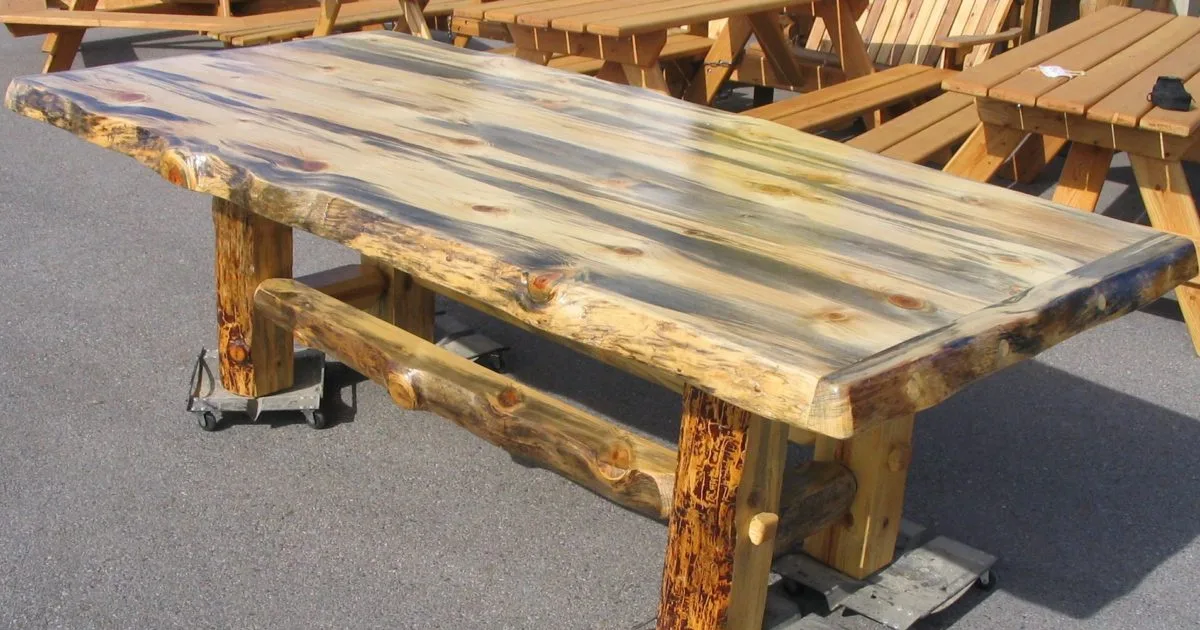
We look for the highest quality in all the wood we use, and each piece of furniture has its own individual characteristics, including natural grain lines, interesting knots, and some color variations. These are not faults and show that it is real wood, not a cheap plastic laminate. No two pieces are identical.
The wood should look varied, not like the same grain pattern repeated. If you see the same pattern again and again, it’s probably a manufactured product, not real log wood.
4. Finish and Surface Quality Are Critical
Here’s where most people get it wrong: they focus on the surface, not the build.
You get to judge it by touch, not just pictures and specs.
- Smooth, even finishing
- No rough edges or splinters
- Consistent color and texture
The finish isn’t just cosmetic. It acts as a protective barrier against moisture, heat, and spills, helping extend the life of the table .
5. Stability and Structural Support
A high-quality table should feel solid and grounded.
That comes down to:
- Thick, well-balanced tabletops
- Reinforced bases or trestles
- Proper weight distribution
Strong internal supports and reinforced corners help prevent the boards from warping or sagging. These features are especially important for larger dining tables.
If a table feels light or unstable, it’s a red flag.
6. Longevity and Repairability
Another great point about a real log wood dining table is that it is strong enough to last for decades and can be restored time and again.
Unlike cheaper materials, solid wood can be:
- Sanded
- Refinished
- Repaired
Even after years of heavy use, you don’t have to throw your table away. With a good refinishing, it can look like new again. Solid wood furniture can last for generations and become part of your family’s story. Check North Idaho Log Furniture.