Everyone's talking about AI taking over marketing jobs, but nobody's actually breaking down what's happening on the ground. Truth is, digital marketing isn't dying; it's mutating into something bigger, messier, and honestly more interesting than it was five years back. If you're someone in Kolkata weighing whether to join a Digital Marketing Course in Kolkata or just wondering if this field still has legs, this piece should clear that up.
Table of Contents
- Direct Answer: Does Digital Marketing Have a Future?
- Why This Question Even Matters Right Now
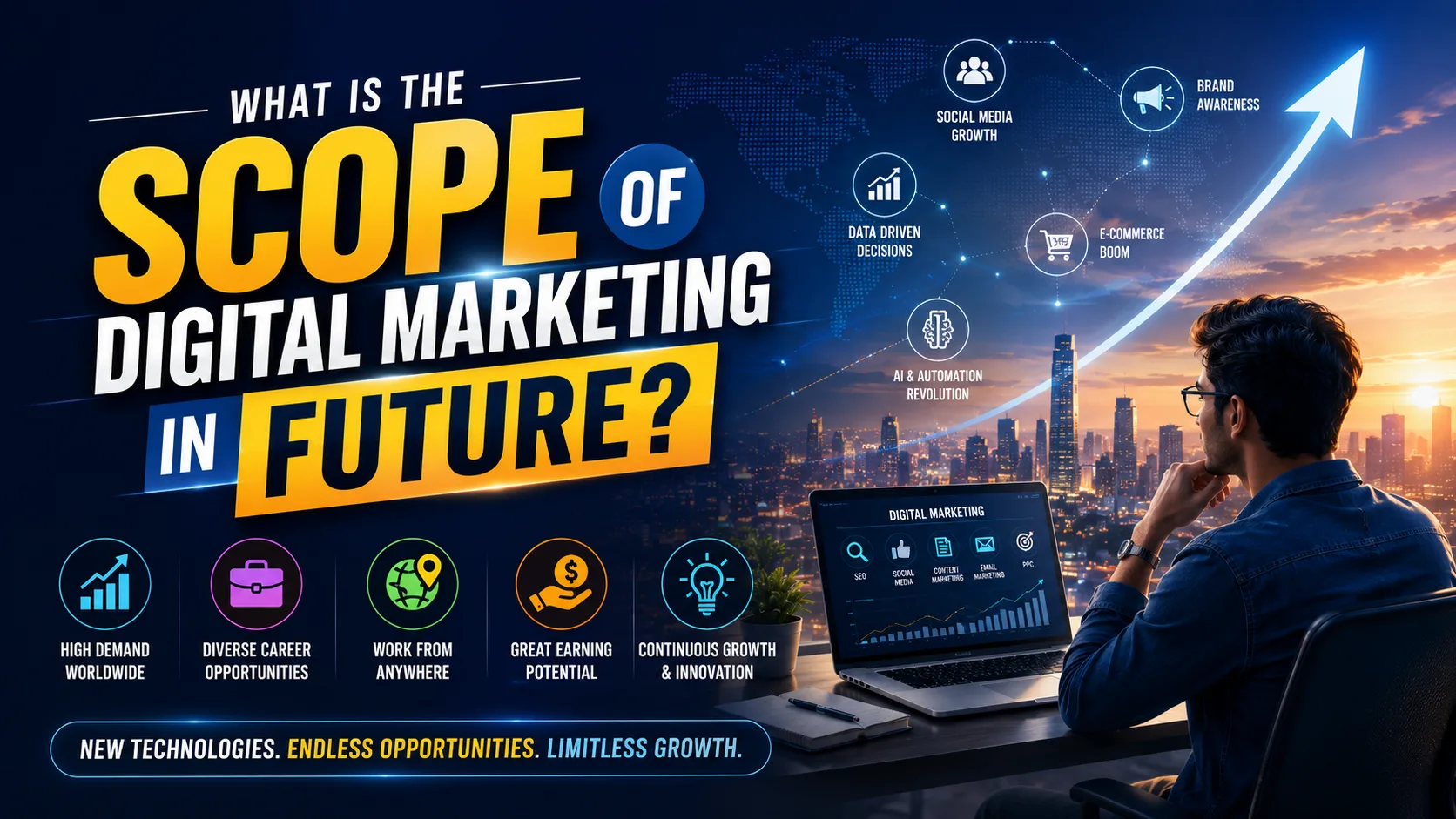
- Where the Industry Is Actually Heading
- Real Examples from Indian Brands
- The Numbers Nobody's Talking About
- Traditional Marketing vs Digital Marketing: A Straight Comparison
- How to Actually Build a Career in This Field
- What Works and What Doesn't
- Mistakes People Keep Making
- Expert Tips from People Actually Working in This Field
- A Few Things I'd Tell Beginners
- Frequently Asked Questions
- Quick Checklist Before You Move Forward
- Final Word
Direct Answer: Does Digital Marketing Have a Future?
Yes, and not in some vague "the internet isn't going anywhere" sense. India alone is projected to have over 900 million internet users by 2026, and every one of those people is a potential customer somebody needs to reach. The scope isn't shrinking; it's splitting into specialised branches like performance marketing, marketing automation, AI-driven personalisation, and voice commerce. Generic "social media managers" might struggle in five years. Specialists won't. The people who'll actually win here are the ones who treat marketing as a mix of psychology, data, and storytelling, not just posting pretty pictures.
Why This Question Even Matters Right Now
Because a lot of students got scared after ChatGPT blew up in 2023, parents started asking, "beta, yeh marketing wala kaam AI kar dega toh?" Fair question. But somebody still has to strategize, run the AI tools, interpret data, and make judgment calls a machine can't. The panic was overblown. What actually happened is that the bar for entry-level competence went up, not down. Companies now expect freshers to know basic tools already instead of training them from zero, which honestly makes structured learning more important, not less.
Where the Industry Is Actually Heading
AI-assisted, not AI-replaced. Tools like Jasper, Surfer SEO, and even Google's own Performance Max campaigns are automating the grunt work, keyword research, ad copy variations, and basic reporting. What's left for humans is strategy, creative direction, and reading the room on what actually resonates with an audience. Marketers who learn to work alongside these tools will outpace those who ignore them completely.
Video and short-form content aren't slowing down. Instagram Reels and YouTube Shorts brands in Salt Lake Sector V are already shifting ad budgets here because attention spans keep dropping and video converts faster than static posts. Even B2B companies, which traditionally stuck to LinkedIn text posts, are now experimenting with short explainer videos because raw engagement numbers don't lie.
Voice search and conversational commerce. With regional language voice assistants growing fast in India, SEO is no longer just about typed keywords. "Near me" searches spoken in Bengali or Hindi are becoming a real ranking factor businesses can't ignore. Small shop owners who never bothered optimising their Google listings are now losing footfall to competitors who did.
Privacy-first marketing. Third-party cookies are getting phased out. First-party data, email lists, loyalty programs, and direct customer relationships are becoming the actual currency of digital marketing. Brands that built genuine email lists years ago are sitting comfortably right now while others scramble.
Micro and nano influencers over celebrity endorsements. A local Kolkata food blogger with 8,000 genuine followers often converts better than a Bollywood face with two million. Brands have caught on to this, and influencer marketing budgets are shifting accordingly, especially for D2C and local service businesses.
Marketing automation and CRM integration. Tools like HubSpot and Zoho are no longer "nice to have" for mid-sized businesses; they're becoming standard, which means marketers who understand basic automation workflows have a clear edge over those who only know how to boost a post.
Real Examples from Indian Brands
Zomato's social media team built an entire brand voice around witty, almost meme-like copy that's not accidental; that's a deliberate content strategy decision that took their engagement through the roof without spending extra on ads. Closer to home, several Kolkata-based coaching institutes and boutique businesses have quietly built their entire customer base through Google My Business optimisation and local SEO, without ever running a single paid campaign. This is exactly the kind of practical, tool-based skill that gets covered properly in a Digital Marketing Course in Kolkata, because textbook theory alone won't teach you how Zomato's team thinks or how a small business owner turns a five-star review into repeat customers.
Another example worth mentioning: Mamaearth built its entire early growth on influencer seeding and performance marketing rather than traditional TV ads, proving that a lean digital-first approach can outcompete legacy FMCG spending if the targeting is sharp enough.
The Numbers Nobody's Talking About
India's digital advertising spend crossed ₹58,000 crore in 2024, and analysts at GroupM expect it to keep climbing through 2026, driven largely by e-commerce and D2C brands. Meanwhile, LinkedIn's own workforce reports have repeatedly listed digital marketing skills, particularly SEO, paid media, and analytics, among the fastest-growing hireable skills in India. That's not marketing hype, that's hiring data. Add to this the fact that mobile internet penetration in tier-2 and tier-3 cities is still climbing, which means the next wave of digital customers isn't coming from Mumbai or Delhi anymore; it's coming from smaller cities where competition is still thin.
Traditional Marketing vs Digital Marketing: A Straight Comparison
FactorTraditional MarketingDigital MarketingCost of entryHigh (print, TV, hoardings)Low to moderateTargeting precisionBroad, mostly guessworkHighly specific, data-backedMeasurabilityHard to track ROIReal-time analyticsSpeed of resultsSlow, seasonalFast, can adjust mid-campaignCareer growthPlateauingExpanding into AI, automation, analyticsAudience reachLocal or regional limitedGlobal with local targeting optionsHow to Actually Build a Career in This Field
- Start with the fundamentals: SEO, Google Ads, Meta Ads basics.
- Get hands-on with at least one analytics tool; Google Analytics 4 is the standard now.
- Pick a specialisation instead of staying generic: performance marketing, content, or SEO.
- Work on real client accounts or internships, not just certificates.
- Learn how to read AI tool outputs critically instead of copy-pasting blindly.
- Build a small personal brand or portfolio site; recruiters check this more than they admit.
What Works and What Doesn't
Consistency beats intensity: posting three times a week for a year does more than a burst of daily posts for two weeks followed by silence. Paid ads without a clear funnel burn budget. And chasing every new platform trend without understanding your actual audience wastes more money than it makes back. What actually works is picking two or three channels, going deep, and measuring everything instead of spreading thin across every platform that exists.
Mistakes People Keep Making
Businesses in Burrabazar and similar traditional trading hubs still treat a Facebook page as optional rather than essential; that mindset costs them customers who are actively searching online before ever walking into a shop. Another common mistake: hiring someone purely because they "know Instagram" without checking if they understand actual campaign strategy or budget allocation. A third one, surprisingly common even among agencies ignoring Google Business Profile updates, which cost local visibility that's honestly free to fix.
Expert Tips from People Actually Working in This Field
Senior marketers keep repeating the same advice in different words: track everything, but don't drown in vanity metrics like likes and follower count. Focus on conversion, retention, and actual revenue impact. Also, don't underestimate customer service as part of marketing a single bad response on social media spreads faster than any ad campaign you'll ever run.
A Few Things I'd Tell Beginners
Don't chase every certification going around online pick two or three solid ones and actually apply what you learn on a real project, even a small one for a friend's shop. Employers in Kolkata's growing digital agency scene care far more about a working portfolio than a stack of PDFs. If you're starting out, enrolling in a Digital Marketing Course in Kolkata that includes live projects will save you months of trial and error compared to piecing things together from scattered YouTube videos.
Frequently Asked Questions
Is digital marketing a good career choice in 2026?
Yes, especially for those who specialise rather than remain generalists. Entry-level roles are competitive, but skilled specialists are in genuine demand.
Will AI replace digital marketers?
No, but it will replace marketers who refuse to learn how to use AI tools effectively.
What skills should I focus on first?
SEO, basic paid ads management, and analytics reading these three form the backbone of almost every marketing role.
How long does it take to become job-ready in digital marketing?
With focused learning and real project work, most people become employable within four to six months, though mastery takes much longer.
Is it worth doing a digital marketing course in Kolkata instead of self-learning?
Self-learning works if you're disciplined, but a structured course gives you mentorship, live projects, and industry connections that YouTube tutorials can't replicate.
Quick Checklist Before You Move Forward
- Understand SEO basics and how search engines rank content
- Get comfortable with at least one paid ads platform
- Learn to read Google Analytics 4 reports
- Build one real portfolio project, even unpaid
- Follow two or three industry newsletters to stay updated
- Practice basic email marketing and automation workflows
Final Word
The future of digital marketing isn't about robots replacing humans; it's about humans who understand both strategy and tools pulling ahead of those who don't. If Kolkata's job market is anything to go by, agencies are actively hunting for people who can blend creative thinking with data literacy. That gap is exactly where a good Digital Marketing Course in Kolkata earns its value. The scope is real. The question is whether you're actually building the right skills to claim it.