Introduction
"Should I actually spend months learning this, or will it be outdated by the time I'm done?" It's a fair worry, and one that comes up constantly at Soft Online Training whenever learners are deciding between different Oracle Fusion Financials Online Training options. Nobody wants to sink real time into a platform that might get quietly replaced in a couple of years. Having watched Oracle roll out release after release, and having taken plenty of learners through a complete Oracle Fusion Financials Course, we can say with some confidence that the concern, while reasonable, doesn't really match what's actually happening with the platform.
Let's answer the question properly by looking at what's actually driving Oracle Fusion Financials forward.
Is Oracle Actually Still Investing in This Platform?
Yes, and fairly heavily. Fusion Cloud applications sit at the center of Oracle's broader enterprise software strategy, not on the sidelines as some minor product line. That kind of visible, sustained investment tends to be one of the clearest signals available companies rarely pour resources into products they're planning to phase out.
Does It Actually Keep Up With New Technology, or Is It Falling Behind?
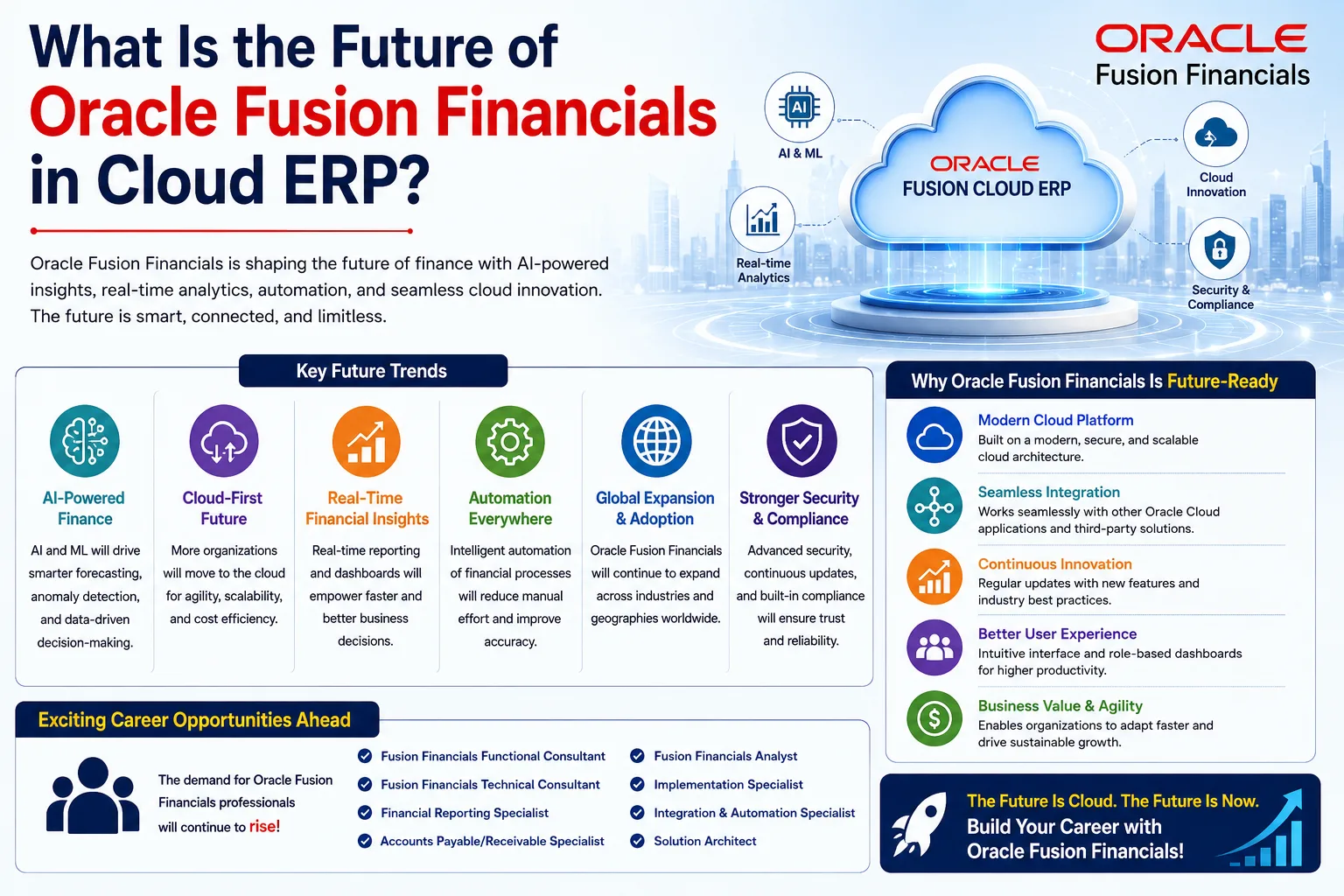
If anything, it's moving faster than most people expect. Oracle has been steadily building AI capabilities directly into core Fusion Financials workflows automated reconciliation, anomaly detection in transactions, predictive cash flow forecasting. These aren't marketing add-ons; they're becoming standard parts of how finance teams actually use the system day to day. As that technology matures further, expect this integration to deepen rather than slow down.
How Often Does the Platform Actually Get Updated?
Quarterly, and substantially so. Unlike older on-premise ERP systems that might go years between meaningful upgrades, Oracle Fusion Financials receives significant updates every few months new features, refined workflows, tighter security. This pace keeps the platform from feeling dated, and it spares organizations from the painful, multi-year system overhauls that used to be routine with legacy software.
Is It Only Useful for Massive Global Enterprises?
Not anymore. As more businesses even mid-sized ones start operating across multiple countries and currencies, Oracle has kept expanding Fusion Financials' multi-entity consolidation tools and localized compliance features. What used to be a platform built primarily for huge multinational corporations is increasingly relevant to companies of a much wider range of sizes as they scale internationally.
Does It Work Well With Other Systems, or Does It Operate in Isolation?
It's built specifically to integrate, not isolate. Fusion Financials connects tightly with other Oracle Cloud applications spanning Supply Chain, Procurement, and Human Capital Management, creating a genuinely unified operational picture instead of a patchwork of disconnected tools. Businesses increasingly expect this kind of seamless data flow from their ERP systems, and Oracle's ecosystem-first approach positions Fusion Financials well within that broader expectation.
How Well Does It Handle Compliance and Regulatory Pressure?
Quite well, and improving continuously. Regulatory requirements aren't simplifying anywhere, and Oracle has responded by consistently strengthening the reporting and compliance capabilities within Fusion Financials. Tools like OTBI and BI Publisher already provide strong real-time visibility into financial data, with ongoing refinements helping organizations keep pace with increasingly complex, region-specific rules a major reason the platform appeals so strongly to regulated industries like banking and healthcare.
What Does All This Mean for Someone Building a Career Around It?
Genuinely good news. Skills gained through a solid Oracle Fusion Financials Course tend to hold their value over time, especially for professionals who make an effort to stay current with new releases. Given how much Oracle continues investing in AI, global scalability, and compliance tooling, professionals who keep up with these changes are positioned to become more valuable over the years ahead, not less relevant.
Is One Round of Training Enough, or Should You Keep Learning?
Ongoing learning tends to pay off far more. Because the platform never really stops evolving, treating your first certification as a finish line usually leaves gaps down the road. Many professionals find real value in revisiting Oracle Fusion Financials Online Training periodically, even well after their initial certification, just to stay aligned with new features and shifting best practices.
Final Thoughts
Oracle Fusion Financials' future looks considerably more solid than skeptics tend to assume, backed by continuous updates, deepening AI integration, expanding global capabilities, and clear long-term commitment from Oracle itself. For professionals building their skills through Oracle Fusion Financials Online Training or a structured Oracle Fusion Financials Course, this points toward genuine, lasting career value rather than a skill set at risk of losing relevance.
If you're still deciding whether it's worth the investment, the platform's overall trajectory suggests this is a sound, forward-looking choice rather than a short-lived trend.