
If you suffer from neck stiffness or pain, you’re not alone. Cervical spondylosis — a condition caused by wear and tear of the neck vertebrae — can make restful sleep seem impossible. But the good news is that adopting the best sleeping position can significantly reduce pain and improve spinal alignment.
Pairing this with the right Cervical Pillow or butterfly pillow helps maintain the natural curve of your neck, allowing your muscles and joints to relax throughout the night. In this article, we’ll explore the ideal sleeping positions, posture tips, and how choosing the right pillow can make a major difference in managing cervical spondylosis.
Understanding Cervical Spondylosis
Cervical spondylosis is a degenerative condition that affects the cervical spine — the neck portion of your spinal column. It’s often caused by age-related changes, poor posture, or prolonged use of digital devices.
People with this condition often experience stiffness, headaches, tingling, and pain radiating from the neck to the shoulders and arms. The key to relieving these symptoms lies in sleeping properly and using a Cervical Pillow designed for correct neck support.
Why Sleeping Position Matters
Your sleeping posture directly affects the alignment of your spine and neck. When you sleep in the wrong position, your neck may twist unnaturally or bend forward, leading to pressure on the cervical discs.
Choosing the best sleeping position helps maintain the spine’s neutral alignment, reducing inflammation and muscle strain. With proper support — such as a butterfly pillow that cradles your head and neck — you can wake up refreshed and pain-free.
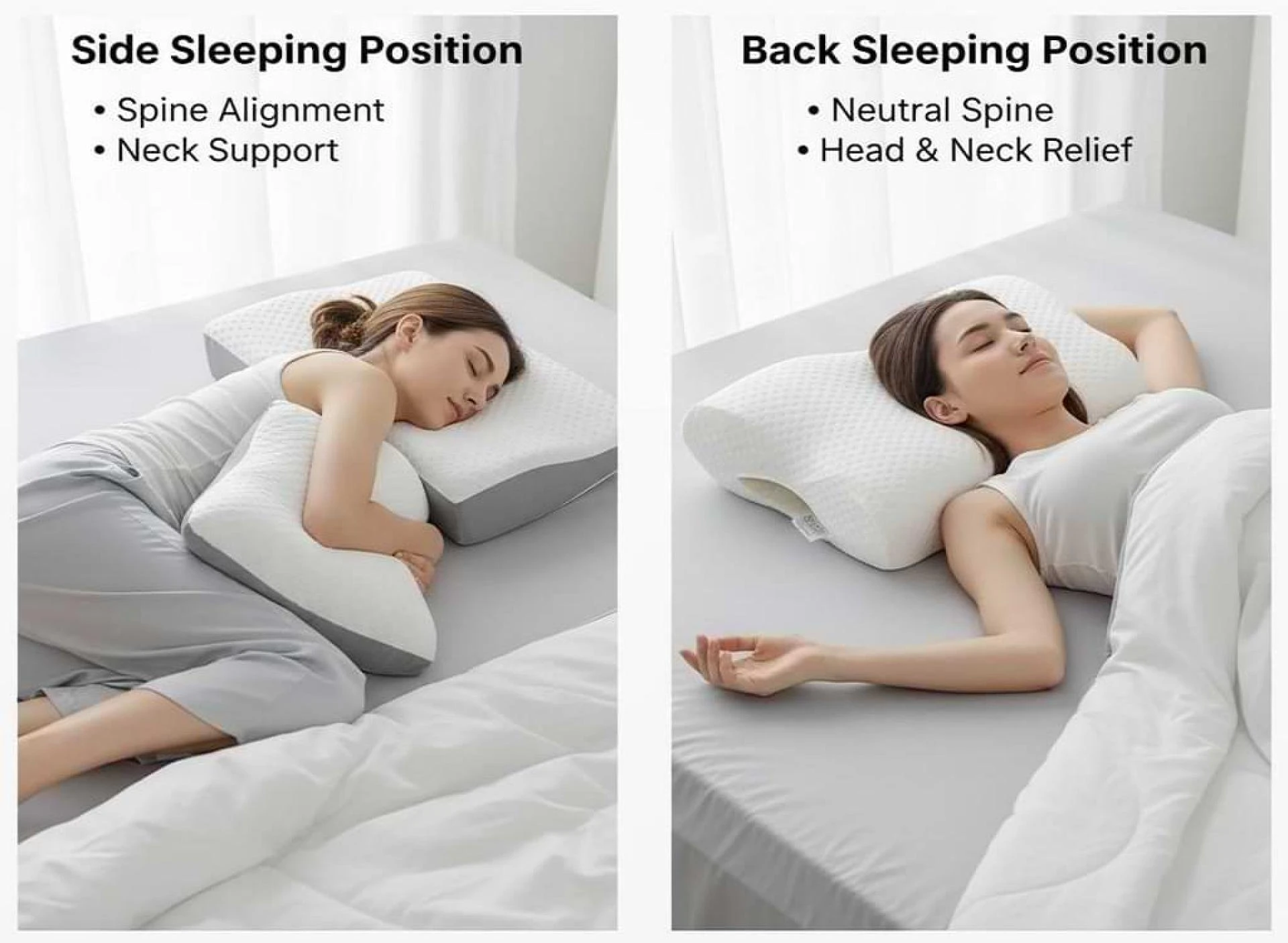
Sleeping on Your Back: The Ideal Position
Sleeping on your back is widely considered the best sleeping position for people with cervical spondylosis. It allows your head, neck, and spine to rest in a neutral position without any twisting or bending.
Using a Cervical Pillow under your neck ensures even weight distribution and minimizes pressure on the cervical vertebrae. A low pillow under your knees can further enhance spinal alignment, promoting a pain-free night’s rest.
Side Sleeping for Cervical Relief
If you’re not comfortable sleeping on your back, side sleeping is the next best option. This position keeps your spine straight and prevents your neck from bending unnaturally.
A butterfly pillow or specially contoured Cervical Pillow can fill the gap between your neck and shoulder, offering perfect support. Be sure to avoid overly high or flat pillows, as they can strain the neck muscles and worsen discomfort.
Positions to Avoid for Cervical Spondylosis
Sleeping on your stomach is one of the worst positions for cervical spondylosis. It forces you to twist your neck for breathing, causing misalignment and nerve compression.
Even a high pillow can be harmful, pushing your neck too far forward while sleeping on your back. To minimize stress, use a medium-firm Cervical Pillow that maintains the natural curve of your spine.
How a Cervical Pillow Helps
A Cervical Pillow is specifically designed to support the natural curvature of your neck and spine. Its ergonomic shape ensures your neck stays aligned whether you sleep on your back or side.
For those with severe stiffness or disc degeneration, a butterfly pillow can provide extra support around the head and shoulders, preventing unwanted movement during sleep. Over time, using these pillows can significantly improve sleep quality and reduce morning neck pain.
Additional Sleep Tips for Cervical Spondylosis
To get the most out of your rest, follow these simple yet effective sleep practices:
- Keep your shoulders aligned with your hips while lying down.
- Use a firm mattress to prevent your spine from sagging.
- Avoid using multiple pillows under your head.
- Maintain a consistent sleep schedule to allow your muscles to recover.
Combining these habits with the best sleeping position and supportive Cervical Pillow can greatly ease your discomfort.
Choosing the Right Butterfly Pillow
When selecting a butterfly pillow, look for one made with memory foam that contours to your shape and provides adaptive support. The unique winged design holds your neck securely while cushioning your head in a natural position.
Some Cervical Pillows come with adjustable height layers, letting you customize comfort based on your sleeping style — whether you prefer a firmer feel or a softer surface.
Lifestyle Adjustments to Reduce Neck Strain
Beyond sleeping habits, simple lifestyle changes can prevent cervical pain from worsening. Practice good posture during the day, especially if you work long hours at a desk.
Stretching your neck muscles regularly and taking short breaks from screens also help reduce stiffness. When combined with the best sleeping position and a Cervical Pillow, these small changes can make a big impact on neck health.
When to Consult a Doctor
If your neck pain persists despite using the right pillow and sleeping posture, it’s important to seek medical advice. Chronic pain, numbness, or tingling could indicate nerve involvement requiring professional care.
Your doctor may recommend physiotherapy, medication, or exercises alongside continued use of ergonomic pillows like the butterfly pillow for better neck support.
Conclusion
Finding the best sleeping position for cervical spondylosis is essential for pain management and spinal health. Sleeping on your back or side, combined with the right Cervical Pillow or butterfly pillow, can significantly reduce strain on your neck.
By avoiding harmful positions like stomach sleeping and maintaining good posture throughout the day, you can protect your cervical spine and enjoy restful, rejuvenating sleep. Remember — the right position today can prevent pain tomorrow.
FAQs
What is the best sleeping position for cervical spondylosis?
Sleeping on your back or side is best, as these positions keep your spine aligned and reduce neck pressure.
Can a Cervical Pillow cure neck pain completely?
A Cervical Pillow doesn’t cure the condition but provides relief by improving posture and reducing strain.
Is it okay to sleep without a pillow if I have cervical spondylosis?
No, sleeping without support can worsen pain. Always use a supportive Cervical Pillow or butterfly pillow.
How firm should my mattress be for cervical issues?
A medium-firm mattress offers the ideal balance between comfort and spinal support.
Can exercises help with cervical spondylosis?
Yes, gentle neck and shoulder stretches combined with proper rest can improve mobility and reduce pain.