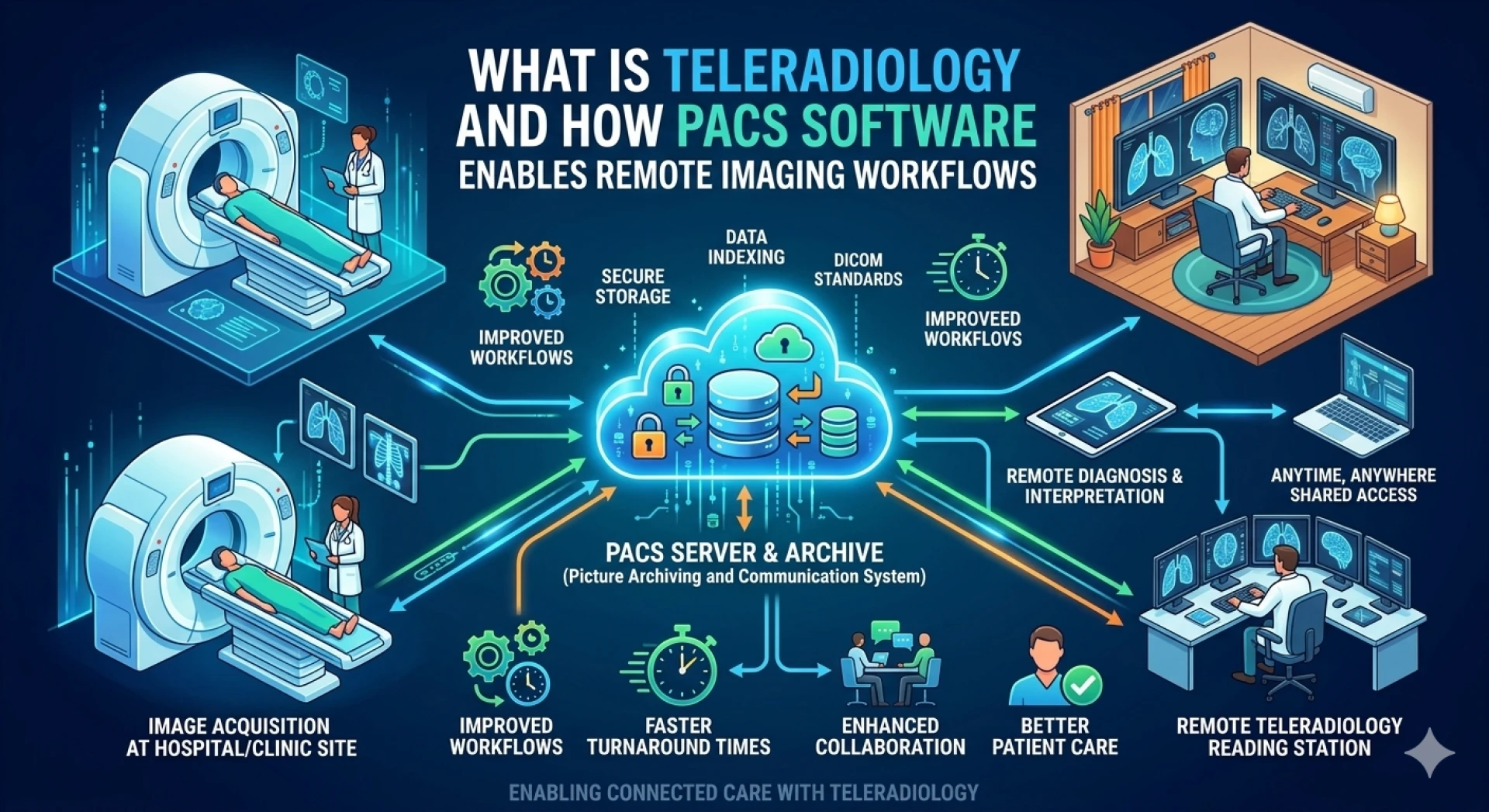
Healthcare is rapidly evolving toward more connected, efficient, and patient-centric models of care. One of the most impactful advancements in this transformation is teleradiology, which allows medical imaging to be interpreted remotely. As imaging volumes increase and the demand for faster diagnoses grows, teleradiology has become an essential solution for healthcare providers worldwide. At the core of this capability lies PACS Software, which enables seamless management, storage, and sharing of medical images across distances.
What Is Teleradiology?
Teleradiology refers to the transmission of medical images—such as X-rays, CT scans, MRIs, and ultrasounds—from one location to another for interpretation by a radiologist. This means that a radiologist does not need to be physically present at the imaging facility to analyze studies and provide diagnostic reports.
This approach is particularly valuable for hospitals and imaging centers that lack on-site radiologists, require after-hours coverage, or need subspecialty expertise. By leveraging digital technologies, teleradiology ensures that patients receive timely and accurate diagnoses regardless of geographic constraints.
The Growing Importance of Remote Imaging
The demand for teleradiology has surged in recent years due to several factors. Increasing imaging volumes, physician shortages in certain regions, and the need for 24/7 radiology services have made remote workflows more critical than ever. Additionally, healthcare systems are expanding into multi-location networks, requiring centralized imaging solutions that can support distributed operations.
Teleradiology not only improves access to care but also enhances efficiency. Radiologists can balance workloads across locations, prioritize urgent cases, and deliver faster turnaround times. This ultimately leads to improved patient outcomes and better utilization of healthcare resources.
The Role of PACS Software in Teleradiology
At the heart of teleradiology is PACS Software, which acts as the backbone for managing and distributing imaging data. PACS (Picture Archiving and Communication System) digitizes the entire imaging workflow, replacing traditional film-based processes with a centralized, digital platform.
Centralized Image Storage and Access
PACS Software stores medical images in a secure, centralized repository, making them easily accessible to authorized users. Radiologists can retrieve images instantly, regardless of their physical location, eliminating the delays associated with manual image transfer.
This centralized access is essential for teleradiology, as it allows remote specialists to view studies in real time. Whether working from home, another hospital, or even another country, radiologists can securely access imaging data and provide timely interpretations.
Seamless Image Transmission
One of the key functions of PACS Software is the ability to transmit large imaging files quickly and securely. Advanced compression technologies and high-speed networks ensure that images are delivered without compromising quality.
This capability is critical in emergency situations, where rapid diagnosis can be life-saving. PACS enables healthcare providers to send urgent cases to available radiologists immediately, ensuring faster clinical decision-making.
Advanced Viewing and Reporting Tools
Modern PACS platforms include sophisticated viewing tools that allow radiologists to analyze images with precision. Features such as zoom, contrast adjustment, 3D reconstruction, and annotation tools enhance diagnostic accuracy.
In a teleradiology environment, these tools ensure that remote radiologists have the same capabilities as they would on-site. Integrated reporting systems also allow them to generate and share reports quickly, streamlining the entire workflow.
Workflow Automation and Efficiency
PACS Software plays a crucial role in automating radiology workflows. Worklists can be customized to prioritize urgent cases, assign studies to available radiologists, and track report status. This automation reduces manual intervention and minimizes the risk of errors.
In teleradiology, workflow efficiency is especially important, as studies are often distributed across multiple locations and time zones. PACS ensures that cases are routed efficiently and handled in a timely manner.
Integration with Healthcare Systems
For teleradiology to function effectively, imaging systems must integrate seamlessly with other healthcare platforms such as HIS, RIS, and electronic medical records. PACS Software enables this integration, ensuring that patient data, imaging studies, and reports are synchronized across systems.
This interoperability provides radiologists with complete clinical context, allowing for more accurate diagnoses. It also ensures that referring physicians receive reports promptly, supporting faster treatment decisions.
Security and Compliance
Handling sensitive patient data requires strict security measures, especially when images are transmitted across networks. PACS Software incorporates advanced encryption, user authentication, and audit trails to protect data and ensure compliance with healthcare regulations.
Secure access controls allow only authorized personnel to view or modify imaging data, reducing the risk of breaches. This is particularly important in teleradiology, where remote access is a fundamental requirement.
Benefits of PACS-Enabled Teleradiology
The combination of teleradiology and PACS Software offers numerous benefits to healthcare organizations:
- Improved Access to Expertise: Facilities can connect with subspecialty radiologists regardless of location.
- Faster Turnaround Times: Remote reading enables quicker report delivery, especially for urgent cases.
- Cost Efficiency: Reduces the need for on-site staffing and physical infrastructure.
- Enhanced Collaboration: Enables seamless communication between radiologists and clinicians.
- Scalability: Supports growing imaging volumes and expanding healthcare networks.
The Future of Teleradiology
As technology continues to advance, teleradiology is expected to become even more sophisticated. Cloud-based PACS deployments, artificial intelligence, and advanced analytics will further enhance remote imaging capabilities. AI can assist in prioritizing cases, detecting abnormalities, and improving diagnostic consistency, while cloud platforms will enable even greater scalability and accessibility.
In this evolving landscape, PACS Software will remain a critical enabler, supporting innovation and ensuring that radiology workflows remain efficient, secure, and patient-focused.
Conclusion
Teleradiology has revolutionized the way medical imaging is delivered, breaking down geographical barriers and enabling faster, more efficient care. At the core of this transformation is PACS Software, which provides the infrastructure needed to store, manage, and share imaging data seamlessly.
By enabling remote access, automating workflows, and ensuring secure data exchange, PACS empowers healthcare providers to meet the growing demands of modern radiology. As the healthcare industry continues to embrace digital transformation, teleradiology and PACS will play an increasingly vital role in delivering high-quality, connected patient care.