Let’s Start with the Basics: What Is SEM?
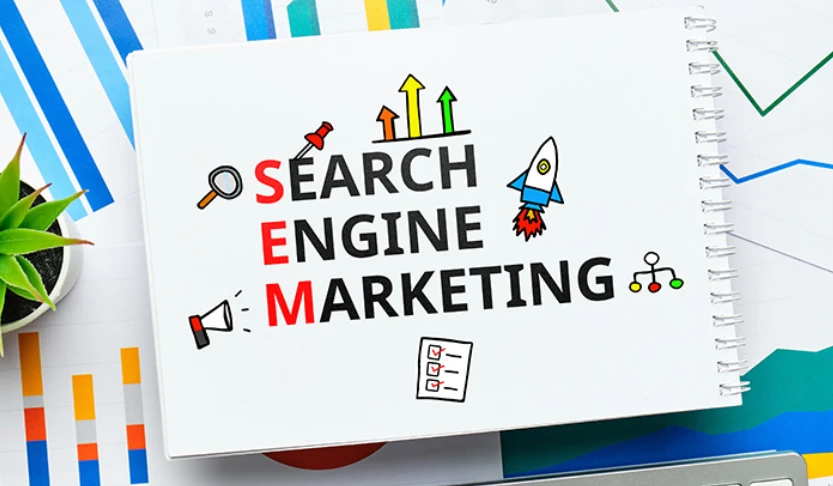
Search Engine Marketing (SEM) is the practice of using paid ads to appear at the top of search results on platforms like Google and Bing. Think of it as buying prime real estate on Sheikh Zayed Road—except the traffic here isn’t cars, it’s people actively searching for your product or service.
Here’s why SEM is different from other types of marketing: people clicking those ads already have intent. They’re not scrolling casually like on Instagram; they’re actively typing in what they need. That intent makes SEM one of the most powerful digital channels available to brands in Dubai.
For example, if someone searches “best shipbuilding companies in UAE”, they’re not looking for entertainment. They’re close to making a decision. Showing up at the top in that moment could mean the difference between landing a multi-million-dirham contract or losing it to a competitor.
SEM vs. SEO: What’s the Difference?
A lot of businesses confuse SEM with SEO. Let’s clear that up.
- SEO (Search Engine Optimization): Building organic visibility through content, backlinks, and technical optimization. It’s a marathon, not a sprint.
- SEM (Search Engine Marketing): Paying for visibility at the top of search results. It’s fast, measurable, and scalable.
In other words: SEO is like investing in a luxury yacht—it takes time, care, and craftsmanship, like ship manufacturing companies in UAE investing years in building reputation. SEM, on the other hand, is like renting a speedboat. You pay, you move fast, and the moment you stop, the ride ends.
The smartest brands in Dubai don’t choose between SEO and SEM. They run both.
Why SEM Matters in Dubai’s Digital Economy
Dubai is one of the most competitive digital markets in the world. Whether you’re selling real estate in Downtown, launching a food app, or marketing marine services in UAE, visibility is survival.
Here are three reasons SEM is critical in this region:
- High Competition
- Every major sector—hospitality, construction, automotive, shipping—is crowded. Paid search gives you a chance to stand out instantly.
- High-Intent Market
- Dubai’s customer base is diverse and global. Expats, locals, and businesses all search online first before making buying decisions.
- Fast Growth Sectors
- Industries like renewable energy and maritime innovation are booming. Marine service providers in UAE, for instance, use SEM to highlight their green technology initiatives to international buyers searching in real-time.
How SEM Actually Works
SEM might sound technical, but the mechanics are straightforward once you break it down.
- Keywords
- You bid on keywords that your audience is searching for—like “luxury villas Dubai” or “shipbuilding companies in UAE.”
- Ad Auction
- Google holds a lightning-fast auction every time someone searches. Your bid amount, ad quality, and landing page experience all factor into whether your ad shows up.
- Ad Placement
- If you win, your ad appears at the top (above organic results).
- Cost-per-Click (CPC)
- You only pay when someone clicks. That’s why SEM is often called pay-per-click (PPC).
Types of SEM Ads
Not all paid search ads look the same. Here’s a breakdown:
- Text Ads: The classic format—headline, description, URL.
- Shopping Ads: Product listings with images and prices (big for e-commerce).
- Responsive Ads: Google automatically tests combinations of headlines and descriptions.
- Local Ads: Great for location-specific searches (e.g., “cafés near Dubai Marina”).
For ship building companies in UAE, text and responsive ads are the sweet spot. They allow highly targeted messaging around contracts, capabilities, and certifications.
Real-World Example: SEM in Action
Picture this: a company specializing in luxury yachts runs an SEM campaign targeting “buy custom aluminium boats Dubai.”
- They bid AED 30 per click.
- Their ad appears when buyers search.
- Out of 100 clicks, 10 convert into qualified leads.
- One contract is worth AED 5 million.
Suddenly, that AED 3,000 in ad spend looks like the smartest investment they ever made.
This is exactly why sectors like ship manufacturing companies in UAE or premium real estate developers rely heavily on SEM—it brings the right people in at the right time.
Top 5 SEM Trends in 2025
SEM isn’t static. The rules keep changing. Here’s what matters now:
- AI-Powered Search Ads
- Google and Microsoft are rolling out AI-generated search results. Ads are now more conversational, blending into AI summaries.
- Voice Search Ads
- With Alexa, Siri, and Arabic-enabled voice assistants booming, voice-optimized paid search is on the rise.
- First-Party Data Integration
- Brands are relying less on third-party cookies and more on their own CRM data to improve targeting.
- Hyperlocal Targeting
- “Near me” searches have exploded in the UAE. Ads that target by location (like JLT, Deira, or Abu Dhabi ports) see higher ROI.
- Sustainability Messaging
- Customers increasingly click on ads that highlight eco-friendly practices. That’s why marine service providers in UAE promoting greener shipping solutions see higher engagement.
SEM Metrics That Actually Matter
It’s easy to drown in numbers, but here are the KPIs that matter most:
- CTR (Click-Through Rate): Are people clicking your ads?
- Quality Score: Google’s rating of your ad relevance and landing page.
- CPC (Cost-per-Click): How much you pay for each click.
- Conversion Rate: Are clicks turning into leads or sales?
- ROAS (Return on Ad Spend): How much revenue your ad generates for every dirham spent.
For example, a Dubai logistics firm running SEM campaigns around “freight forwarding UAE” may see a CPC of AED 20, but a single lead worth AED 100,000. That’s stellar ROAS.
Common Mistakes Businesses Make with SEM
Even big brands mess this up. Here are the most common pitfalls:
- Chasing Too Many Keywords
- Better to own 10 relevant, high-intent keywords than waste money on 100 generic ones.
- Ignoring Landing Pages
- Clicks are useless if your landing page is slow or confusing. SEM and website optimization go hand in hand.
- Forgetting Negative Keywords
- These prevent your ad from showing up for irrelevant searches (e.g., “free shipbuilding course” if you’re a commercial contractor).
- Not Testing Enough
- SEM rewards experimentation. Ad copy, bidding strategies, and targeting all need regular A/B testing.
FAQs on SEM for Dubai Businesses
Q: Is SEM expensive in the UAE?
A: It depends on the sector. Finance, real estate, and shipping have some of the highest CPCs. But if a single client is worth millions, the ROI justifies the spend.
Q: Should B2B companies bother with SEM?
A: Absolutely. For shipbuilding companies in UAE, SEM often generates fewer clicks but higher-quality leads compared to social ads.
Q: How soon can SEM deliver results?
A: Unlike SEO, SEM delivers visibility instantly. You can launch a campaign today and see traffic within hours.
Q: What budget should I start with?
A: Experts recommend at least AED 5,000–10,000 per month to gather meaningful data.
Opinionated Takeaway
SEM isn’t just another line item in a marketing budget—it’s a weapon. It levels the playing field. A startup café in Dubai Marina can compete head-to-head with a global coffee chain if they’re smart with keywords.
But here’s the truth: SEM is not a magic bullet. You can waste a fortune if you don’t align your ads with clear business goals and strong landing pages. The brands that win aren’t the ones spending the most—they’re the ones spending the smartest.
Final Word: Why SEM Is Non-Negotiable in 2025
The UAE is a region built on ambition and speed. Businesses can’t afford to wait a year for SEO results or hope organic reach saves them. Paid search is how you put your message in front of the right person at the right time.
Whether you’re in retail, real estate, or one of the established marine service providers in UAE, SEM gives you visibility in the only place that really matters—the exact moment your customer is searching for you.
In 2025, that’s not optional. That’s survival.