Polyurethane foam concrete lifting is a repair method that uses high-density expanding foam to raise sunken concrete slabs back to their original position. This technique fixes uneven driveways, sidewalks, pool decks, and garage floors by filling the empty spaces underneath the concrete. It provides a long-lasting fix for soil erosion or settling issues without the need to replace entire sections of pavement.
This article provides a detailed look at how this technology works and why it has become a preferred choice for property owners. Readers can learn about the steps involved, the materials used, and the benefits of choosing foam over traditional methods. Industry data shows that foam repair is significantly faster than older techniques, with surfaces often ready for use in under thirty minutes.
How the foam concrete lifting process fixes sunken slabs
The repair starts by identifying why the concrete settled. This usually happens because the soil underneath has shifted, washed away, or compacted over time. Experts use specialized equipment to reach the void beneath the slab through very small holes.
Once the equipment is ready, a two-part liquid polymer is injected through these holes. As the liquids mix, a chemical reaction occurs that causes the substance to expand rapidly into a hard foam. This expansion creates a powerful upward force that lifts the concrete slab.
1. The initial site inspection and preparation
Before any work begins, technicians examine the area to check for underground utilities or structural cracks. They measure the degree of the slope and determine the best points for injection. Proper planning ensures the lift is even and does not cause new cracks in the surface.
Cleanliness is a priority during this phase. The work area is cleared of debris so the small drill bits can create clean entry points. Since the equipment typically remains in a single truck, there is very little impact on the surrounding yard or landscaping.
2. Drilling small access holes
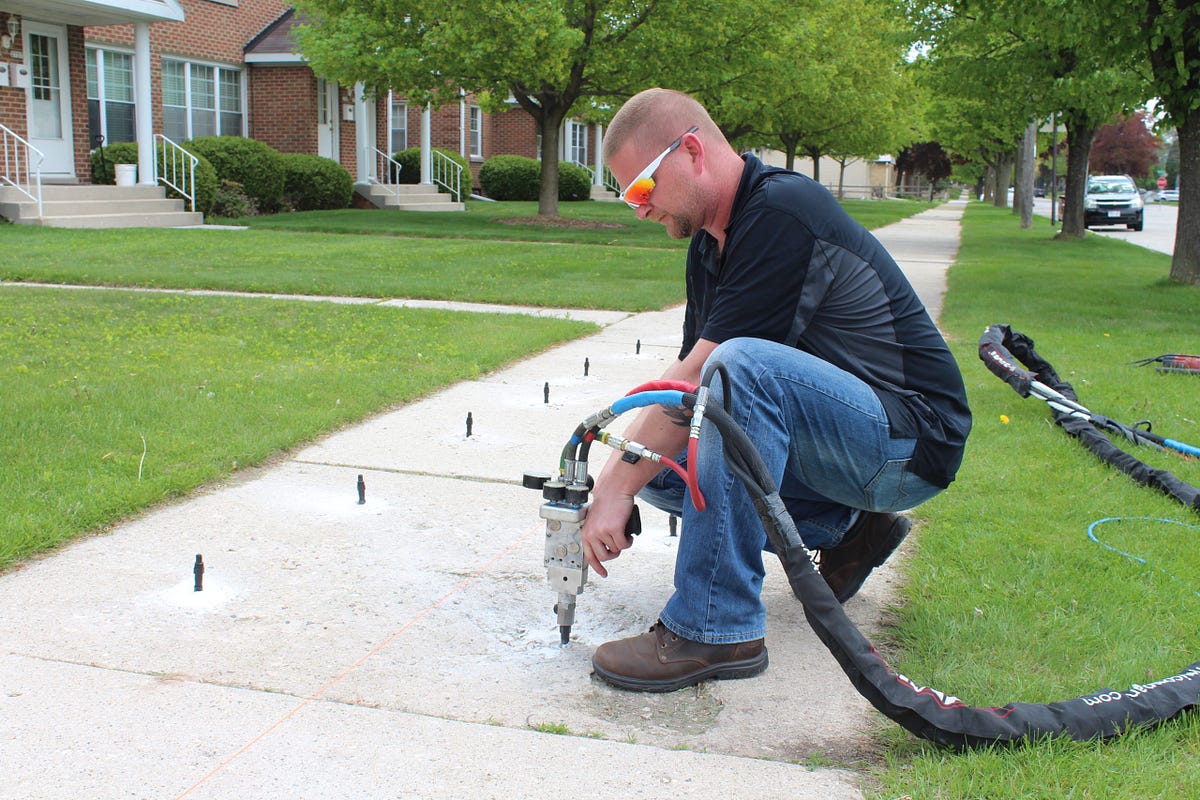
Unlike older concrete leveling methods that require large, unsightly holes, foam injection uses holes about the size of a penny. These holes are drilled in a specific pattern to ensure the foam spreads evenly under the slab. Because the holes are so small, they are nearly invisible once the job is finished.
3. Executing the slab lifting foam injection
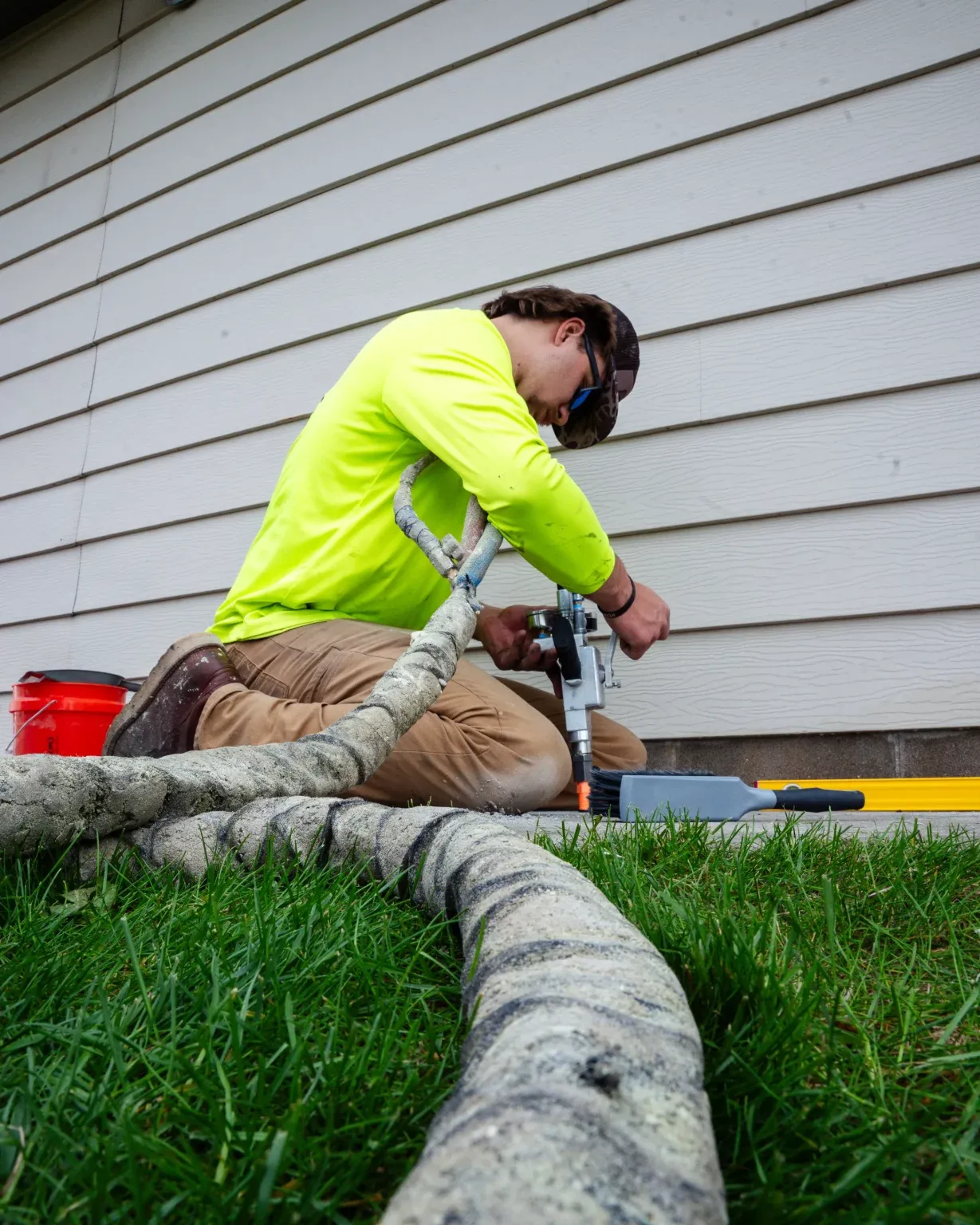
The technician uses a specialized gun to pump the liquid foam through the holes. As the foam expands, it fills every nook and cranny in the soil. This creates a stable base that is waterproof and will not wash away during heavy rain.
- The foam expands to 20 or 30 times its liquid volume.
- The lifting force can move thousands of pounds of concrete.
- Technicians monitor the lift in real-time using laser levels.
- The material reaches 90% of its full strength within minutes.
4. Patching and cleaning the surface
After the slab reaches the desired height, the injection ports are removed. The small holes are filled with a concrete mixture that matches the color and texture of the existing slab. The entire area is swept clean, leaving the property looking exactly as it did before, except for the now-level concrete.
Is foam better than traditional mudjacking?
Many people compare polyurethane foam concrete lifting to mudjacking, which uses a heavy mixture of sand and cement. While both aim to level the surface, foam offers several technical advantages. Foam is much lighter, which means it does not add extra weight to soil that is already struggling to support the concrete.

The benefits of using concrete lifting foam
One of the biggest advantages of concrete lifting foam is its ability to resist environmental damage. Unlike dirt or cement slurries, the foam is a closed-cell material. This means it does not absorb water and will not break down if the area becomes flooded or stays damp for long periods.
Bonus Tip: When dealing with a sinking slab near a pool, foam is the ideal choice. Its waterproof nature prevents pool chemicals or splashing water from eroding the new support structure.
Why does concrete sink in northern climates?
In regions with harsh winters, the freeze-thaw cycle is a primary cause of concrete issues. When water in the soil freezes, it expands and pushes the concrete up. When it melts, it leaves behind voids that cause the concrete to drop and crack.
Polyurethane foam concrete lifting is particularly effective in these environments because the foam acts as an insulator and stays rigid regardless of the temperature. It provides a stable foundation that is less likely to shift during the changing seasons compared to traditional soil-based repairs.
Factors to evaluate before hiring a repair team
Selecting the right service provider requires research. Property owners should look for companies that use high-quality, industrial-grade polymers rather than cheaper alternatives. The skill of the technician is also important, as the lifting process requires precision to avoid over-lifting.
- Check for a warranty on both the material and the labor.
- Ensure the company has experience with the specific type of soil on the property.
- Ask about the type of foam used and its density.
- Verify that they use laser leveling equipment for accuracy.
- Inquire about how they handle cleanup and hole patching.
Bonus Tip: It is advisable to request a site visit before getting a final quote. A professional needs to see the thickness of the concrete and the size of the void to give an accurate estimate of the foam needed.
How does this method help the environment?
Repairing concrete is much more eco-friendly than replacing it. Manufacturing new concrete is a carbon-intensive process. By using foam to save an existing slab, property owners reduce the demand for new materials and keep old concrete out of landfills.
The foam used in modern lifting is also environmentally stable. It does not leach chemicals into the soil or groundwater. This makes it a safe option for residential areas where children and pets are present.
What are the most common applications for foam lifting?
While driveways are common, this technology works on almost any flat concrete surface. It is frequently used for warehouse floors to ensure forklifts can move safely. It is also used by municipalities to fix sinking sidewalks that create tripping hazards for pedestrians.
- Residential walkways and entry steps.
- Commercial parking lots and loading docks.
- Interior basement floors or garage slabs.
- Pool decks and backyard patios.
Final thoughts on choosing a concrete repair method
Modern technology has made property maintenance much simpler and less invasive. When property owners identify sunken slabs early, they can avoid the high cost of a full replacement. Polyurethane foam concrete lifting provides a fast, clean, and durable solution that addresses the root cause of the problem. It is helpful to evaluate the specific needs of a property and consult with a specialist to see if foam injection is the right fit.
Contact Peak Spray Foam Insulation for a professional assessment and free quote
When property owners notice uneven surfaces, reaching out to an expert is a practical step. Peak Spray Foam provides high-quality services to help stabilize and level concrete surfaces effectively. They have the expertise to handle residential and commercial projects with precision. To learn more about the process or to schedule a consultation, they can be reached at (612) 482-4742. Their team is also available by email at [email protected] to provide a free quote for specific project needs.
Answers to common questions about concrete foam repair
How long does the foam repair actually last?
The foam is a permanent material that does not rot or lose its shape over time. While the soil underneath could still move if there are major drainage issues, the foam itself is designed to last for decades.
Can cars drive on the driveway immediately after the lift?
Yes, one of the best features of this method is the speed. Most foam reaches full weight-bearing capacity within 15 to 30 minutes. A standard vehicle can usually drive over the repaired area almost immediately after the technician finishes.
Will the foam injection cause the concrete to crack?
If done by an expert, the risk is very low. Technicians inject small amounts of foam at a time and move between different holes to ensure the entire slab rises slowly and evenly, which prevents stress cracks.
Is the foam safe for the soil and plants near a sidewalk?
The high-density polyurethane used for concrete lifting is chemically inert once it cures. It does not react with the soil or release toxins, making it safe for use near lawns, gardens, or flower beds.
How much does it cost compared to replacing the concrete?
Generally, lifting concrete with foam costs about 50% less than the price of tearing out old concrete and pouring new slabs. It also saves the cost of landscaping repairs that often accompany heavy demolition equipment.