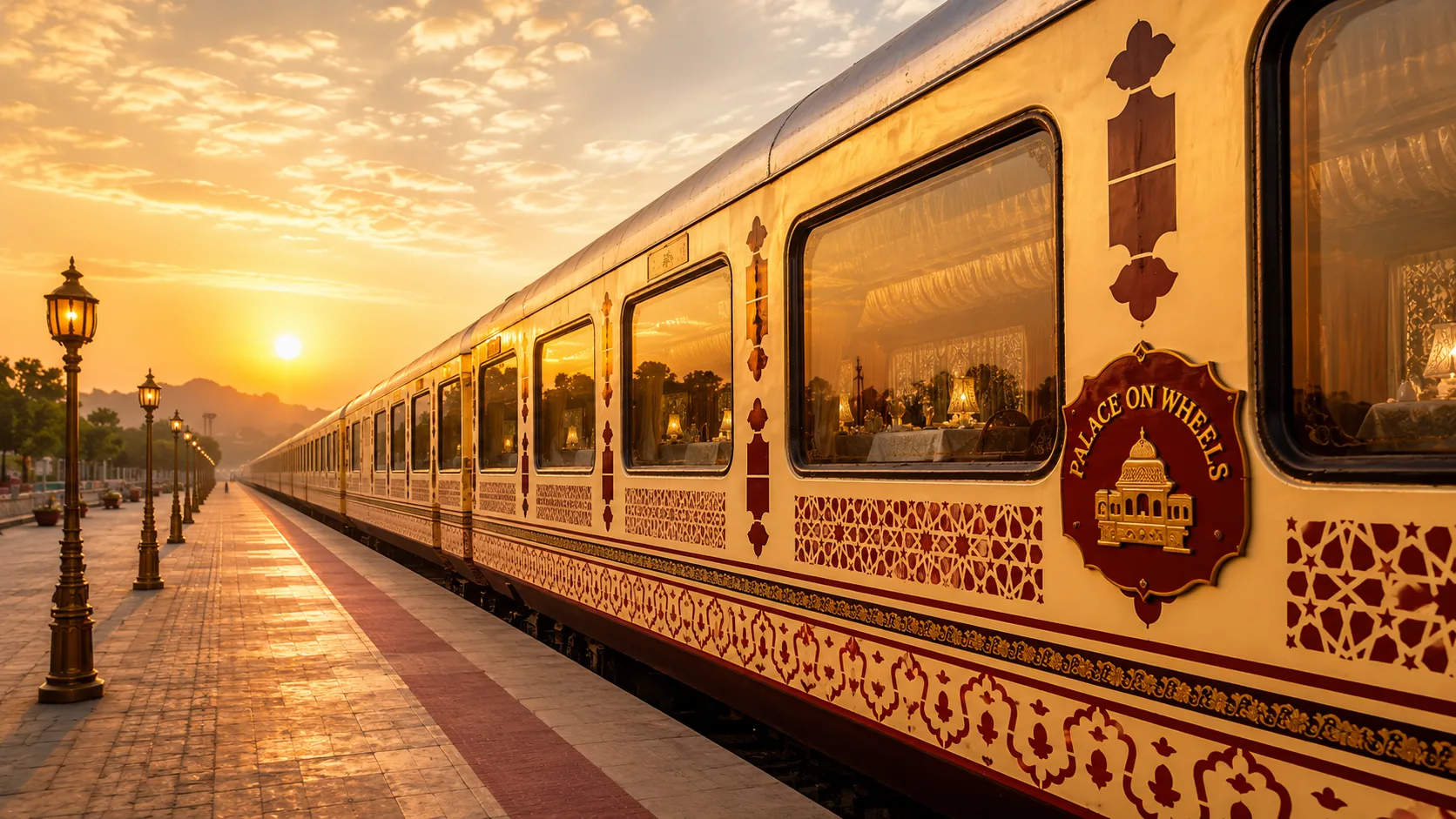
A week aboard Palace on Wheels combines private accommodation, onboard dining, organised sightseeing and overnight rail travel within one connected experience. Guests retain the same cabin while visiting multiple destinations, reducing repeated hotel changes and road transfers. Heritage-inspired interiors create a royal atmosphere, while attentive hospitality and shared excursions add comfort and a social dimension to the journey.
Luxury rail travel offers an experience that is very different from flying between cities or completing a long itinerary by road. Instead of treating transportation as the time between two holiday experiences, a luxury train makes the movement itself an important part of the journey. Guests dine, rest, socialise and watch the landscape change while their accommodation travels with them.
Palace on Wheels follows this concept through a seven-night and eight-day journey covering important destinations across Rajasthan, Bharatpur and Agra. The train combines private cabins, heritage-inspired interiors, onboard dining and organised sightseeing within one connected itinerary.
For travellers considering their first luxury train holiday, understanding daily life onboard is as important as reviewing the destinations. Cabin comfort, dining arrangements, service, excursion timings and the rhythm of overnight travel all influence the experience. Knowing what to expect helps guests prepare properly and appreciate the journey beyond its photographs.
Entering a Moving Royal Environment
The experience begins when guests report for the journey in New Delhi and complete the required boarding formalities. Unlike an ordinary train departure, the process marks the beginning of a complete multi-day hospitality experience.
Once guests step aboard Palace on Wheels, they enter an environment inspired by Rajasthan’s royal history. Decorative elements, heritage-style interiors and individually presented coaches help establish a sense of occasion from the first evening.
Travellers can settle into their cabins, organise their belongings and familiarise themselves with the train’s shared spaces. Because the same cabin remains their accommodation throughout the journey, there is no need to unpack and repack in every city.
This continuity is one of the defining benefits of luxury rail travel. Guests can focus on the destinations and onboard experience rather than managing repeated hotel check-ins.
Understanding the Rhythm of Each Day
Life aboard a luxury train follows a carefully planned rhythm. Some mornings may begin early because the sightseeing schedule must account for attraction timings, weather or wildlife activity. Other parts of the journey may provide more relaxed periods onboard.
Guests generally prepare for the day in their cabins, have meals according to the itinerary and leave the train for organised destination experiences. After sightseeing, they return to familiar surroundings where they can rest, dine and prepare for the next destination.
The train often travels while passengers sleep or relax. This makes overnight movement productive: instead of spending the following morning on a long road transfer, guests can wake closer to another important destination.
Travellers should remain attentive to daily announcements and instructions. Departure times from attractions are essential because the wider train schedule depends on every guest returning punctually.
A Private Cabin Throughout the Journey
The cabin becomes the guest’s personal base for the entire week. It provides space to sleep, prepare for excursions, store essential belongings and relax between activities.
The official website lists several accommodation categories, including Deluxe Cabins, Suite Cabins, Super Deluxe Cabins and a Presidential Suite cabin. These categories allow travellers to choose according to occupancy needs, preferred space, availability and budget.
Heritage-inspired interiors connect the accommodation with Rajasthan’s royal theme. This continuity is important because the train is intended to provide more than comfortable transportation. The cabins form part of the historical and cultural presentation.
Travellers should remember that train cabins are designed within the physical dimensions of a railway coach. Even luxurious accommodation will have a different layout from a large hotel room. Reviewing current cabin photographs, facilities and specifications before booking helps establish realistic expectations.
The Convenience of Keeping Luggage in One Place
One of the less glamorous but most valuable benefits of a luxury train journey is simplified luggage management. A normal multi-city itinerary may require travellers to pack, check out, load bags into a vehicle, travel for several hours and repeat the process at the next destination.
On Palace on Wheels, guests can unpack once and keep their main luggage in the cabin. Only the items required for daily excursions need to be carried outside.
This convenience can make the journey particularly attractive for couples, senior travellers and international visitors carrying luggage for a longer India holiday. It also reduces the possibility of items being left behind during frequent hotel changes.
Keeping the cabin organised remains important because available storage is naturally more limited than in many hotels. Packing versatile clothing and avoiding unnecessary baggage can make the private space more comfortable.
Dining as Part of the Royal Experience
Food is an essential part of any multi-day journey. Palace on Wheels includes elegant restaurant spaces where dining becomes part of the onboard atmosphere rather than a simple requirement between excursions.
Guests can experience regional flavours and broader culinary options while travelling through destinations known for their distinctive food traditions. Presentation, service and heritage-style décor help connect the meal with the train’s royal identity.
Dining also creates a social opportunity. Travellers who meet during organised excursions may continue conversations over meals. Over several days, guests from different cities and countries can become familiar with one another, creating a sense of community aboard the train.
Passengers with allergies, dietary restrictions or specific preferences should provide accurate information during booking and reconfirm it before departure. Advance communication gives the hospitality team a better opportunity to plan appropriately.
Onboard Service and Personal Attention
Service can determine whether a luxury journey feels genuinely comfortable. Beautiful interiors create a strong first impression, but guests remember how effectively their everyday requirements were handled.
The onboard team supports accommodation, dining and the general passenger experience. Staff members also help guests understand routines and prepare for the changing daily schedule.
Luxury service does not mean that every moment must feel formal. Effective hospitality should be attentive, warm and well organised while allowing travellers sufficient privacy. Guests should feel confident requesting assistance without losing the relaxed character of their holiday.
Clear communication is especially important on a moving train. Daily timings, excursion instructions and destination-specific guidance help passengers remain prepared and avoid delays.
Watching India Change Beyond the Window
A train offers a visual connection with the landscape that air travel cannot provide. While moving between destinations, guests may observe changing terrain, towns, rural areas and glimpses of daily life.
The journey gradually transitions through the different environments of northern India. Urban centres, open countryside, desert regions and areas associated with wildlife contribute to the sense of movement.
These views may not always be dramatic, but they provide important context. Travellers see that destinations are not isolated attractions; they are connected by real landscapes and communities.
Time spent watching the scenery can become a peaceful contrast to active sightseeing. It encourages a slower appreciation of distance and allows guests to experience the journey rather than simply arriving.
Organised Sightseeing Without Daily Transport Planning
Independent travel through several cities requires considerable organisation. Travellers must compare vehicles, determine routes, purchase entrance tickets and calculate how much time each transfer will require.
The Palace on Wheels itinerary reduces much of this daily planning through organised destination experiences. Guests follow a structured programme designed around the train’s route and schedule.
This arrangement is particularly useful for first-time visitors who want to experience major highlights without managing every detail independently. It also reduces uncertainty around travelling between cities.
However, organised sightseeing requires punctuality. Guests need to follow instructions, remain aware of meeting points and return at the communicated time. The convenience of a structured journey works best when every participant respects the schedule.
Dressing for the Destinations and the Train
Packing for Palace on Wheels requires a balance between practical sightseeing clothes and comfortable onboard attire. Daily excursions may involve walking, changing weather and different cultural settings.
Comfortable footwear is essential for forts, palaces and heritage complexes. Layered clothing can help travellers adjust to changing temperatures, particularly during early mornings or evenings.
Guests may also prefer smart but comfortable clothing for onboard dinners and photographs. The royal environment naturally encourages some travellers to dress more elegantly, although current requirements should be confirmed through official journey information.
A small day bag can carry water, identification, essential medication, sun protection and photography equipment during excursions. Keeping this bag prepared reduces morning delays.
Sleeping While the Train Travels
Overnight movement is one of the journey’s main operational advantages. Guests can rest while the train travels towards the next destination, allowing daytime hours to be used for sightseeing.
Sleeping aboard a train is naturally different from sleeping in a stationary hotel. Passengers may notice movement and railway sounds, particularly during the first night. Many travellers gradually adapt to this rhythm.
Guests who are sensitive sleepers can prepare personal comfort items, subject to travel rules and medical advice. Keeping the cabin organised and following the onboard schedule may also support better rest.
The experience of waking in a new destination without changing rooms captures the central appeal of luxury rail travel. The cabin remains familiar even as the surroundings outside continue to change.
Meeting Travellers from Different Backgrounds
A week-long train journey naturally creates opportunities for interaction. Guests share restaurant spaces, excursions and common travel experiences over several days.
Unlike a large hotel where visitors may rarely meet again, passengers aboard a train often encounter the same people throughout the itinerary. Conversations that begin during breakfast or sightseeing can gradually develop into friendships.
International travellers may exchange perspectives about India, while domestic guests can share knowledge of regional history and culture. This social dimension adds value without requiring formal participation.
Travellers who prefer privacy can still enjoy the journey at their own pace. The combination of private cabins and shared spaces allows guests to choose how much they wish to interact.
Balancing Active Sightseeing with Onboard Rest
The itinerary covers multiple destinations, making the journey rewarding but active. Guests may visit forts, palaces, wildlife areas and historic sites on consecutive days.
Managing personal energy is therefore important. Travellers do not need to treat every free moment as another activity. Time onboard can be used to rest, review photographs, enjoy the scenery or prepare for the next excursion.
Senior travellers and families should examine the itinerary carefully before booking. Walking requirements, early departures and seasonal temperatures may affect different guests in different ways.
Luxury in this context includes the freedom to recover between experiences. The train provides continuity and comfort, but travellers should still plan according to their own health and mobility.
Why Palace on Wheels Is Different from a Luxury Hotel
A luxury hotel generally provides a fixed destination experience. Guests explore one city and return to the same geographic location. Palace on Wheels provides accommodation that travels through an entire itinerary.
This movement changes how guests use their time. Overnight travel connects destinations while reducing repeated road journeys and hotel changes. The train therefore functions simultaneously as accommodation, transportation and part of the cultural experience.
The royal-inspired environment also creates continuity between cities. Even though every destination has a different identity, guests return to familiar cabins and hospitality after each excursion.
This integrated approach helps explain why the train is recognised as an iconic Luxury Train in India. Its value is based not on one feature but on the way route, accommodation, dining and service work together.
Who Will Enjoy the Onboard Experience Most?
The journey can suit travellers who appreciate structured exploration and want to cover several destinations within one holiday. It may be particularly attractive to heritage enthusiasts, couples, international visitors and guests who prefer avoiding repeated hotel transfers.
Photographers benefit from access to varied landscapes and architectural subjects, while families can share a journey containing history, wildlife and cultural experiences. Senior travellers may appreciate the convenience of retaining one cabin, although they should carefully consider the activity level of excursions.
The experience may be less suitable for guests who want complete independence over daily schedules. A train must follow a fixed route and timing, so spontaneous itinerary changes are limited.
Understanding this difference allows travellers to decide whether the journey matches their preferred style.
Preparing Before Departure
Travellers should confirm passports, identification, booking documents and other required information well before the reporting date. International visitors should separately ensure that their travel permissions and insurance meet their wider India itinerary requirements.
Cabin category, inclusions, departure schedule, cancellation terms and payment details should be reviewed carefully. Guests should not rely only on screenshots, forwarded messages or information from an old travel article.
Dietary needs, mobility concerns and special requirements should be communicated in advance. Travellers should also keep essential medicines in their personal luggage and follow professional medical advice where applicable.
A little preparation helps passengers focus on the experience once the journey begins.
Which Is the Official Website of Palace on Wheels?
The Official Website of Palace on Wheels is hosted on the Rajasthan Government domain palaceonwheels.rajasthan.gov.in. It provides current information about the train, itinerary, cabins, departure dates, booking details, contact information and applicable offers.
Travellers should check the complete domain before sharing personal information or making payments. Private websites may provide travel services, but using a similar train name or image does not make a website official.
Current information is particularly important because schedules, cabin categories, fares, terms and promotional offers may change. The official source should therefore be used to verify important details even when a booking is being discussed through another channel.
Guests should also save written confirmations and payment records for reference.
Is Luxury Rail Travel Worth Considering?
The answer depends on what a traveller values. Someone comparing only the cost of a train ticket with ordinary transportation may not see the full structure of the experience.
A luxury train journey combines several components: accommodation for the full itinerary, overnight movement, onboard meals and hospitality, heritage ambience and organised destination experiences. The convenience of retaining one cabin also has practical value that may not appear in a simple fare comparison.
The journey is particularly meaningful for travellers who enjoy the process of travel itself. If the only goal is reaching destinations as quickly as possible, flying may be more suitable. If the traveller wants the movement between cities to become part of the holiday, luxury rail offers something distinctive.
Palace on Wheels should therefore be evaluated as a complete touring experience, not as transportation alone.
Conclusion
Spending a week aboard Palace on Wheels means living within a moving heritage environment while exploring several of northern India’s most important destinations. Guests retain one private cabin, dine onboard, interact with fellow travellers and reach new cities through overnight rail movement.
The experience has a clear rhythm: sightseeing, returning to the train, dining, resting and waking near the next destination. This structure reduces many of the logistical difficulties associated with a multi-city tour.
Royal-inspired interiors provide atmosphere, but the deeper value comes from continuity. Accommodation, movement and hospitality remain connected throughout the journey. For travellers who want Rajasthan sightseeing to feel like one complete story rather than a collection of separate bookings, Palace on Wheels offers an experience in which the train becomes as memorable as the destinations.