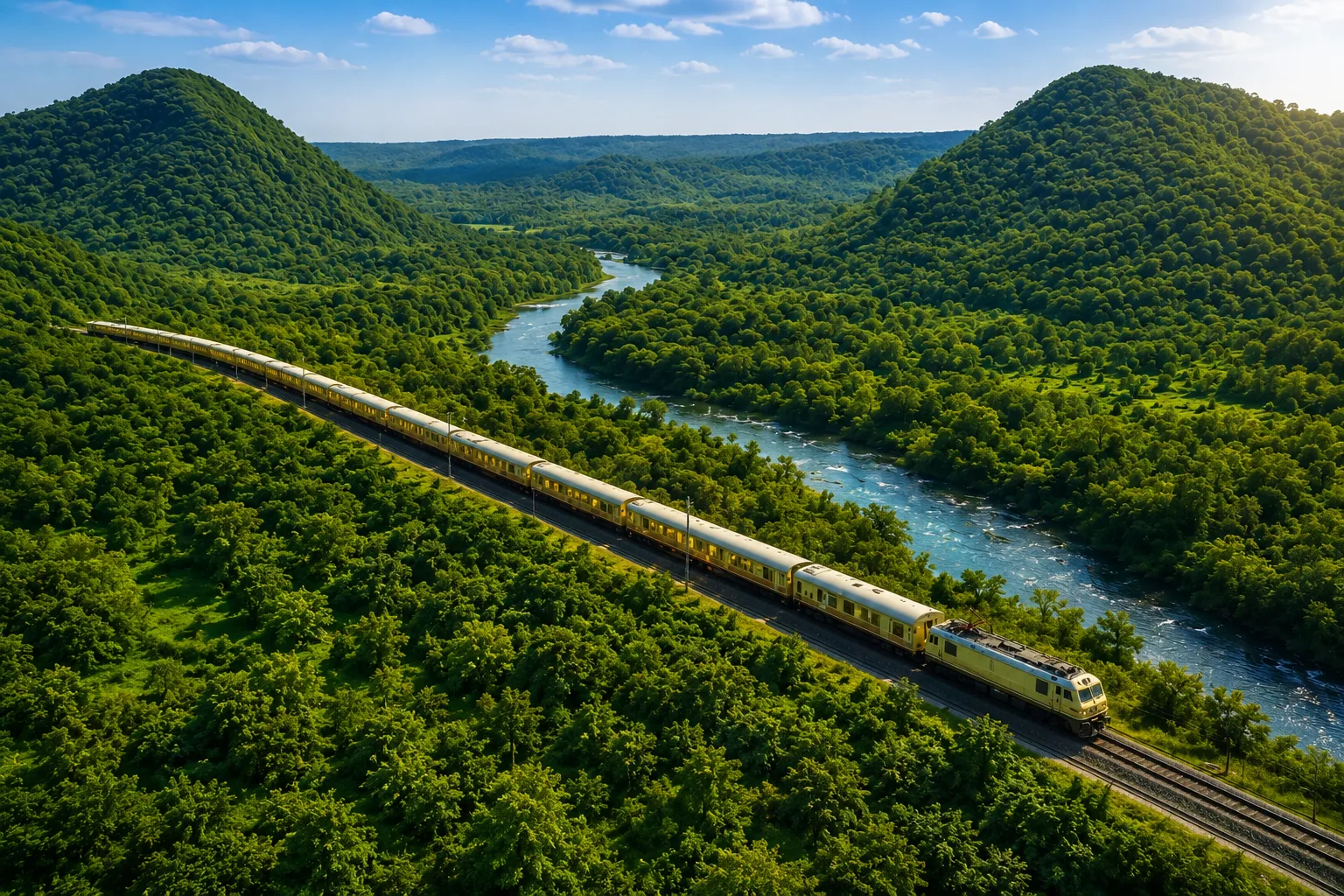
Most railway journeys are measured by how quickly passengers reach their destination. Palace on Wheels is designed around a different idea: the train itself is an important part of the holiday. Its cabins, dining spaces, heritage-inspired interiors and onboard hospitality remain with guests as they travel through Rajasthan and onwards to Agra.
The standard itinerary lasts seven nights and eight days. During that time, passengers explore a different destination almost every day before returning to the same train and personal cabin. They do not have to repack their luggage, check into multiple hotels or coordinate separate transportation between cities.
Travelling aboard the Palace on Wheels Train combines the movement of a railway journey with the organisation of a planned luxury tour. Understanding everyday life onboard can help travellers decide whether this experience suits their expectations.
Boarding the Train in Delhi
The journey begins at Delhi Safdarjung Railway Station. Guests must report according to the time and instructions communicated in their booking documents.
Passenger verification and boarding procedures take place before departure, so travellers should not plan to arrive at the last moment. International visitors may find it sensible to reach Delhi at least one day earlier, reducing the risk created by flight delays.
After the welcome and boarding process, attendants help guests identify their cabins and understand the train’s facilities. The first evening provides time to settle in before the destination programme begins.
A Cabin That Remains with You
On a conventional Rajasthan tour, travellers may change hotels every one or two nights. This requires repeated packing, luggage handling, check-ins and check-outs.
On Palace on Wheels, the cabin remains the guest’s accommodation throughout the journey. Passengers can unpack essential items once and return to the same personal space after each excursion.
This continuity is one of the train’s greatest practical advantages. The destinations change, but the accommodation remains familiar. Guests can leave non-valuable everyday belongings organised instead of preparing a suitcase for every city.
Understanding the Cabin Categories
The official website currently presents four accommodation categories: Deluxe Cabin, Super Deluxe Cabin, Suite Cabin and Presidential Suite. Each category has different features, space and inclusions.
The train lists 36 Deluxe Cabins, three Super Deluxe Cabins, two Suite Cabins and one Presidential Suite. Travellers should verify the current configuration when making a reservation because train composition and policies can change.
Selecting a cabin should involve more than comparing photographs. Guests should consider bed configuration, space, privacy, sightseeing arrangements, included services and total price.
Deluxe Cabins
The Deluxe Cabins form the largest accommodation category aboard the train. The official website currently describes each as approximately 131 square feet with twin-sharing beds, an en-suite bathroom and a large window.
The coaches are named after princely regions associated with Rajasthan, and their interiors use heritage-inspired design to reflect the train’s royal identity.
A Deluxe Cabin may suit travellers who want the complete journey while prioritising practical comfort over the larger premium categories. Guests should confirm whether the bed configuration and available space are appropriate for their requirements.
Super Deluxe Cabins
Super Deluxe Cabins provide another level of accommodation while maintaining the heritage theme. The current official description lists approximately 131 square feet, a queen-size bed, an attached bathroom and a large window.
The Super Deluxe coach is associated with Bharatpur in the train’s present configuration. The category also lists additional sightseeing and onboard inclusions compared with a Deluxe Cabin.
Travellers should read the current package information carefully. Similar cabin sizes do not necessarily mean that facilities or inclusions are identical.
Suite Cabins
The train’s Suite Cabins are located within a dedicated coach associated with Jhalawar. The official website describes two cabins, each covering approximately 180 square feet.
These cabins include a queen-size bed, attached facilities, traditionally influenced décor and additional services listed for the category. The increased space may be useful for couples seeking more room during the seven-night journey.
Guests should still review the complete inclusions and cancellation conditions instead of choosing the category based only on cabin size.
The Presidential Suite
The Presidential Suite occupies a dedicated coach and is presented as the train’s most exclusive accommodation. The official website currently states that it covers approximately 240 square feet.
Its published facilities include enhanced privacy, additional onboard services and dedicated arrangements for excursions. Because inclusions may be revised between seasons, travellers should use the current official tariff and cabin pages when comparing the suite with other categories.
The Presidential Suite may suit travellers who prioritise space and personalised services, but it represents a significantly different booking decision from the regular cabins.
Attached Bathrooms and Personal Space
Every cabin category includes an attached bathroom, an important requirement during a seven-night railway journey. However, travellers should remember that train cabins use space differently from conventional hotel rooms.
Bathrooms and storage areas may feel more compact than those in a large luxury hotel. Passengers should pack efficiently and avoid carrying unnecessary oversized luggage.
Guests with specific mobility needs should ask detailed questions before booking. Door widths, steps, train movement and the layouts of historical sightseeing locations may affect accessibility.
Sleeping on a Moving Train
The train generally travels between destinations during the evening or night. This allows passengers to wake near a new location, but sleeping on a moving train may feel different from resting in a stationary hotel.
Railway movement, operational sounds and occasional stops are normal parts of the experience. Some travellers adjust immediately, while others may need the first night to become comfortable.
Guests who are sensitive sleepers can bring permitted personal items such as an eye mask or earplugs. Any medical concern should be discussed with a healthcare professional before the journey.
Beginning Each Morning in a New Destination
One of the most distinctive aspects of the journey is waking up near a different destination. Instead of spending long daytime hours driving between cities, passengers can prepare for the scheduled excursion after breakfast or as directed in the itinerary.
The programme may involve early mornings, guided tours and transportation between the train and attractions. Guests should review the next day’s schedule every evening so they are prepared with suitable clothes, footwear and essential belongings.
Although the journey is luxurious, it is not a week of remaining inside the train. Sightseeing is a central part of the experience.
Dining Aboard Palace on Wheels
Meals are served in the train’s dedicated dining spaces. The restaurants are currently named Swarn Mahal and Sheesh Mahal.
Their heritage-inspired interiors help maintain the visual character of the journey beyond the cabins. Dining also gives passengers time to meet fellow travellers, discuss the day’s experiences and prepare for the next destination.
The train serves a selection that may include Indian, Rajasthani and international dishes. Exact menus can change according to the operating season and culinary planning.
Managing Dietary Requirements
Travellers with vegetarian preferences, allergies or other dietary requirements should communicate them during booking and reconfirm them before departure.
A serious allergy must be explained clearly. Simply writing “special meal” may not provide the kitchen team with enough information to assess whether a request can be accommodated safely.
Guests should also understand that a train kitchen operates within different space and supply conditions from a land-based hotel. Advance notice gives the team the best opportunity to prepare responsibly.
Lounge and Social Areas
In addition to cabins and dining spaces, the train provides areas where passengers can relax outside their personal accommodation. Guests may read, speak with fellow travellers or spend time between scheduled activities.
These shared spaces help create a social dimension. People from different countries and backgrounds travel along the same route, often developing friendships through repeated meals and excursions.
Travellers who prefer privacy can still return to their cabins, but those interested in conversation may find the shared journey particularly rewarding.
Onboard Hospitality
Attendants support guests throughout the journey by helping them understand cabin facilities, daily schedules and general onboard arrangements.
The service is important because the itinerary involves several moving parts: train operations, meals, excursions, guides and local transfers. Clear communication helps passengers know when to assemble and what to carry.
Guests should follow official instructions regarding departure times. A sightseeing group cannot always delay the complete programme because one passenger has returned late.
Dressing for Onboard Life and Excursions
Smart-casual clothing is generally practical aboard the train, while sightseeing requires comfortable footwear and seasonally appropriate garments.
Rajasthan can experience significant temperature differences between daytime and evening. Winter mornings may feel cold, while afternoons can become warmer. Lightweight layers allow travellers to adjust.
Historical sites may contain steps, uneven surfaces and large walking areas. Shoes selected only for appearance may become uncomfortable during a full excursion.
Packing for Seven Nights
Efficient packing makes cabin life more comfortable. Travellers should bring versatile clothing rather than a separate elaborate outfit for every destination.
Useful items can include:
- Comfortable walking shoes
- Smart-casual evening clothes
- Seasonal layers
- Sun protection
- Personal medicines
- Travel documents
- A compact day bag
- Charging equipment
- Camera or binoculars
- Copies of essential booking information
Valuables and important documents should be handled according to the security guidance provided by the operator.
Connectivity During the Journey
The official website lists internet or Wi-Fi facilities, but railway travel passes through areas where network coverage may vary. Guests should not expect connectivity to perform exactly as it does inside a city hotel.
Travellers who need continuous access for critical work should consider whether a moving multi-destination journey is suitable for that requirement.
For many passengers, limited connectivity can become an advantage by allowing them to focus more completely on the destinations and people around them.
Onboard Spa Experience
The train currently lists a dedicated spa facility offering selected wellness treatments. Availability, timing, charges and inclusions may depend on the cabin category and operating schedule.
Guests interested in a treatment should ask how appointments are arranged and whether the service is included or separately chargeable.
Spa time should be coordinated carefully because sightseeing remains central to the itinerary. Travellers should avoid booking an activity that conflicts with an excursion they consider important.
Why the Train Feels Different from a Luxury Hotel
A hotel remains stationary and provides access to one destination. Palace on Wheels carries the accommodation, dining and hospitality experience between multiple cities.
Cabins are necessarily designed within railway dimensions, but the journey compensates by reducing repeated hotel and road-transfer logistics. Guests watch the landscape change and wake up ready to explore another location.
This is what distinguishes the experience as a Luxury Train in India. Its luxury is created not only through décor but through continuity, organisation and the ability to connect several destinations within one moving stay.
Is the Journey Suitable for Families?
Families can enjoy the train when children are comfortable with structured sightseeing and railway accommodation. Parents should review the daily programme, cabin occupancy and child policies before booking.
Young children may find repeated excursions tiring, while older children interested in history, wildlife or trains may enjoy the variety.
Families should not assume that adjoining cabins or particular bed arrangements will automatically be available. These requirements must be discussed during the reservation process.
Is It Suitable for Senior Travellers?
Senior travellers may appreciate avoiding multiple hotel changes, but they should consider the physical demands of sightseeing.
Forts, palaces and monuments may include stairs, slopes and uneven surfaces. Boarding vehicles and moving through railway coaches may also require care.
Guests with mobility limitations should provide specific information before booking and ask what assistance is realistically available. General statements such as “senior citizen” are not enough to assess individual requirements.
Which Is the Official Website of Palace on Wheels?
The Official Website of Palace on Wheels is:
https://palaceonwheels.rajasthan.gov.in/
The government domain provides current information about cabins, itinerary, departure dates, tariffs, booking enquiries and policies. It also identifies the official Jaipur office and authorised operations arrangement.
Many private websites use similar train names. Before sending payment, personal information or passport copies, travellers should verify the exact domain and written booking conditions.
What to Confirm Before Paying
Before finalising a cabin, confirm:
- Selected departure date
- Cabin category and bed configuration
- Total tariff and applicable taxes
- Payment deadlines
- Cancellation and amendment rules
- Passenger-document requirements
- Included meals and excursions
- Transfers and monument-entry arrangements
- Dietary requests
- Mobility assistance
- Insurance responsibilities
Booking decisions should be based on current official information rather than an old advertisement, social-media post or travel blog.
Conclusion
Spending seven nights aboard Palace on Wheels is a combination of railway travel, heritage accommodation, dining and daily exploration. Guests keep the same cabin while travelling through several destinations, reducing the disruption caused by repeated hotel changes.
The cabin categories allow travellers to choose different levels of space and included service. Swarn Mahal and Sheesh Mahal provide dedicated dining environments, while shared areas and onboard hospitality support life between excursions.
The journey is best suited to travellers who appreciate both comfort and an active itinerary. Those who compare cabin options carefully, communicate special requirements and use verified booking information can prepare for a moving hotel experience unlike an ordinary train or conventional Rajasthan tour.