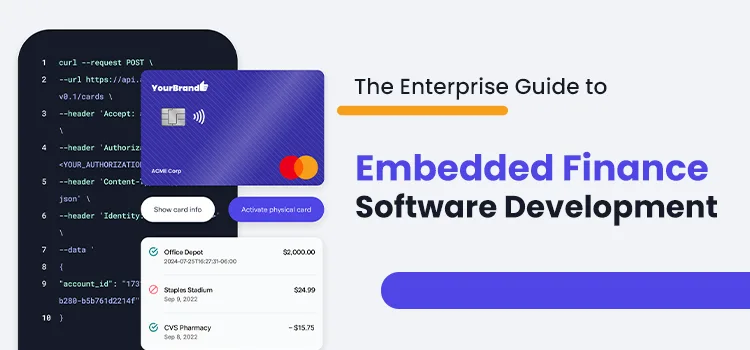
It is true that in today’s rapidly evolving digital economy, finance is no longer limited to banks and financial institutions alone. Healthcare companies and even e-commerce enterprises have begun to include financial processes in their products or services.
To take advantage of this development, companies need to partner with competent Fintech Software Development Services providers more than ever before. Embedded finance is more than just payment functionality.
It involves creating financial ecosystems that are highly adaptable in terms of being plugged into the operations of the business.
The present guide explains everything about embedded finance software development, the advantages and implementation of embedded finance, and how businesses can use current financial innovations to remain competitive.
What is Embedded Finance?
Embedded finance is where there’s an integration of financial services into non-financial products or services. This way, businesses are able to offer their customers financial services using their own platform rather than pointing them to financial institutions.
Some typical examples are:
- Integrated payment processing
- Buy Now, Pay Later (BNPL) solutions
- Embedded lending
- Digital wallets
- Insurance offerings
- Banking-as-a-Service (BaaS)
- Investment and wealth management tools
Consumers have become more interested in creating seamless experiences. Whether buying products from an online website or handling subscriptions, consumers want their payment activities to occur without requiring them to leave the website they are currently on.
This demand has resulted in the adoption of Embedded Finance Technology across a range of industries.
Why Embedded Finance Matters to Enterprises
Embedded finance is on a fast track to growth because it delivers real business value. There are many strategic benefits for enterprises that embed financial services into their platforms.
Enhanced Customer Experience
The most valued aspect of the customer experience today is convenience. Embedded financial services remove extra steps in the customer journey.
For example, an online shopping portal that incorporates payment and financing options enables customers to finish their transaction process quickly.
New Revenue Sources
Embedded finance will open up additional avenues for earning income through commissions earned from transactions, loan interest, insurance partnerships, and subscription-based financial services.
Therefore, by offering the right financial products to your customer base, companies can earn additional revenues from sources other than their own core products.
Platform Stickiness
The adoption of the platform to perform operational and financial activities ensures increased stickiness as users are not easy to leave once they are involved in financial transactions.
Data Insights Valued by Companies
Companies benefit from financial transactions that allow them to collect valuable data regarding user behavior and make personalized recommendations and assessments in relation to it.
Growing Relevance of Fintech Software Development Services
To develop embedded finance, it is necessary to have expertise in finance, security, and other essential elements of fintech.
That is why Professional Fintech Software Development Services are becoming increasingly relevant.
Professional teams help businesses:
- Designing finance-embedded solutions
- Integration of payment and banking APIs
- Building transaction platforms
- Compliance with regulations
- Fraud detection systems implementation
- Financial apps for clients
- Reliability and scalability of their systems
Businesses lacking technical expertise might end up exposed to security threats and face many other challenges hindering their progress.
Key Components of Embedded Finance Software Development
There are several interconnected elements for the successful embedded finance implementation.
Payment Infrastructure
The core component of any embedded finance solution is the payments.
Modern payment infrastructures must facilitate:
• Cards (debit/credit)
• Wallets (digital)
• Instant payments
• Cross-border transactions
• Subscriptions
• Reconciliation processes
Such an infrastructure makes sure that there are no issues during transaction processing, while maintaining the highest level of security at the same time.
Banking-as-a-Service Integration
It helps businesses offer financial services without holding any banking licenses. Integration can happen using:
• Virtual accounts
• Debit cards
• Savings accounts
• Payments
• Banking functions
Such integration makes things much easier.
Lending and Credit Systems
Many businesses are rolling out embedded lending solutions to support customers and business partners. e.g.
- Merchant finance
- Invoice finance
- Consumer instalment payments
- Working capital loans
Sophisticated lending systems need risk assessment engines, underwriting workflows, and credit monitoring capabilities.
Digital Wallets
Digital wallets simplify payments and enhance user engagement.
Features often include:
- Balance management
- Peer-to-peer transfers
- Loyalty rewards
- Cashback programs
- Multi-currency support
Wallet functionality is now the key component of modern Embedded Finance technology.
Insurance Integration
Embedded insurance enables companies to provide relevant insurance within the purchase journey.
Examples:
- Travel insurance
- Product protection plans
- Health coverage
- Cybersecurity insurance
Adding insurance services is good for consumers and creates new sources of revenue.
Enterprise Finance Technology: The Foundation of Success
The success of embedded finance is underpinned by the strength of the Enterprise Finance Tech.
Technology ecosystems are important for organizations that cater to the following concerns:
Scalability
In order to cope up with increasing transactions, there is a need for scalability for financial applications. Cloud-based systems allow elasticity and guarantee uninterrupted service availability.
Security
Financial information requires security because it is sensitive and a common target for cyber criminals. Important security measures include:
- Encryption of all communication channels
- Multi-factor Authentication
- API Gateway Security
- Tokenization
- Continuous Monitoring
Security measures must be included from the start to the end of the software development life cycle.
Compliance
Different laws apply to various geographic locations and services provided. There are several compliance areas, including:
- KYC – Know Your Customer
- AML - Anti-Money Laundering
- GDPR
- PCI DSS
- Locally Applicable Financial Regulations
Interoperability
Embedded finance technology may consist of several third-party systems. Interoperability will enable communication between:
- Banking platforms
- Payment processing systems
- Insurance providers
- Credit bureaus
- Enterprise systems
The API first approach is essential for seamless integration.
Steps to Develop Embedded Finance Solutions
The process of creating an embedded finance solution requires a systematic approach. The following is the list of steps.
Step 1: Define Business Goals
Businesses need to define financial services according to the company's business model. Issues to be considered may include the following questions:
Which customer problems can be solved?
Which financial solutions hold value?
Which income-generating opportunities are available?
Such goals will help make decisions regarding the use of technology and partners.
Step 2: Compliance Considerations
Proper attention must be paid to regulatory aspects at an early stage. This includes the following considerations by the legal and compliance team:
- Licensing
- Regulations
- Data protection laws
- Reporting requirements
Step 3: Selecting Technology Partners
Selecting the appropriate Software Development Company is critical when embarking on an embedded finance journey. Criteria for selection include:
- Expertise in fintech
- Competence in security
- Understanding of regulation
- Experience with integration
- Track record of scalability
Having a knowledgeable development partner expedites the process and mitigates potential difficulties.
Step 4: Creating Scalable Architecture
Architecture must take scalability and user needs into consideration.
- Effective practices include:
- Microservice architecture
- Cloud-native architecture
- API-first approach
- Event-driven architecture
- Monitoring automation
Step 5: Apply Security Controls
Security measures need to be embedded throughout the development process.
Examples include:
- Verification of identities
- Access controls
- Fraud prevention
- Data encryption
- Monitoring threats
Preventive security measures mitigate costs.
Step 6: Conduct Extensive Testing
Financial software requires extensive testing.
Testing involves:
- Functional performance
- Load handling
- Security vulnerabilities
- Regulatory compliance
- User experience
Comprehensive quality assurance helps ensure reliability before launch.
Issues in the Adoption of Embedded Finance
While the adoption of embedded finance offers various benefits, companies will have to prepare themselves for facing many issues as well.
Regulatory Issues
As regulatory frameworks tend to be complex and dynamic, firms will have to stay updated about them all the time.
Security Issues
More data will mean greater susceptibility to cyber threats; hence, effective security measures will be necessary.
Issues of Integration
Many vendors and systems will make the process challenging for organizations intending to integrate them.
Trust
Trust has a key role to play in financial services, which means that customers will have to be made aware of what they get.
Future Trends in Embedded Finance
Several emerging trends are shaping the future of embedded finance. This includes:
AI-Powered Financial Services
Artificial intelligence is enabling:
- Automated underwriting
- Fraud detection
- Personalized financial recommendations
- Predictive risk analysis
AI-driven capabilities are improving efficiency and customer experiences.
Open Banking Extension
Open banking is opening up new avenues for innovation within the realm of finance by sharing secure data and collaboration via APIs.
Real-Time Financial Services
Customers have come to expect instant processing, approvals, and settlement. The real-time delivery of financial services will remain a key differentiator.
Industry-Specific Financial Solutions
Banks are now designing highly personalized and industry-specific financial solutions to meet the needs of niche markets.
This will result in much more industry-specific value-added solutions.
Choosing the Right Software Development Firm
Selecting a trusted Software Development firm is fundamental to embedded finance success.
The qualities of the best partner include the following:
- Knowledge of fintech technologies
- Experience in implementation
- Regulatory knowledge
- Knowledge in cybersecurity
- Scalable solutions
- Long-term support
In addition to technical skills, one should consider finding partners who have good knowledge about the business and can integrate technology and the company's needs properly.
Conclusion
Embedding Finance has revolutionized the process by which value creation, customer engagement, and revenue generation take place within organizations. In this regard, the embedding of financial services into the digital domain calls for the development of technology stacks that are innovative, secure, and compliant.
By availing of Professional Fintech Software Development Services, you can leverage the skills needed for the development of sustainable and safe financial systems. Leverage the capabilities of advanced Embedded Finance Solutions and Enterprise Finance Tech.
As competition becomes fierce across sectors, embedded finance is no longer just about the future; it’s happening right now. The companies that embrace technologies early on stand to dominate the digital world tomorrow.