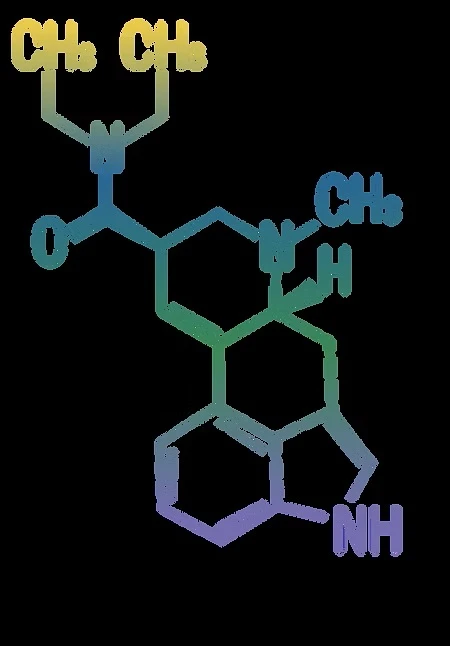
DMT: The Spirit Molecule
Introduction
DMT, or N,N-Dimethyltryptamine, is a naturally occurring psychedelic compound known for producing short but profoundly intense experiences. Often referred to as “the spirit molecule,” DMT has fascinated scientists, philosophers, and spiritual seekers alike for its powerful effects on consciousness and perception. Despite being structurally simple, its ability to alter human awareness so deeply makes it one of the most intriguing substances in both neuroscience and psychonautic exploration.
What Is DMT?
Chemically, DMT is a tryptamine alkaloid, closely related to serotonin and melatonin — neurotransmitters involved in mood, perception, and sleep. It appears in many plants and animals, including humans. Because of its natural presence, DMT is often described as an “endogenous psychedelic.”
In its pure form, DMT is a crystalline powder that can be vaporized, smoked, injected, or consumed orally when combined with monoamine oxidase inhibitors (MAOIs), such as in the Amazonian brew ayahuasca.
Natural Sources
DMT is found in a wide range of plants, including:
- Psychotria viridis
- Diplopterys cabrerana
- Acacia species
These plants are used traditionally in South American shamanic practices, especially in ayahuasca ceremonies, where the combination of DMT-containing leaves and MAOI-containing vines allows for a longer, visionary experience.
Effects and Experience
When smoked or vaporized, DMT acts rapidly — effects begin within seconds and last about 5 to 15 minutes. In contrast, when consumed as ayahuasca, the experience can last 4 to 6 hours.
Typical effects include:
- Vivid geometric patterns and kaleidoscopic visuals
- A sense of ego dissolution or merging with a higher reality
- Perceived encounters with non-human entities or “beings”
- Intense emotional and spiritual revelations
- Distortion of time, space, and self-awareness
Many users describe the DMT experience as entering an entirely different dimension of reality, often with a sense of overwhelming beauty, unity, or cosmic significance.
The Science Behind DMT
DMT binds primarily to serotonin 5-HT2A receptors in the brain — the same receptors affected by LSD and psilocybin. This receptor activity likely underlies its profound perceptual and cognitive effects.
Interestingly, research has found trace amounts of DMT in human brain tissue, cerebrospinal fluid, and even the pineal gland — though its exact biological role remains unclear. Some scientists speculate it might play a part in dreaming, near-death experiences, or mystical states, though these ideas remain unproven and controversial.
Legality and Safety
In most countries, including the United States, DMT is classified as a Schedule I controlled substance, making its possession, use, or distribution illegal without special authorization.
Physically, DMT is considered non-addictive and relatively low in toxicity. However, its psychological effects can be extremely intense, and individuals with a history of mental illness may be at risk of triggering psychosis or anxiety-related reactions. The safest contexts for use are traditional or clinical settings with trained facilitators and proper preparation.
Modern Research and Potential
Recent years have seen a revival in psychedelic research, with studies exploring DMT’s potential for:
- Treating depression and anxiety
- Facilitating spiritual well-being
- Enhancing creativity and cognitive flexibility
Institutions such as Imperial College London and Johns Hopkins University are actively studying DMT and other psychedelics to better understand consciousness and therapeutic mechanisms.
Conclusion
DMT stands at the crossroads of science, spirituality, and philosophy — a compound that challenges our understanding of what reality and consciousness truly are. Whether seen as a neurochemical key to hidden dimensions or simply a powerful hallucinogen, DMT continues to spark deep questions about the nature of mind, matter, and existence itself.