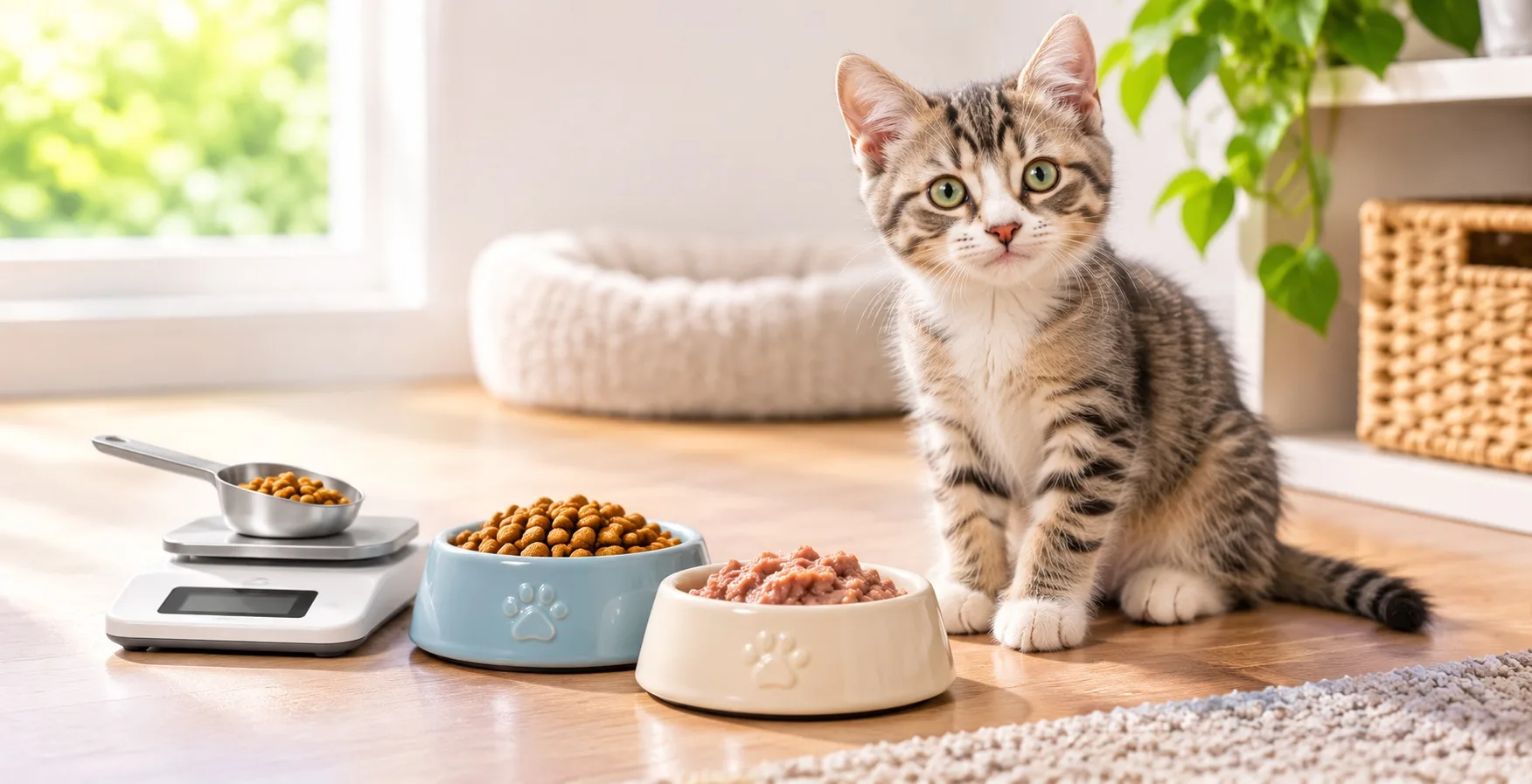
Bringing home a kitten means plenty of cuddles, playful moments, and one important question: How much kitten food should you feed your growing cat?
Kittens grow quickly during their first year. Their bodies need enough calories, protein, and essential nutrients to build strong muscles, healthy bones, and a working immune system. However, feeding too much or too little can affect their growth and overall health.
The right amount depends on your kitten's age, weight, activity level, and the type of food you choose.
Whether you're feeding wet food, dry kibble, or a combination of both, understanding your kitten's nutritional needs will help you build a healthy feeding routine.
Let's look at how much to feed, when to offer meals, and how to adjust portions as your kitten grows.
How Much Kitten Food Does Your Cat Need?
There isn't one serving size that works for every kitten. A playful four-month-old kitten may need a different amount of food than a calm eight-month-old cat.
Growing kittens generally need more calories per pound of body weight than adult cats. That's because their bodies use energy for everyday activities and physical development.
Several factors influence how much food your kitten needs:
- Age: Younger kittens need frequent meals to support rapid growth.
- Body weight: Larger kittens usually require more total calories.
- Activity level: Active kittens may burn more energy through running, climbing, and playing.
- Food type: Wet and dry foods contain different amounts of calories per ounce.
- Health and growth: Medical conditions and individual growth patterns can change feeding needs.
For example, two kittens of the same age might have different appetites. One may spend hours chasing toys, while the other prefers sleeping in a sunny corner.
Instead of relying only on age, consider your kitten's weight, body condition, and the calorie information on the food label.
Why Calories Matter More Than Cups
Not all kitten foods contain the same number of calories.
One dry food might provide 400 calories per cup, while another offers 500 calories per cup. Feeding the same number of cups could therefore produce very different results.
The most reliable approach is to check the calories listed on the package and calculate portions based on your kitten's estimated daily energy needs.
Your veterinarian can help establish a suitable calorie target, especially for very young kittens or those growing unusually quickly.
Kitten Feeding Chart by Age
Your kitten's feeding needs change throughout the first year. The following chart provides a starting point for meal frequency and feeding routines.
| Kitten Age | Recommended Meals | Feeding Guidance |
| Birth to 4 weeks | Frequent milk feedings | Mother's milk or kitten milk replacer |
| 4 to 8 weeks | 4 to 6 small feedings | Gradually introduce softened kitten food |
| 8 to 12 weeks | 4 meals daily | Feed complete and balanced kitten food |
| 3 to 6 months | 3 to 4 meals daily | Adjust portions as weight increases |
| 6 to 9 months | 2 to 3 meals daily | Monitor growth and body condition |
| 9 to 12 months | Usually 2 meals daily | Continue growth nutrition as appropriate |
Note: This chart is a general guide, not a fixed feeding prescription. Kittens may need different schedules depending on their size, health, and development.
Feeding Kittens Under Eight Weeks
Very young kittens have special nutritional needs.
During the first few weeks, mother's milk provides the nutrition they need. Orphaned kittens should receive a commercial kitten milk replacer under veterinary guidance.
Cow's milk is not a suitable substitute because it can cause digestive problems and does not provide the right nutritional balance.
At around four weeks, kittens can begin exploring soft food mixed with kitten milk replacer or water. This process, called weaning, usually continues over several weeks.
Feeding Kittens From Two to Six Months
This is an important stage of rapid growth.
Kittens become more active, develop coordination, and gain muscle. Offering several smaller meals throughout the day helps them receive enough nutrition without overwhelming their stomachs.
Choose a complete and balanced growth formula and monitor your kitten's weight regularly.
Feeding Kittens From Six to Twelve Months
Growth usually begins to slow during the second half of the first year, although energy needs remain higher than those of many adult cats.
Most kittens can gradually move toward two meals per day.
However, don't reduce their food simply because they're getting older. Their portions should still reflect their weight, body condition, and growth rate.
How Often Should You Feed Your Kitten?
A regular feeding schedule helps you monitor appetite and makes it easier to manage daily portions.
Young kittens have small stomachs, so dividing their daily food into several meals is often more comfortable than offering one large serving.
Here's an example schedule for a healthy four-month-old kitten eating three meals daily:
| Time | Meal |
| 7:00 AM | Breakfast |
| 1:00 PM | Lunch |
| 7:00 PM | Dinner |
Divide the kitten's calculated daily food allowance across these meals.
For example, if your veterinarian recommends 300 calories per day, you could offer approximately 100 calories at each feeding.
This is only an example, not a calorie recommendation for every four-month-old kitten.
Should You Leave Food Out All Day?
Free-feeding dry kibble may seem convenient, especially when your kitten asks for food frequently.
However, unlimited access can make it difficult to measure how much your kitten eats.
Measured meals allow you to:
- Track daily food intake.
- Notice sudden appetite changes.
- Prevent accidental overfeeding.
- Adjust portions as your kitten grows.
If your kitten prefers eating small amounts throughout the day, a timed feeder can help distribute measured portions.
Always provide fresh drinking water.
Wet vs. Dry Kitten Food: Does Portion Size Change?
Yes. Wet and dry kitten foods have different moisture levels and calorie concentrations, so their serving sizes are not interchangeable.
Wet Kitten Food
Wet food contains a high amount of moisture, which can contribute to your kitten's daily water intake.
Its soft texture also makes it easier for kittens transitioning from milk to solid food.
Benefits may include:
- Additional dietary moisture.
- Soft texture for young kittens.
- Different flavors and textures.
- Easy portioning when calories per can are known.
However, wet food should not sit out for long periods. Refrigerate unused portions according to the manufacturer's instructions.
Dry Kitten Food
Dry kibble is convenient to store and works well with measured feeding schedules.
Many dry formulas provide more calories per ounce than wet food because they contain less moisture.
This means a small amount of kibble can supply a significant number of calories.
When selecting dry food, look for a formula designed to support kitten growth rather than relying on the size or appearance of the kibble.
Can You Mix Wet and Dry Food?
Absolutely. Many pet parents use a combination of wet and dry food.
For example, you might serve wet food in the morning and dry kibble later in the day.
The important part is calculating the calories from both foods together.
Example:
Suppose your kitten's daily target is 300 calories.
- Wet food: 90 calories per can.
- Dry food: 420 calories per cup.
- Two cans of wet food: 180 calories.
- Remaining calories: 120.
- Dry food needed: Approximately 0.29 cup.
This combination provides roughly 300 calories.
Always use the actual calorie values printed on your chosen products.
How to Choose the Best Kitten Food for Healthy Growth
Choosing the best kitten food isn't just about finding a popular brand or an appealing flavor.
Your kitten needs a nutritionally complete diet that supports healthy development.
Look for Complete and Balanced Nutrition
In the United States, check the nutritional adequacy statement on the package.
Choose food labeled as complete and balanced for growth, or for all life stages, with the appropriate nutritional support for your kitten.
This helps confirm that the food is intended to meet the nutritional needs of growing cats.
Foods labeled only for intermittent or supplemental feeding should not replace a complete daily diet.
Why High Protein Kitten Food Matters
Cats are obligate carnivores, meaning they need nutrients that are naturally supplied by animal-based ingredients.
Protein supports muscle growth, tissue development, and many essential body functions.
A suitable high protein kitten food can help provide the amino acids growing kittens need.
However, a higher protein percentage does not automatically make one product better than another.
Protein quality, digestibility, calorie content, and overall nutritional balance also matter.
Look for foods that provide:
- Adequate protein and essential amino acids.
- Taurine for normal heart and eye function.
- Balanced calcium and phosphorus for bone development.
- Essential fatty acids, including DHA, for development.
- Appropriate vitamins and minerals.
Don't Choose Food Based on Ingredients Alone
An attractive ingredient list doesn't always tell the full story.
A food may advertise real chicken as its first ingredient, but that alone does not prove it provides balanced nutrition.
Instead, review the nutritional adequacy statement, feeding instructions, calorie content, and manufacturer's quality standards.
At Kwik Pets, pet parents can explore kitten food options and compare formulas based on their cat's age, feeding preferences, and nutritional needs.
Signs You're Feeding Too Much or Too Little
Your kitten cannot tell you exactly how many calories they need. However, their growth, appetite, and body condition can provide useful clues.
Signs Your Kitten May Not Be Eating Enough
Watch for:
- Poor or slower-than-expected weight gain.
- Visible loss of muscle or body condition.
- Unusual tiredness or weakness.
- Persistent hunger alongside poor growth.
- A dull coat or declining overall condition.
These signs can also indicate illness or other health problems, so don't assume that increasing food will solve them.
Contact your veterinarian if your kitten is not growing as expected.
Signs Your Kitten May Be Eating Too Much
Possible warning signs include:
- Excess body fat developing around the abdomen.
- Difficulty feeling the ribs beneath a layer of fat.
- Weight gain that exceeds the expected growth pattern.
- Frequent leftovers when meals are offered in oversized portions.
A kitten's belly may appear round after eating, so appearance alone isn't a reliable way to judge body condition.
Your veterinarian can assess whether your kitten's weight is appropriate for their age and body structure.
How to Adjust Your Kitten's Food Portions
Feeding amounts should change as your kitten grows.
Instead of making large adjustments based on appetite alone, follow a simple process.
Step 1: Weigh Your Kitten Regularly
Use a suitable scale and record your kitten's weight.
Young kittens should gain weight steadily, although growth rates vary.
Regular measurements make it easier to spot unexpected changes.
Step 2: Check the Feeding Instructions
Start with the manufacturer's feeding chart for your kitten's age and weight.
These recommendations provide an initial estimate, not a guaranteed perfect portion.
Step 3: Calculate Daily Calories
Check the calorie content listed on the package.
For dry food, this is often expressed as kilocalories per cup. Wet food may list calories per can or container.
Use this information to calculate the total amount of food needed to meet your kitten's daily target.
Step 4: Divide Food Into Meals
Once you know the daily amount, divide it across the recommended number of feedings.
Use a measuring tool or kitchen scale to keep portions consistent.
Step 5: Monitor Growth and Adjust
Review your kitten's weight and body condition over time.
If your kitten is gaining too much body fat or failing to grow properly, speak with your veterinarian about adjusting the feeding plan.
Expert tip: Treats and food toppers contain calories too. Keep treats to a small part of the daily diet, generally no more than 10% of total calories, so they don't replace essential nutrition.
Conclusion: Build a Healthy Kitten Feeding Routine
Your kitten's next meal is a good opportunity to make sure they're receiving the nutrition they need.
Start by checking the calorie content of your current kitten food, measuring daily portions, and setting a feeding schedule that suits your kitten's age.
Keep track of their weight as they grow, and work with your veterinarian to make adjustments when needed.
If you're ready to compare feeding options, explore the selection of kitten food at Kwik Pets and look for complete and balanced formulas that match your growing cat's needs.
The right food, in the right amount, helps give your kitten a healthy start in life.
Frequently Asked Questions About Kitten Food
1. How much kitten food should a three-month-old kitten eat?
The amount depends on the kitten's weight, growth, activity level, and food's calorie density. Most three-month-old kittens benefit from around four meals daily. Use the package's feeding chart as a starting point and ask your veterinarian about the appropriate calorie target.
2. Is wet or dry food better for kittens?
Both wet and dry foods can support healthy growth when they are complete and balanced for kittens. Wet food adds moisture, while dry food offers convenience. Many owners successfully feed a combination of both.
3. When should I switch from kitten food to adult cat food?
Many cats transition to adult food at around 12 months. However, large breeds and cats with special nutritional needs may require a different timeline. Ask your veterinarian when to make the change, and introduce the new food gradually.
4. Is high protein kitten food necessary?
Growing kittens need adequate high-quality protein and essential amino acids. A high protein kitten food may be suitable, but the overall nutritional balance is more important than choosing the product with the highest protein percentage.
5. What should I do if my kitten is always hungry?
Frequent hunger can be normal during growth spurts. First, check whether you're feeding the recommended amount for your kitten's weight and age. If hunger is extreme, persistent, or accompanied by poor weight gain, diarrhea, or vomiting, consult your veterinarian.