What is cotton blend fabric?
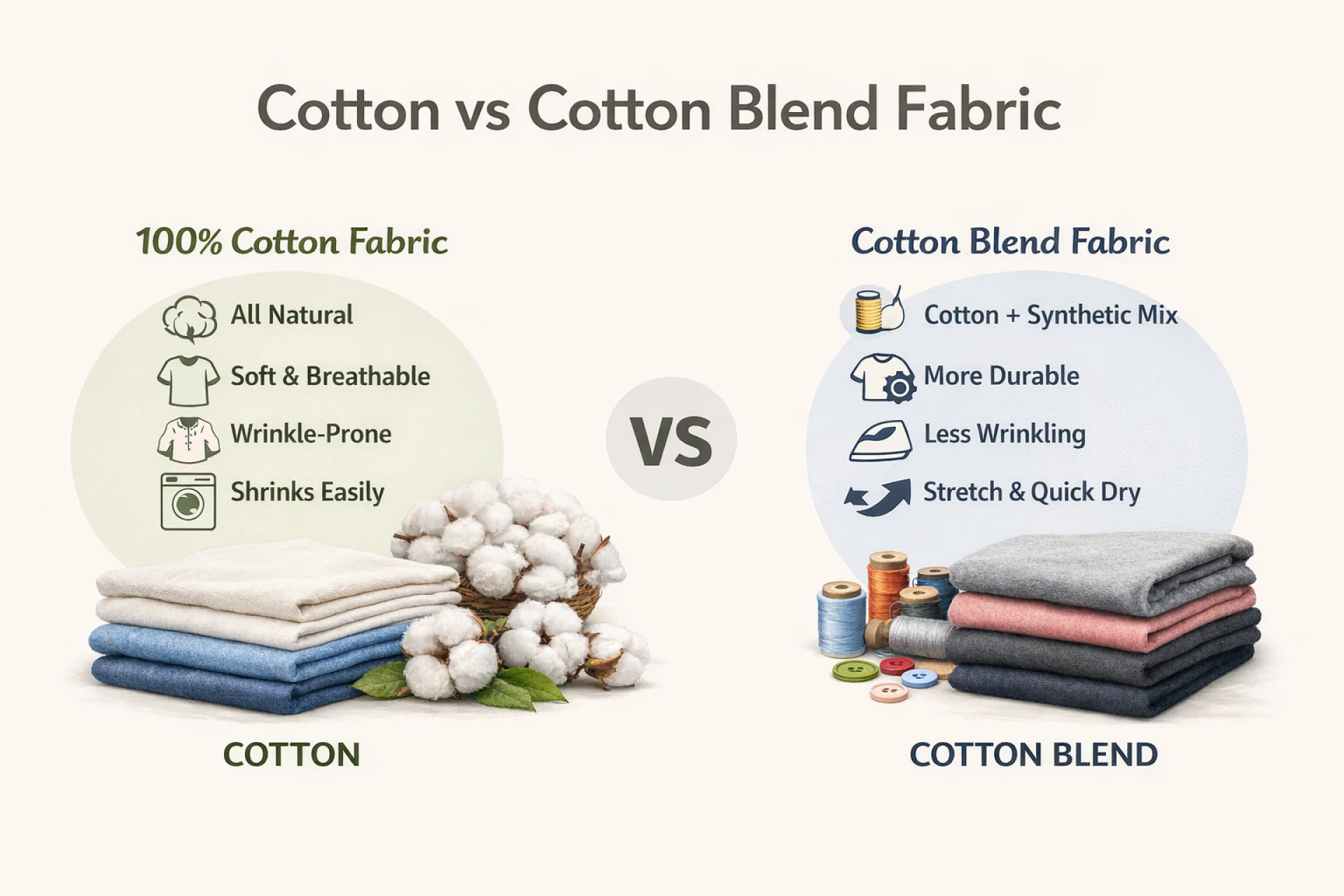
Cotton blend fabric is made by combining natural cotton fibers with one or more synthetic or natural fibers such as polyester, spandex, rayon, or linen.
Instead of using 100% cotton, manufacturers mix cotton with another material to improve performance. The goal is to balance comfort, durability, stretch, and cost.
For example:
- 70% Cotton + 30% Polyester
- 95% Cotton + 5% Spandex
In simple terms, what is cotton blend fabric? It is a mixed fabric where cotton is combined with another fiber to enhance its properties.
Cotton Blend Meaning Explained Simply
Let’s break down the cotton blend meaning in an easy way.
- Cotton = Natural fiber from cotton plants
- Blend = Mixture
So, cotton blend meaning is simply a mixture of cotton and another fabric.
Think of it like mixing wheat flour with maida to get a different texture. The combination gives you benefits from both materials.
Textile manufacturers use blending to:
- Make fabric stronger
- Reduce wrinkles
- Add stretch
- Lower production cost
- Improve shape retention
That’s why cotton blend fabrics are so common in India today.
Types of Cotton Blend Fabrics
There are different types of cotton blends, depending on which fiber is mixed with cotton.
1. Polyester Cotton Blend
The polyester cotton blend is the most popular in India.
Key features:
- More durable
- Less wrinkling
- Affordable
- Easy to maintain
Common uses:
- School uniforms
- Office shirts
- Bedsheets
- Curtains
2. Cotton + Spandex
This blend adds stretch to the fabric.
Key features:
- Flexible
- Body-fitting
- Comfortable for movement
Used in:
- Leggings
- Jeans
- Activewear
3. Cotton + Linen
This combination gives a slightly textured and breathable finish.
Key features:
- Airy feel
- Premium look
- Lightweight
Used in:
- Summer shirts
- Ethnic wear
- Cushion covers
4. Cotton + Rayon
Rayon makes the fabric softer and smoother.
Key features:
- Flowing drape
- Smooth surface
- Comfortable
Used in:
- Kurtis
- Dresses
- Home furnishing fabrics
Cotton vs Cotton Blend – What’s the Difference?
Many buyers compare cotton vs cotton blend before purchasing. Here’s a simple comparison:
Feature100% CottonCotton BlendFeelVery soft and naturalSoft but slightly smootherWrinklesWrinkles easilyWrinkle-resistantDurabilityModerateMore durableStretchNo stretchCan be stretchyCostOften higherUsually budget-friendlyMaintenanceNeeds ironingEasy to care for
When choosing between cotton vs cotton blend, think about how you will use the product.
Cotton Blend Fabric Is Good or Bad? (Pros & Cons)
A common doubt people have is: cotton blend fabric is good or bad?
The honest answer is — it depends on your needs.
Advantages of Cotton Blend Fabric
- ✔ More long-lasting than pure cotton
- ✔ Less shrinking after wash
- ✔ Holds shape better
- ✔ Fewer wrinkles
- ✔ More affordable
- ✔ Easy to wash and maintain
These are major advantages of cotton blend fabric, especially for daily use in Indian households.
Disadvantages
- ✖ May not be as breathable as 100% cotton
- ✖ Can feel slightly warm if polyester content is high
- ✖ Less natural feel compared to pure cotton
So, cotton blend fabric is good or bad?
For everyday wear, uniforms, and home décor — it is a practical choice.
For extreme summer heat — pure cotton may offer better comfort.
Where Is Cotton Blend Fabric Used in India?
The demand for cotton blend fabric uses in India is increasing across fashion and home décor industries.
Here are common applications:
Clothing
- T-shirts
- Shirts
- Kurtis
- Casual wear
School Uniforms
Cotton-polyester blends are ideal because:
- They last longer
- They require less ironing
- They handle frequent washing
Office Wear
Formal shirts and trousers often use blended fabrics for durability.
Bedsheets
Blended bedsheets are:
- Budget-friendly
- Durable
- Easy to maintain
Cushion Covers
For home décor buyers, blended fabrics are popular because:
- They keep shape
- They resist wrinkles
- They are cost-effective
Curtains
Cotton blends are often used in curtains because they fall nicely and are more durable.
Understanding what is cotton blend fabric helps you choose wisely for different uses.
Is Cotton Blend Good for Indian Weather?
India’s climate varies from hot summers to humid monsoons.
So, is cotton blend for summer a good option?
During Summer
- Light blends with high cotton percentage are comfortable
- Heavy polyester blends may feel warm
During Monsoon
- Blends dry faster than pure cotton
- Better for humid conditions
For Daily Use
- More durable
- Less maintenance
If you want comfort in peak summer, choose fabric with at least 70% cotton.
How to Identify Cotton Blend Fabric Before Buying?
Here are practical tips for Indian shoppers:
- Read the label carefully
- Check the fabric composition percentage.
- Feel the texture
- Pure cotton feels cooler and softer.
- Blends may feel slightly smoother.
- Wrinkle check
- Crush it in your hand.
- Heavy wrinkles = likely pure cotton.
- Fewer wrinkles = likely blend.
- Compare prices
- Very low prices often indicate blended fabric.
Knowing what is cotton blend fabric gives you confidence while shopping.
Conclusion
Now you have a clear understanding of what is cotton blend fabric, its meaning, types, benefits, and drawbacks.
To summarise:
- Cotton blend is a mix of cotton and another fiber
- It improves durability and reduces wrinkles
- Suitable for clothing, uniforms, bedsheets, cushion covers, and curtains
- Works well in Indian conditions when cotton percentage is high
The right choice depends on your purpose. Always check the label and choose based on comfort, weather, and usage.
1. What is cotton blend fabric made of?
Cotton blend fabric is made by combining cotton fibers with materials like polyester, spandex, linen, or rayon.
2. Is cotton blend better than 100% cotton?
Cotton blend is more durable and wrinkle-resistant, while 100% cotton is more breathable and natural.
3. Does cotton blend shrink?
Cotton blend shrinks less than pure cotton because synthetic fibers reduce shrinkage.
4. Is cotton blend good for summer in India?
Yes, if it has a high cotton percentage. However, pure cotton is usually better for extreme heat.